
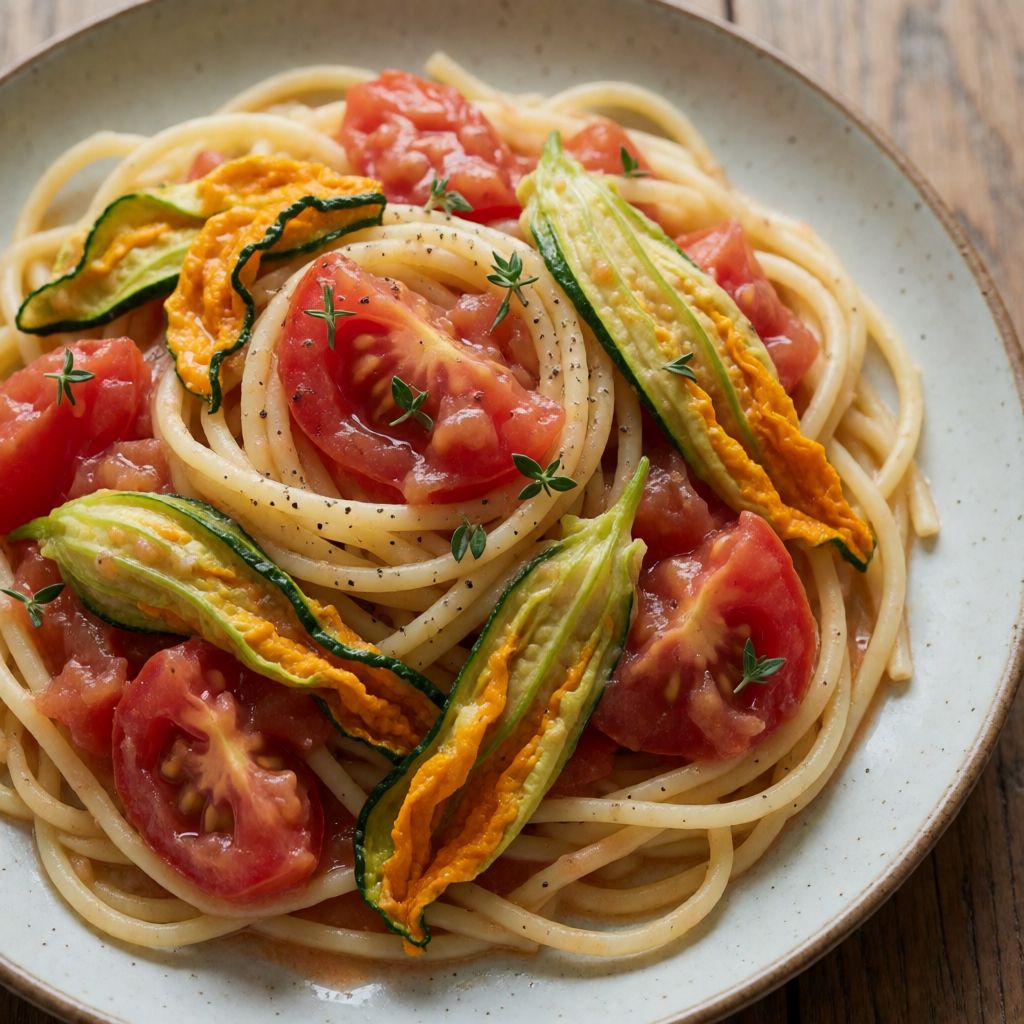
 AI photo
Pasta with Courgette Flowers and Tomatoes
A quick summer pasta with pan-fried courgette flowers, courgettes and fresh tomatoes, tossed with spaghetti.
Labels are worked out automatically from the ingredients and can be wrong. Check the packaging if it matters to you.
Ingredients
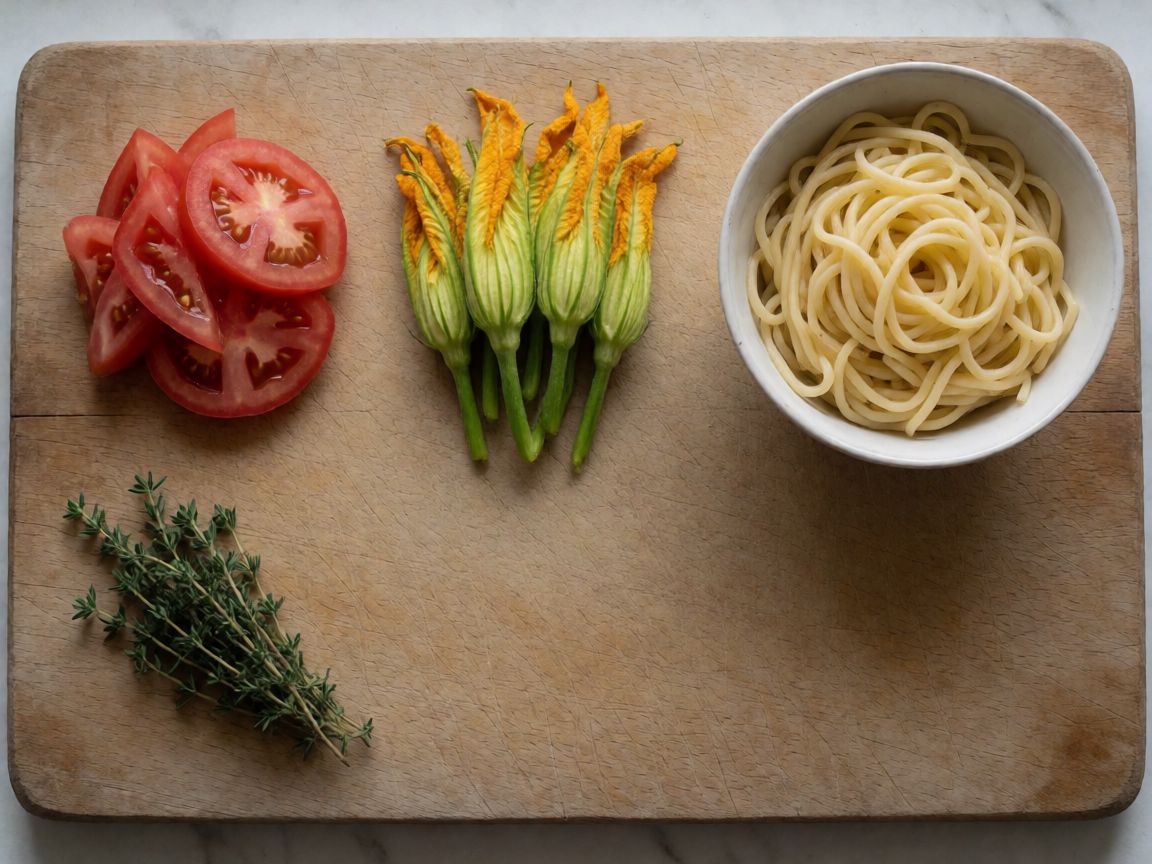





Steps
Make a few cuts in the tomato skins and dip them into boiling water for 2-3 minutes, until the skin begins to curl.
3 minDrain the tomatoes, peel off the skin, cut into quarters, remove the seeds and slice into strips.
Separate the flowers and tips from the courgettes, then slice the courgettes into thin strips.
Rinse the courgette flowers, remove the central pistil and cut into strips.
Heat a little olive oil in a non-stick pan and add the courgettes.
Cook the courgettes covered for 2-3 minutes.
3 minAdd salt, black pepper, the courgette flowers and thyme, and mix.
Cook for one more minute.
1 minBoil the spaghetti in plenty of salted water until al dente.
Toss the spaghetti in the pan with the ready sauce and the tomatoes.
This is a dish built on a simple contradiction: everything in the pan is cooked, and the tomato on top is not. That's the whole trick. The courgette goes soft and sweet under a lid in its own steam, the flowers get a minute at most just to wilt, and then raw tomato, peeled and seeded, is folded in at the very end so it stays bright and a little acidic against all that soft green. If you boil the tomato into the mix, or let the flowers sit in the heat a beat too long, you've made a different, duller dish — a vegetable mush with pasta in it, instead of pasta with three distinct textures riding on top of each other.
Some say "pasta with tomatoes" means tomato sauce — no, because here the tomato never meets real heat. The two or three minutes in boiling water are only there to loosen the skin, not to cook the fruit. You want it to taste like it still thinks it's in the salad.
What decides whether this works is timing, and timing here is read by eye and touch, not by a clock on the wall. The courgette strip should bend, not snap, and still show its colour — once it goes grey-green and floppy you've gone past tender into tired. The flower should just lose its stiffness, like a flag when the wind drops. Thyme and pepper go in with the flowers, not before, because thyme cooked too long turns from perfume into hay.
Start with the tomato. You want one that's actually ripe — gives a little under thumb pressure, smells of itself when you hold it to your nose. A hard, pale, out-of-season supermarket tomato has almost no acid or sugar to offer; blanching it won't fix that, it'll just give you a naked, flavourless cube. Score the skin first because an unbroken skin shrugs off hot water for ages — the cuts let the heat in fast enough to loosen the layer between skin and flesh before the flesh itself starts cooking. Seed it afterwards for one plain reason: the seeds and their jelly carry most of the tomato's water, and that water, released loose into a hot pan, is what turns a dish watery and thin. Keep the flesh, lose the water, and the tomato stays a bright accent rather than a puddle.
Courgette: buy the small, young ones if you can find them, skin taut and glossy, heavy for their size. An old, overgrown marrow has gone spongy inside and its seeds have turned bitter and leathery — no amount of good cooking brings that back. The reason courgette and its flower are sold together at all is practical, not romantic: growers thin out some of the blossoms so the plant doesn't try to ripen too many fruits at once, and those thinned flowers, picked the same morning, are the ones that end up on a market stall. That's also why you basically never see them in a British supermarket — they wilt within a day, can't survive a distribution lorry, and have no shelf life worth stocking. If you want them, look to a farmers' market, an Italian greengrocer, or your own courgette plant if you grow one. If you genuinely can't get them, don't fake it with another flower — just make the dish as pasta with courgette and tomato, and call it what it is.
Cutting the courgette into thin strips rather than rounds matters for the same reason spaghetti is long and thin: more surface meets the pasta, less chewing to do. The lid during cooking isn't ceremony — it traps the little moisture the courgette releases as the salt starts pulling water out of its cells, and that trapped steam is what cooks it through gently instead of drying and scorching it against hot metal. A domestic hob runs hotter and less evenly near the pan's edge than a wide kazan ever would, so a non-stick surface and a modest flame are doing real work here, not just following habit. No lid to hand? A plate set on top does the same job; even foil, loosely draped, will hold enough steam in.
The flower itself: pull out the central pistil before slicing, because that's where the bitterness and any gritty pollen concentrate — leave it in and you taste it as an unpleasant note against the sweetness of the rest. Beyond that it's mostly texture and a faint vegetal perfume rather than strong flavour, which is exactly why it can't survive overcooking: there's so little character in it to begin with that heat erases it entirely rather than deepening it.
Thyme is there in the background, not as the star — if you only have dried, use less than you think, since drying concentrates it toward something dustier and more medicinal than the fresh leaf. Marjoram or a small amount of oregano will stand in without clashing, but skip anything heavier like rosemary, it'll shout over the vegetables.
Olive oil here is doing double duty, as the cooking medium and as a flavour you'll actually taste in the finished dish, so this isn't the place for a neutral oil picked only because it's cheap. If you don't have olive oil, use any oil you don't mind tasting of and that can sit over gentle heat without complaining — sunflower if you want it to stay quiet, something with more character if you want it to join in. And last: give yourself the patience to let the courgette actually go tender rather than rushing it off the heat at the first sign of softness — a minute more under the lid costs you nothing and is the difference between squeaky and right.