
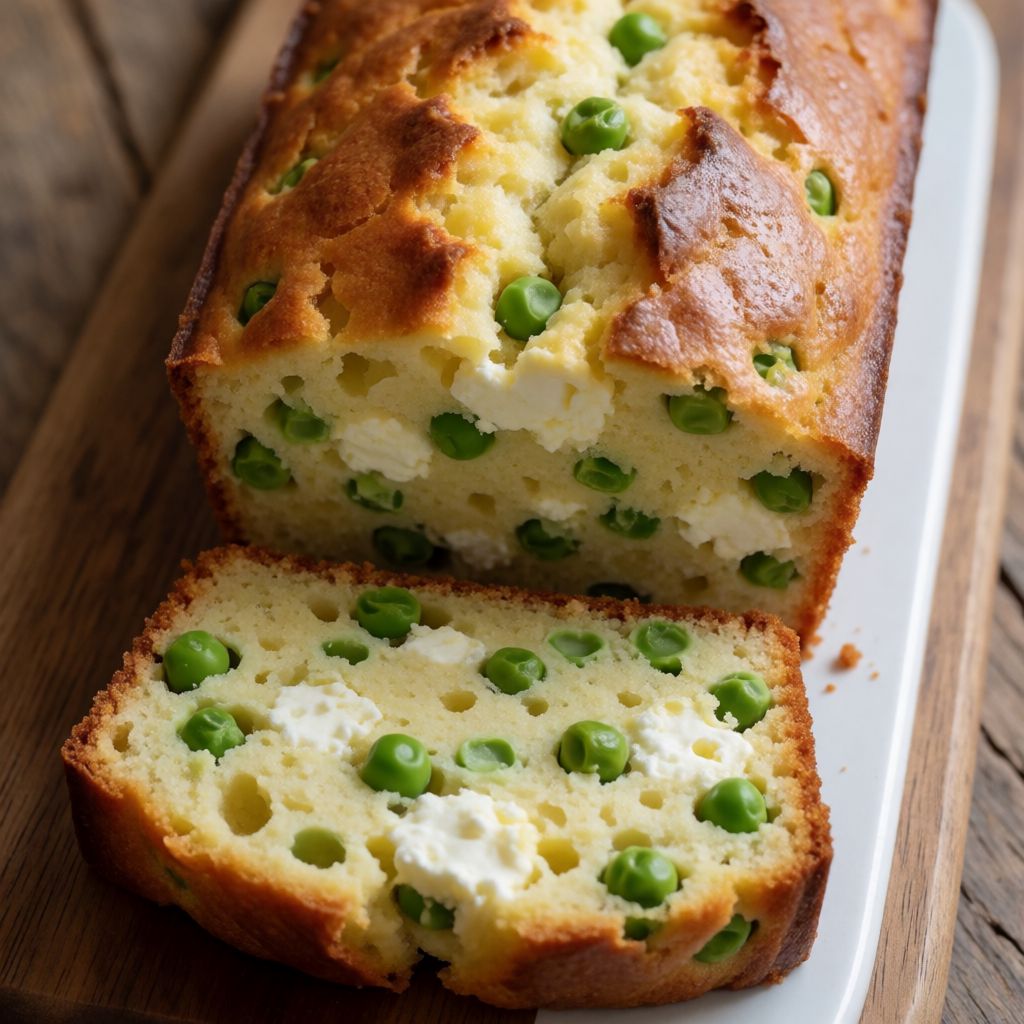
 AI photo
Pea and Ricotta Savoury Cake
A savoury baked cake with peas, ricotta and ham, easy to slice and share.
Labels are worked out automatically from the ingredients and can be wrong. Check the packaging if it matters to you.
Ingredients
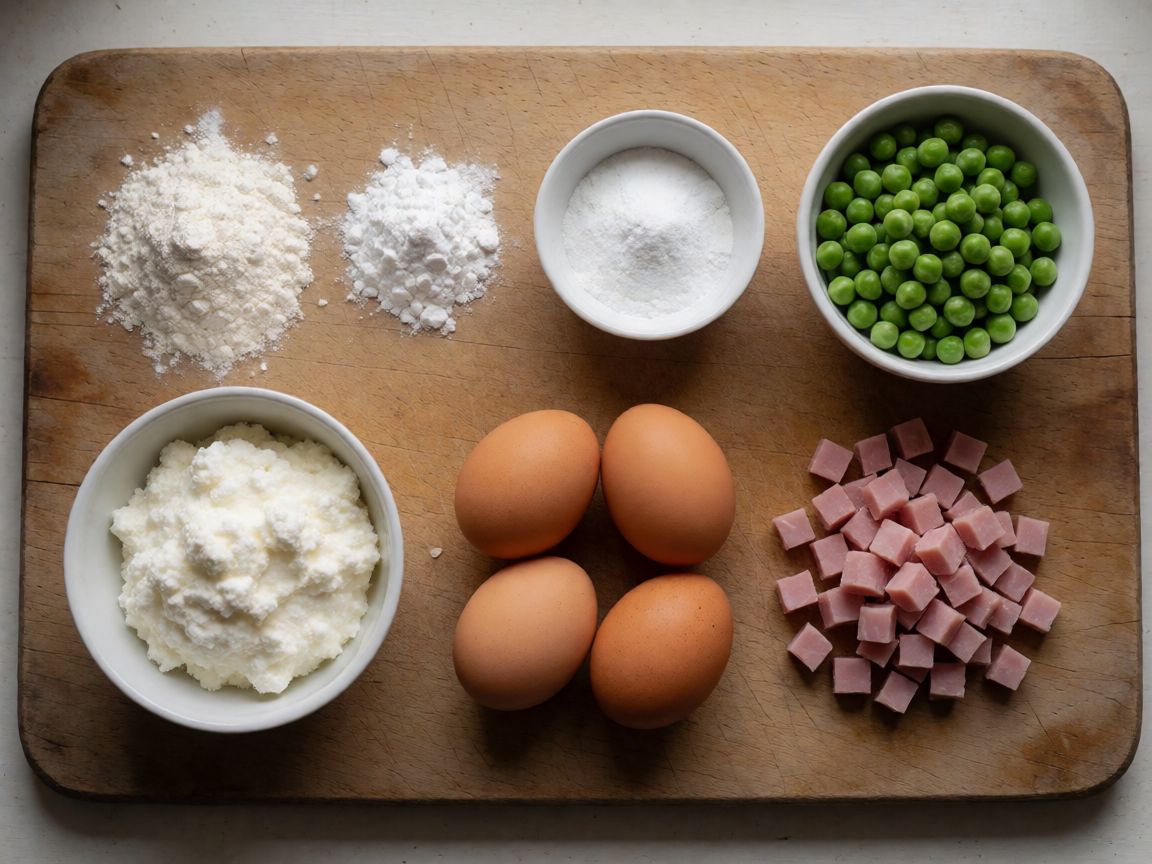
- 200 g Plain flour
- 100 g Potato starch
- 16 g Baking powder
- 150 g Olive oil
- 300 g Peas
- 200 g Ricotta
- 4 pcs Eggs
- 150 g Ham diced
- Salt to taste
- Black pepper to taste










Steps
If using frozen or fresh peas, boil them for 5-6 minutes, or skip to the next step if using tinned peas.
6 minDrain the peas, blend them, add the ricotta, salt and pepper, and whizz until smooth.
Crack the eggs into a bowl and beat with a mixer until pale and creamy.
Pour in the olive oil and the pea-ricotta mixture, and mix together.
Sift in the flour, potato starch and baking powder, and add to the batter.
Add the diced ham and mix until evenly combined.
Pour the batter into a greased 24cm tin and bake in a fan oven preheated to 180°C.
73 minCheck with a wooden skewer — if it comes out dry, the cake is ready.
This is a plum cake in shape only — the savoury Italian cousin that uses cake technique to solve a sandwich problem. You whisk eggs and oil the way you would for a Victoria sponge, but the "fruit" is peas and ricotta blitzed to a pale green purée, and the "sultanas" are cubes of ham. It rises because of baking powder and nothing else, and it holds together because starch, not flour alone, is doing the structural work here.
What decides whether it works is the same thing that decides any quick bread: how much water is in the batter versus how much starch can bind it. Peas are mostly water once cooked and blended. Ricotta is mostly water too. If you only used flour, you'd get a dense, gummy slab, because wheat starch alone can't gelatinise fast enough to set a batter this wet before the crumb collapses. Potato starch is the fix — it gelatinises at a lower temperature and holds more water per gram than wheat flour, which is exactly why Italian savoury cakes (torte salate) lean on it instead of just using more flour.
Some say you need plain flour alone and "more of it" to fix a wet batter. No — more flour just dilutes the egg and dulls the pea flavour; it doesn't change the water problem, it just buries it under starch that can't gelatinise properly in a cold spot. The potato starch ratio here (100g to 200g flour, so one part in three) is the actual fix, not brute quantity.
Peas: fresh or frozen need the brief boil because raw pea starch is still locked in the cell wall — heat ruptures it so the blender can actually turn them to purée instead of pea-flavoured gravel. Tinned peas are already cooked soft, which is why you skip straight to blending; no virtue is lost skipping this step, it's just that someone else already did it for you in the tin.
Ricotta: it's doing two jobs — moisture and binding fat in small amounts, and a mild dairy backdrop that stops the pea purée tasting like baby food. Any soft, barely-salted fresh cheese with a loose curd works the same way — cottage cheese drained and mashed, or a mild curd cheese, will do if ricotta isn't on the shelf. Don't reach for cream cheese; it's too fatty and too tight-textured, and it'll make the crumb heavy instead of light.
Potato starch: the actual engineering ingredient in this cake, as above. If you have none, cornflour behaves close enough — same principle, gelatinises at low heat, holds water. Don't substitute with more plain flour; you'll get the gummy centre this starch exists to prevent.
Olive oil: liquid fat, which means it coats flour proteins evenly and keeps the cake from going dry the next day, unlike butter, which sets solid when cold and makes next-day cake feel tight and short. Use any oil with no smell of its own if your olive oil is the strong, grassy kind you'd rather save for dressing a salad — a light rapeseed or sunflower oil won't fight the pea flavour.
Ham: diced, not minced, because you want bite-sized savoury pockets, not a paste. Dry-cured ham, cooked ham, even a smoked bacon lardon fried off first — anything salty and firm enough to hold its cube shape through baking works. If you're doing a proper Sunday roast anyway, this is a fair home for the end of a ham joint that's too small to serve on its own.
On your hob: a fan oven at 180°C is a genuinely moderate heat for a cake with this much wet purée in it — don't be tempted to push it hotter to "cook it faster." A domestic oven at higher heat will set the crust before the dense, wet middle has had time to firm up around the starch, and you'll get a cake that looks done and isn't. The 24cm tin matters too — a smaller tin means a deeper batter, which needs real patience to cook through; 73 minutes is where this particular depth of batter tends to finish, but the skewer is what tells you, not the timer. Let it cool properly before you cut it — like a quiche, it firms up as it sits, and cutting too early gets you a slice that falls apart rather than one that holds its cube of ham in place.