
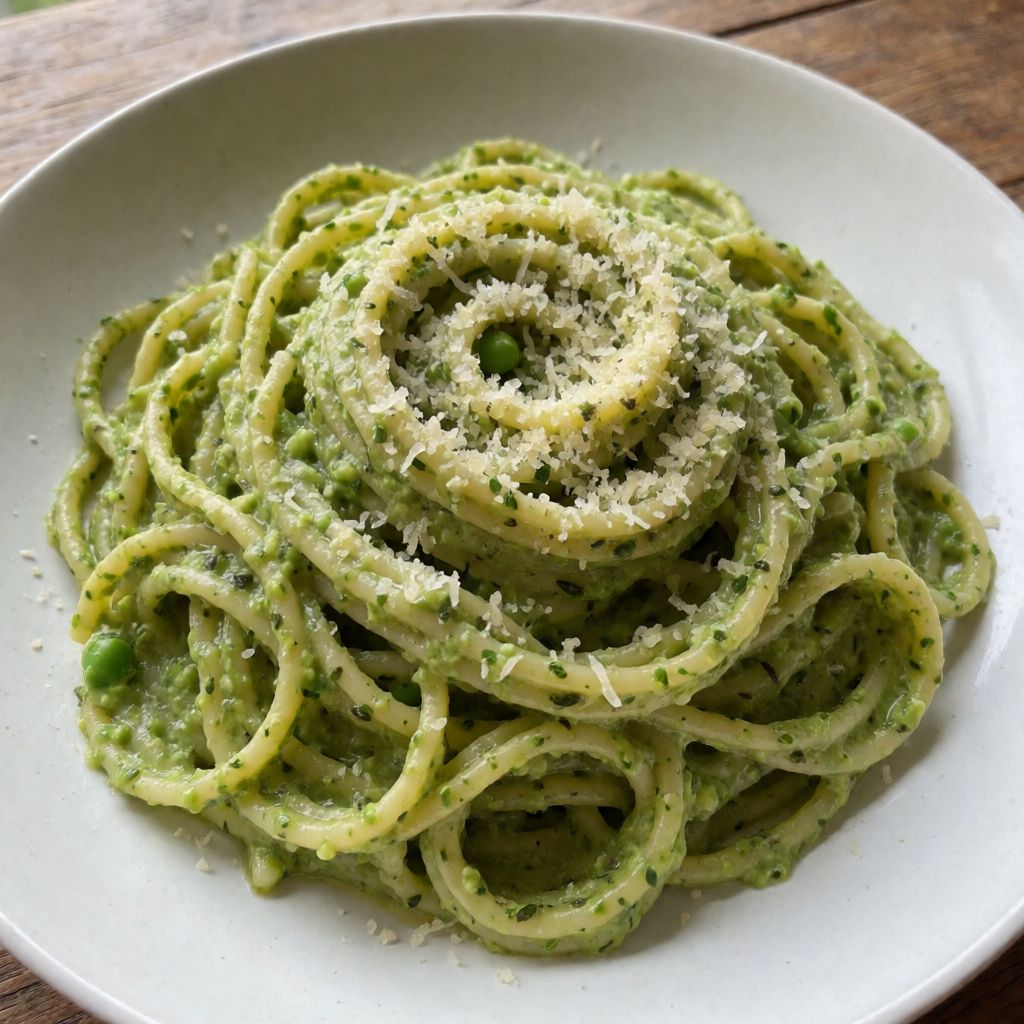
 AI photo
Pasta with Pea Pesto
A quick pasta dish tossed with a creamy pesto of peas, almonds and pecorino romano.
Labels are worked out automatically from the ingredients and can be wrong. Check the packaging if it matters to you.
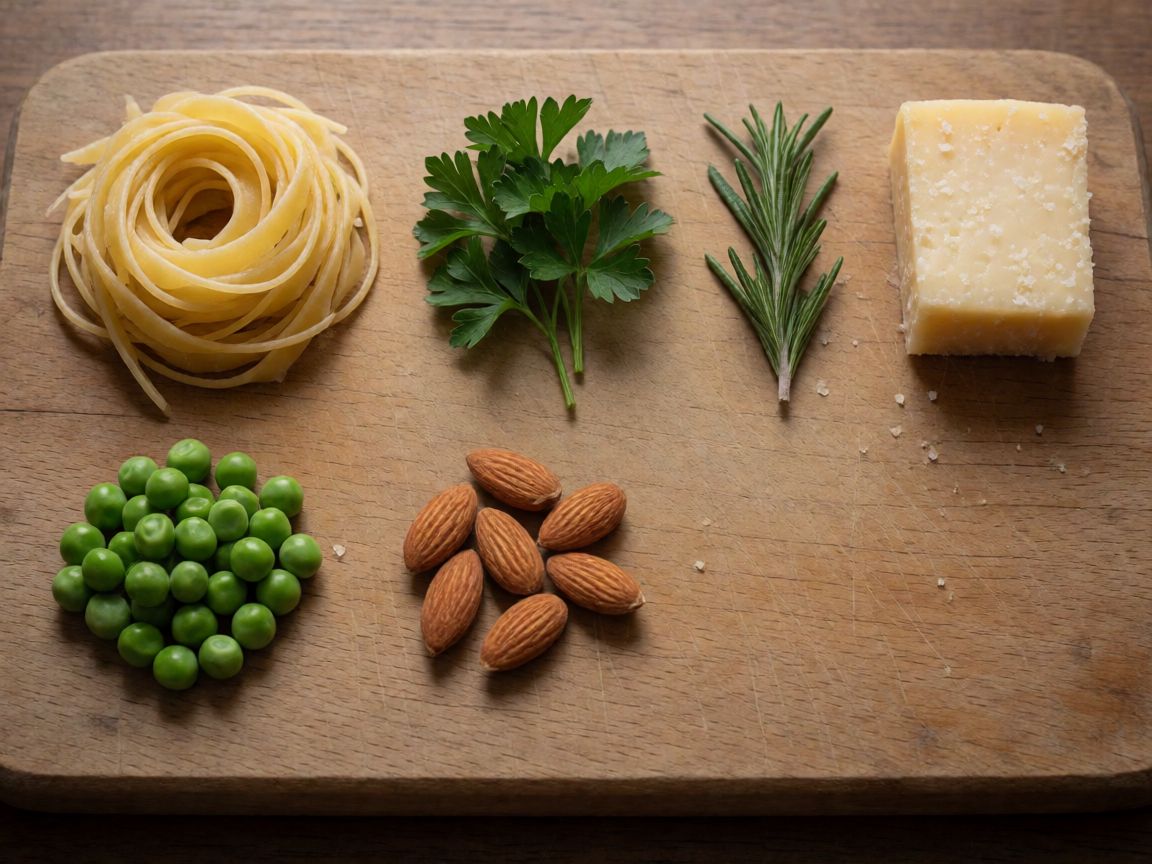
Ingredients








Steps
Cook the peas in a pot of salted boiling water with a sprig of rosemary for about 10 minutes (or 5 minutes if frozen). Drain and cool.
10 minBlend the cooled peas, almonds, pecorino romano, parsley and olive oil in a blender until smooth and creamy.
Meanwhile, cook the pasta until al dente, drain (reserving a little of the cooking water) and toss with the pesto.
Add a few spoonfuls of the pasta cooking water for creaminess.
Serve the pasta sprinkled with grated pecorino romano and parsley.
This is pesto by structure, not by basil. Swap the leaf for peas and the whole logic shifts with it: basil is bitter and sharp, so classic pesto needs sweet pine nuts and salty cheese to tame it. Peas start out sweet, so the cheese has to do more of the balancing work on its own — pecorino romano instead of a gentler cheese, something with real bite. That's the dish in one line: a cold, blended sauce where each ingredient corrects the one before it.
Two things decide whether it works, and neither is a timer. First, how hot the peas are when they go into the blender. Warm peas against cold hard cheese, spun fast, means the cheese doesn't grate into the sauce — it seizes and curdles, and what should be silky comes out grainy and split. The peas get cooled on purpose, not out of fuss, because heat is the one thing a raw sauce can't survive. Second, the spoonful of pasta water stirred in at the end. Pesto straight from the blender is a paste, thick enough to sit on the pasta in clumps rather than cover it. Starchy water loosens the fat without washing out the flavour — it's the difference between good pesto and good pesto that actually eats well.
Peas are the body of this sauce, so their sweetness is non-negotiable, and here's where a common assumption gets it backwards: some think fresh peas must beat frozen. No — not automatically. The moment a pea is picked, its sugar starts turning to starch; commercial frozen peas are usually blanched and frozen within hours of picking, right near the field, while a fresh pod from a supermarket shelf may have travelled for days. Frozen can simply be sweeter. Buy fresh only if you know they were picked recently; otherwise frozen is not the compromise, it's the sensible choice, and it's why the recipe gives it less cooking time — it's already partly cooked by the freezing process, you're only finishing it.
Rosemary goes into the cooking water, not into the blender, and that's deliberate. Boiling water pulls the resinous oils out of the sprig and that flavoured water seeps into the peas while they cook. Drop the sprig raw into the blender instead and you get sharp, woody fragments that never break down — all bite, no roundness. It's the same herb you'd tuck under a Sunday roast, used here the same way: as background, not as a blended ingredient.
Almonds stand in for pine nuts, and that's not a downgrade, it's economics. Pine nuts were never cheap, even in the places that made pesto famous — they're slow-growing and labour-intensive to shell, so plenty of regional versions use whatever oily nut was on hand. The criterion for the swap: something with enough fat to help the sauce emulsify, and a mild enough flavour that it doesn't argue with the peas. Blanched almonds work, so do cashews or skinned hazelnuts. Walnuts are too bitter and tannic — they'll fight the sweetness instead of supporting it. If your almonds still have their skins, that skin carries the bitterness walnuts have too much of — worth peeling them off if you can, or buying them blanched.
Pecorino romano earns its place by being sharp and salty where parmesan is comparatively mild — it's doing the job basil's own bitterness does in the original. The substitution criterion is a hard, aged cheese that grates fine and dissolves into the sauce through friction and warm pasta water rather than through direct heat. Parmesan will do if that's what's in the fridge, but taste as you go and expect to add a little more salt to cover the gap. For the oil, resist the instinct that says neutral is safer. In frying you want an oil with no character of its own, because the dish does the talking. Here the oil is never heated — it's tasted raw, straight into the sauce — so a flavourless 'light' olive oil, built precisely to disappear, is the wrong tool. Pick one you'd happily dip bread into.
Choose a pasta shape with somewhere for the sauce to sit — fusilli, casarecce, anything with ridges or a hollow — and it'll hold the pesto better than a smooth strand will. Spaghetti still works, it just needs more of that reserved water stirred through. Don't rinse the pasta after draining; the starch clinging to it is the same bridge the pasta water provides, and running it under the tap washes that bridge away. This quantity feeds two properly; scale the peas and pasta together and add roughly a third more cheese per extra person, since the cheese is what carries the salt. And give the peas their few minutes to cool before they go anywhere near the blender — spreading them out on a plate instead of leaving them huddled in a colander speeds that along, no extra kit needed. That wait is not dead time, it's the step doing the work.