
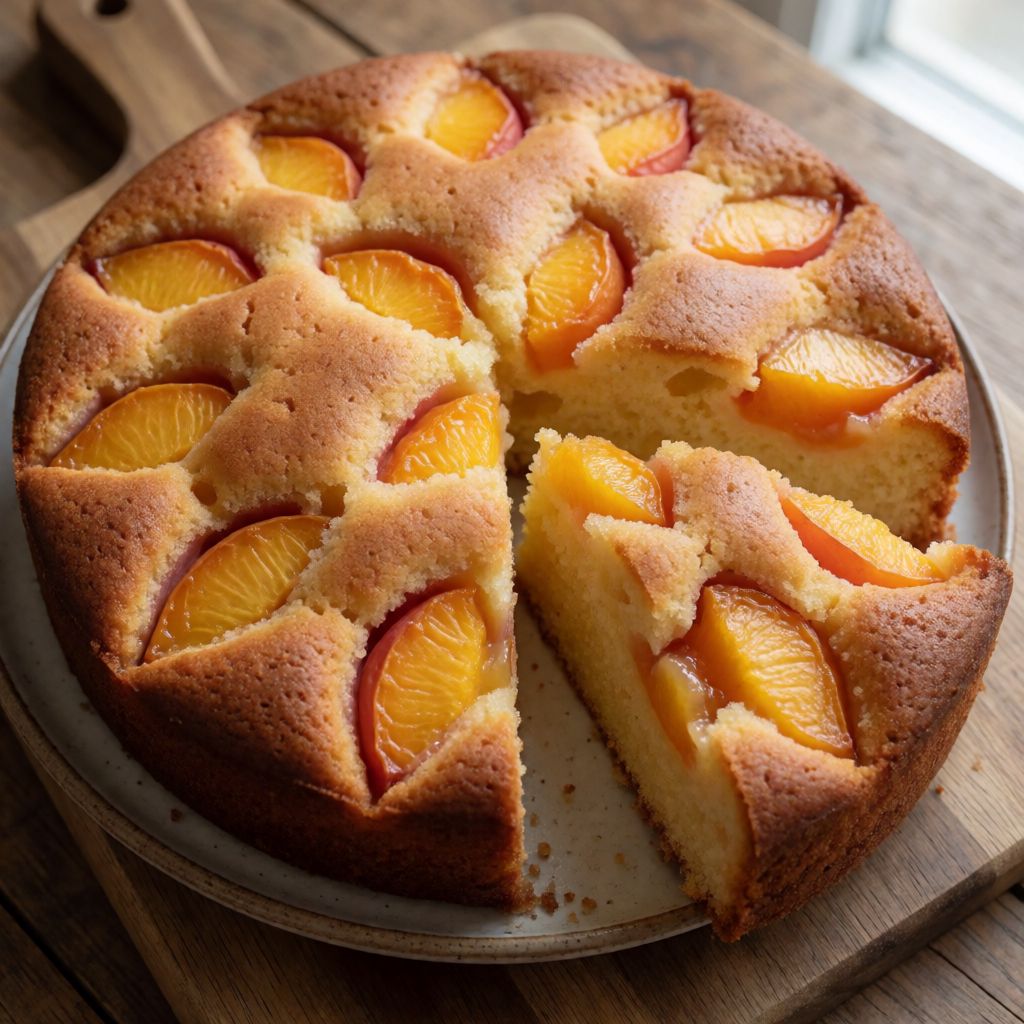
 AI photo
Eggless peach and apricot cake
A simple eggless peach and apricot cake with a light vanilla-scented batter, finished with a dusting of icing sugar.
Labels are worked out automatically from the ingredients and can be wrong. Check the packaging if it matters to you.
Ingredients
- 2 pcs Peaches
- 3-4 pcs Apricots
- 200 g Sugar
- 350 g Plain flour
- 200 ml Water
- 75 ml Vegetable oil
- 1 pcs Lemon zest
- 15 g Baking powder
- 1 tsp Vanilla extract
- Icing sugar to taste










Steps
In a large bowl, pour in the sugar, oil and water, and mix thoroughly with a wooden spoon until you get a smooth, creamy consistency.
Sift the flour and gradually fold it into the mixture, stirring constantly to avoid lumps.
Add the baking powder, vanilla extract and lemon zest, which will give the bake a lovely aroma.
Wash and peel the peaches and apricots, then cut them into thin slices or wedges.
Grease a round tin with oil and dust with flour, pour in the batter and arrange the fruit on top, pressing gently.
Bake in an oven preheated to 160°C for about 42 minutes.
42 minLet the cake cool, then transfer it to a plate and decorate with icing sugar.
What was changed
Vanillin, uncommon in British baking, was replaced with Vanilla extract.
This is a quick-bread style cake — no egg to hold it together, just flour, oil, water and baking powder doing the work, with peach and apricot slices baked into the top. Forget any idea that a cake without egg is some kind of a compromise. Egg gives richness and a close, buttery crumb; baking powder gives lift and a lighter, more open one. Different animal, not a lesser one. Lots of households have made cakes this way for centuries, not out of virtue but out of thrift — lean weeks, fasting days, rationing, or simply not having a hen handy. The economics decided the method, and the method still works.
What decides whether it comes out right: first, the batter has to be smooth before the flour goes in wrong. Mix sugar, oil and water into one loose, creamy liquid — that's the base everything clings to. Add the flour too fast, or dump it in rather than fold it, and you get flour islands sitting in wet pockets, because there's no egg here to smooth over your mistakes and bind stray lumps into the mix. Sift it, fold it in gradually, and the batter stays even.
Second, the oven has to be gentle enough that the middle sets before the top hardens and the fruit scorches. 160°C is not "medium" to the cake — at that heat the moisture in the batter drives off slowly, the crumb firms from the outside in without racing ahead of the centre, and the fruit softens and gives up its juice rather than seizing and burning at the edges. Go hotter and you'll get a cake with a dark skin over a wet middle — that's the batter not having had time to set before the surface sealed itself.
On the flour and sugar: 350g flour to 200g sugar is a fairly lean ratio, and that's deliberate — this isn't meant to be a dessert so sweet it needs nothing else; the icing sugar at the end tops it up. Plain flour is right because there's nothing here that needs the extra gluten strength of a bread flour, and no eggs to toughen against. If you only have self-raising flour in the cupboard, cut the baking powder back — you'd be doubling the lift and the middle could rise too fast and then collapse before it sets.
The oil and water stand in for what butter and egg usually do together — oil for tenderness (it coats the flour and keeps gluten strands short, so the crumb stays soft rather than chewy), water for the steam that helps the baking powder do its job. The criterion for the oil is simple: anything with no smell of its own, so the lemon and the fruit stay the flavour you taste, not a fight with olive oil or coconut. Sunflower or rapeseed oil, both common enough in a British kitchen, do the job without comment.
Baking powder is the actual architect of this cake — it is a double-acting leavener, meaning part of it reacts with moisture as soon as you mix it (that's the first small rise you'd see if you left the batter standing), and the rest reacts with heat once it's in the oven, giving the proper lift. This is the whole answer to "how does an eggless cake even hold its shape" — it doesn't rely on trapped air whipped into egg, it relies on gas released on a schedule. Don't substitute bicarbonate of soda straight across; it needs an acid to react against and baking powder already carries its own.
Lemon zest isn't decoration, it's there to cut through 200g of sugar with something sharp before it tastes flat and one-note — use the zest, not the juice, because you want the aromatic oil in the skin, not the acidity. No lemon, use orange zest; the job is the same, just a rounder version of it.
On the fruit: peaches and apricots are chosen because their flesh holds a slice-shape under heat and doesn't flood the batter the way a soft plum or an overripe nectarine would. Pressing the slices gently into the batter rather than laying them loose matters too — it seats them so the juice that does escape bakes into the crumb directly under it instead of pooling and making a soggy ring. If stone fruit's out of season, a firm apple or pear, thinly sliced, behaves the same way; a berry won't — too much water, too fast.
Doneness here isn't really about the clock. 42 minutes is where to start checking, not where to stop and open the door. Look for the cake pulling slightly away from the tin's edge, and press the centre lightly — it should spring back rather than leave a dent. The fruit at the rim should look slightly caramelised, not blackened.
And then — don't rush it onto a plate. Let it cool in the tin. Without egg protein holding the crumb rigid, a warm eggless cake is softer and more fragile than you'd expect; move it too soon and it can crack or slump. Patience here isn't a virtue, it's an ingredient you forgot to list but need anyway. The icing sugar at the end is just the finish — sift it on once the cake is fully cool, or it melts into a wet patch instead of sitting as a dusting.