
 AI photo
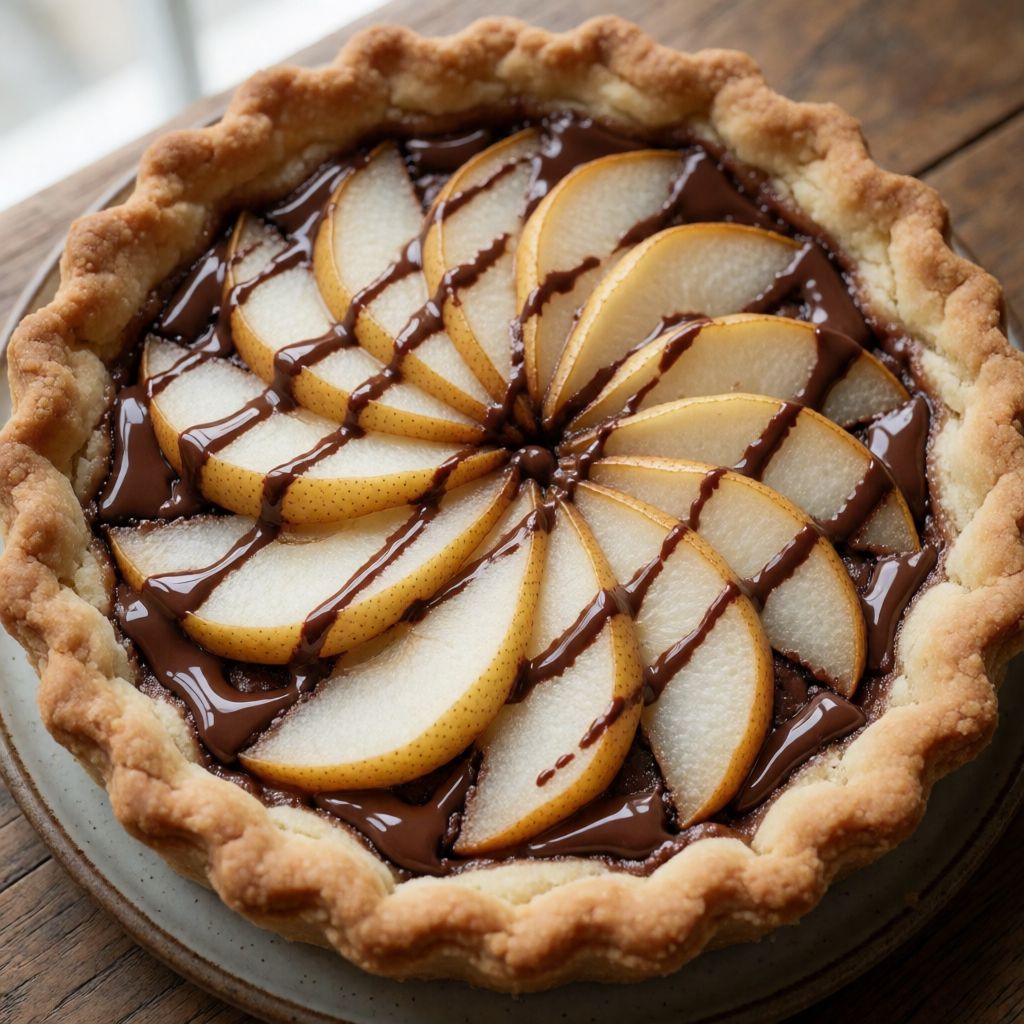
Pear and Chocolate Crostata
A sweet pastry tart filled with chocolate cream and fanned slices of pear.
Labels are worked out automatically from the ingredients and can be wrong. Check the packaging if it matters to you.
Ingredients
- 350 g Plain flour
- 4 pcs Egg yolk
- 120 g Caster sugar
- 150 g Butter
- 1 tsp Vanilla extract
- 450 g Pear
- 160 g Dark chocolate
- 200 ml Double cream
- 50 g Icing sugar
- 2 pcs Eggs
- Caster sugar to taste









Steps
Tip the flour onto the work surface, add the sugar, butter, egg yolks and vanilla extract. Knead by hand and form into a ball.
Wrap the dough in cling film and leave to rest in the fridge.
35 minPour the cream into a small saucepan, add the icing sugar and bring to the boil, stirring.
Remove from the heat, add the chopped chocolate and stir until melted into a smooth cream.
Pour the cream into a bowl and let it cool. Add the eggs and mix until smooth.
Roll out the dough with a rolling pin to a thickness of about 4-5 mm.
Transfer the dough to a baking tin greased with butter and dusted with flour. Prick the surface with a fork.
Spread over the chocolate cream and arrange the sliced pears in a fan pattern.
Sprinkle the surface with sugar and bake at 170°C in a fan (convection) oven.
40 minLet the crostata cool, cut into slices and serve.
What was changed
Vanilla extract replaces vanillin with vanilla extract, since vanillin powder is uncommon in British shops.
A crostata is Italy's answer to the tart, but it's built on different logic than the French one — this is pasta frolla, a short crust made by rubbing fat, sugar and yolks together until they just come to a ball, not by the cold-butter-in-flour method you might know from British shortcrust. The yolks are the point here: no white, no water, so the gluten in the flour never gets the moisture it needs to develop long strands. That's why the dough is sturdy, almost biscuity, rather than flaky — it's meant to be a plate, not a pastry.
What decides whether this works is restraint at two points: the resting of the dough and the baking of the filling. Thirty-five minutes in the fridge isn't a suggestion for tidiness — the butter needs to firm back up after the warmth of your hands, or it will slump and shrink when it hits the oven and you'll get a crust climbing down the sides instead of holding its wall. Some say you can skip the rest if you're quick. No — speed with your hands doesn't change the state of the butter; only cold does.
The filling is a baked chocolate custard under pear, not a ganache sitting on top of a cooked case. You pour cream, melt chocolate into it, then — crucially — let it cool before adding whole eggs. Eggs into hot cream scramble; eggs into warm cream thicken gently in the oven instead. The pears fan over this custard raw, so they cook exactly as much as the tart does — no more, no less — releasing a little juice that the chocolate custard is there to absorb and flavour.
Flour: plain, nothing stronger. Bread flour's extra gluten fights you here — you want a crust that breaks cleanly under a fork, not one with any chew. 350 g gives you enough to line a standard tart tin and still patch the edges without stretching it thin and tearing.
Egg yolks, four of them, no white: this is the real difference between pasta frolla and British shortcrust. Whites bring protein that toughens on baking: fine in a pie that needs to hold gravy, wrong in a tart that should snap. If you're short an egg, a splash of cold milk will bind the dough, but the crust will be a shade less rich and a shade more pastry-like — acceptable, not the same.
Butter, 150 g, cold from the fridge when you start: it's doing two jobs, flavour and waterproofing — coating flour particles so gluten strands stay short. Don't swap in a spreadable "baking" margarine; the water content in those is higher and the dough will be slack and hard to roll. If you need dairy-free, a firm block margarine works, but expect a less clean break.
Pears, 450 g: choose ones that are ripe but still hold their shape when sliced — a pear that's gone soft and grainy will collapse into the custard and you'll lose the fan pattern entirely. Comice or Conference, firm-ripe, work well. Apples are the honest substitute if pears are poor that week; they just want a touch more sugar, being sharper.
Dark chocolate, 160 g, something you'd eat off the bar — 60-70% cocoa is the useful range. Much lower and the custard turns sweet and flat; much higher and it seizes more readily when you melt it into the hot cream and tastes bitter against the pear. Don't reach for chocolate chips sold for baking — many carry stabilisers meant to keep their shape in cookies, which work against you here when you want it to melt smoothly into cream.
Double cream, 200 ml, for its fat content: that's what keeps the custard silky rather than watery once it's baked and cooled. Single cream will split more readily when you bring it to the boil and risks a grainy set.
On the tin: a loose-bottomed fluted tart tin is the right tool, but if your kitchen runs to an ordinary flat with no specialist bakeware, a well-greased, flour-dusted sandwich tin will do — you just lose the fluted edge and will need a palette knife, patience, and a bit of luck to turn it out cleanly once it's cooled. That cooling before you cut is not optional — slice it warm and the chocolate custard runs instead of holding a clean edge; give it the time to firm up properly and your slices will stand on the plate rather than slump on it.