
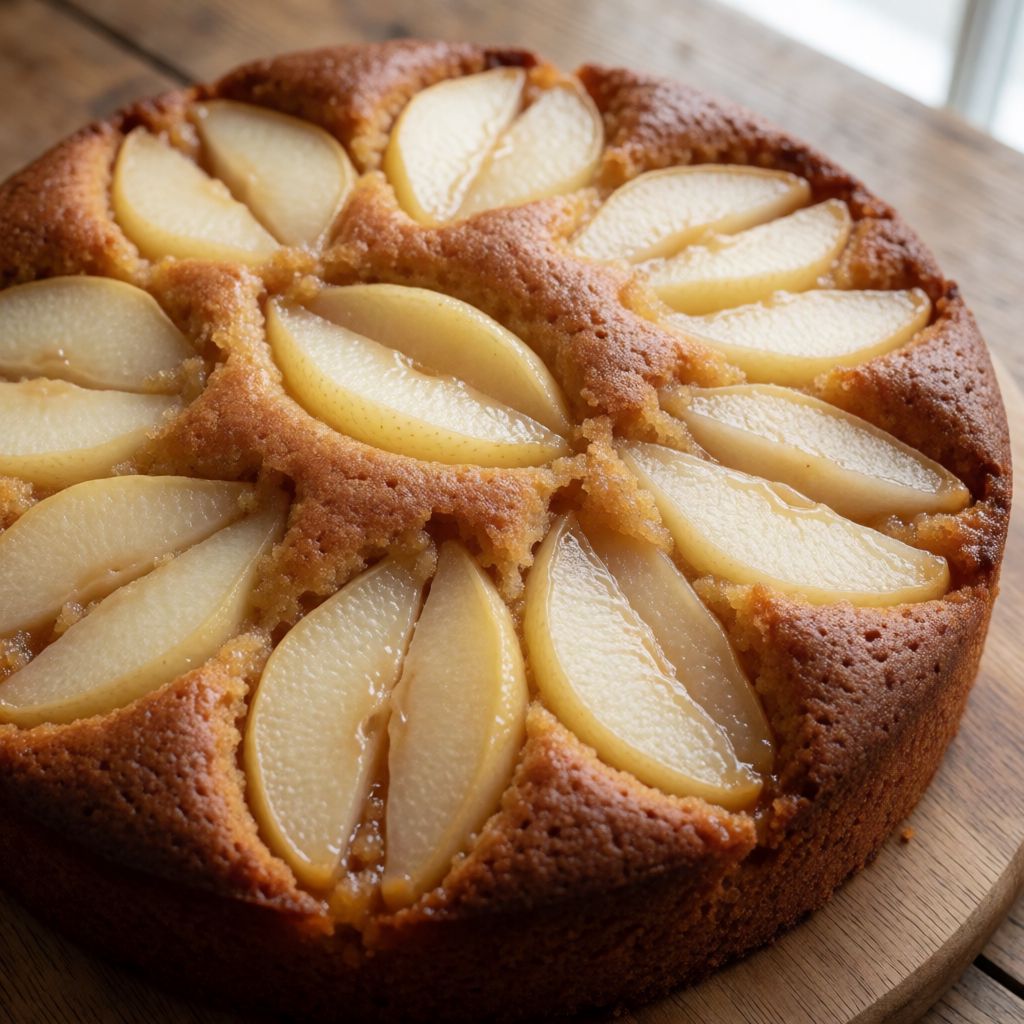
 AI photo
Pear and Honey Cake
A soft sponge cake with pears, walnuts and raisins, finished with a brush of honey.
Labels are worked out automatically from the ingredients and can be wrong. Check the packaging if it matters to you.
Ingredients
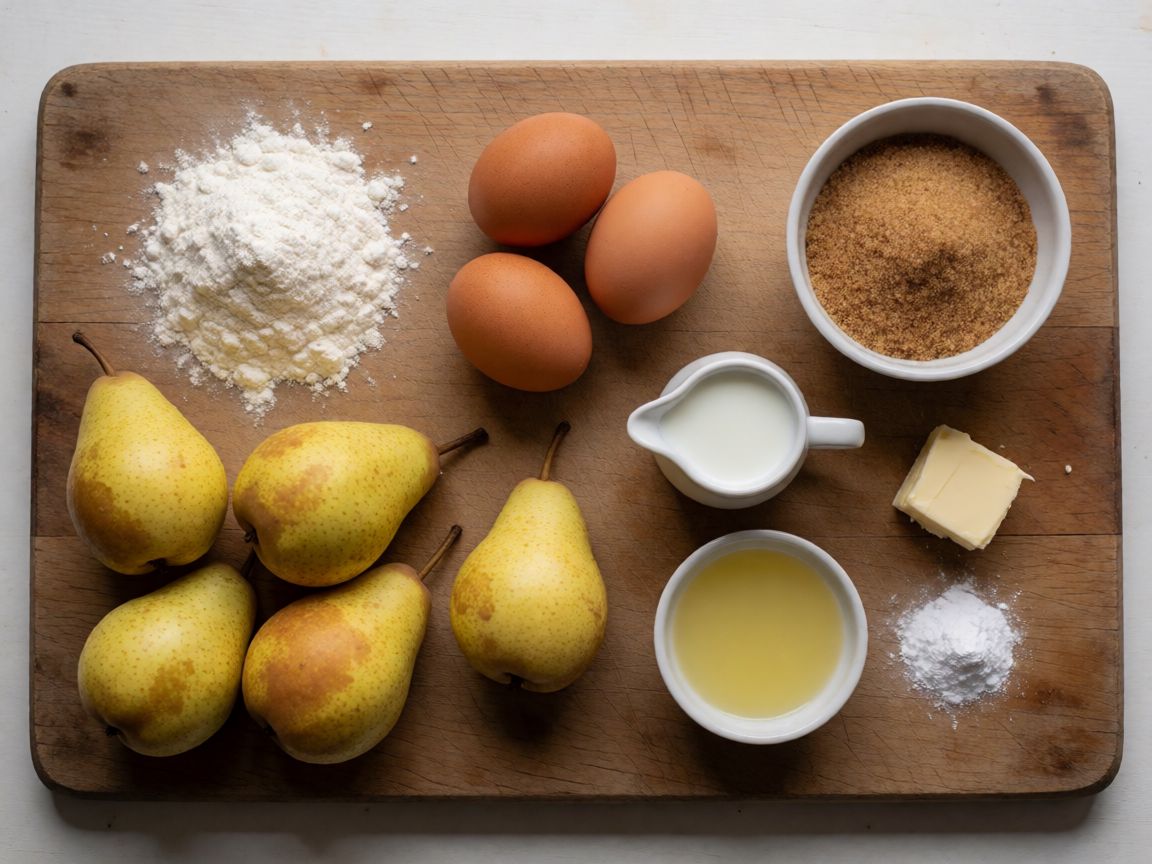
- 180 g Plain flour
- 3 pcs Eggs
- 150 g Brown sugar
- 4 pcs Pears
- 125 g Butter
- 60 ml Milk
- 2 tbsp Lemon juice
- 1 tsp Baking powder
- 80 g Walnuts
- 80 g Raisins
- 1 tsp Cinnamon
- 1 tbsp Honey





Steps
Wash the pears, peel and remove the cores. Slice one thinly, cut the rest into small cubes.
Mix the chopped pears with the lemon juice and leave to macerate.
Preheat the oven to 180°C, top and bottom heat, no fan.
Beat the egg yolks with the brown sugar until light, pale yellow and fluffy.
Separately, whisk the egg whites into a thick foam.
Add the butter to the yolk mixture and beat well until smooth and creamy.
Add the sifted flour and baking powder, mix until smooth.
Pour in the milk in small amounts, stirring continuously.
Add the cinnamon, raisins, walnuts, beaten egg whites and pear cubes. Fold in gently.
Pour the batter into a tin greased with butter and dusted with flour, arrange the pear slices in a fan on top.
Bake in the oven preheated to 180°C, no fan.
70 minWhile still warm, brush the cake with the cooled honey.
This is a wet, heavy cake that uses pears the way some cakes use carrots — as moisture and structure, not decoration. The batter is really two batters forced into one: a yolk-sugar-butter mix built for richness, and whipped whites folded in at the end for lift. Everything after that is about not losing that lift before the oven sets it.
What decides whether it works is the egg whites and the cube-cut pears. Whites whipped to a "thick foam" — not stiff, dry peaks, just a foam that holds its shape when you tip the bowl — fold in without deflating. Dry, overbeaten whites turn to lumps of meringue scattered through a dense cake; undermolested whites collapse to nothing. And the pear cubes need to be small enough to cook through in 70 minutes without turning the crumb around them soggy — think dice, not chunks.
The fanned pear slices on top are not just for show. A cake this wet, with fruit baked into the middle, struggles to brown nicely on its own — the surface stays pale and a bit damp-looking. The thin slices on top give you something that actually caramelises, something with edges, while the honey brushed on at the end glazes it and seals in a bit of moisture so the top doesn't dry out as it cools.
Some say a cake like this needs a stand mixer and three bowls going at once. No — you need one bowl for whites, one for everything else, and a bit of arm patience. A hand whisk does the whites fine; it just takes longer and you'll know when to stop because your arm tells you first.
Pears: go for ones that are ripe but still have some bite — a pear that's gone soft and grainy will turn to mush in the batter and bleed too much liquid, making the crumb gummy around the fruit. If your pears are a bit underripe and firm, that's actually safer here than overripe ones; firm fruit holds its dice shape through baking. The lemon juice on the chopped pears isn't just to stop browning — it's doing real work slowing oxidation while they sit, and it also cuts slightly through the sweetness of sugar, honey and raisins, so don't skip it even if the pears look pale enough already. No pears to hand — apple works as a straight swap, same dice, same macerate.
Eggs: separated for a reason already covered — the yolks go into the rich base, the whites give the rise this cake needs since there's only 1 tsp baking powder doing chemical lift. Three eggs for 180 g flour is a lot of egg relative to flour, which is why the crumb stays moist rather than light and airy like a sponge.
Butter: 125 g, melted into the yolk mix rather than creamed with sugar first — this is not a creaming-method cake, so don't expect the pale fluffy texture of a Victoria sponge. Use a butter with no strong cultured tang if you want the honey and cinnamon to come through clean; unsalted is safer since there's no other salt mentioned.
Brown sugar: brings molasses notes that play well with cinnamon and honey — white sugar would work structurally but you'd lose that slight caramel depth. If it's all you've got, add a spoon of golden syrup to the batter to make up the difference.
Walnuts and raisins: textural contrast against the soft pear and crumb — walnuts for crunch, raisins for concentrated sweetness and chew. Toast the walnuts lightly first if you want more flavour from them; raw walnuts baked inside a wet cake can taste a bit flat. No walnuts, use pecans — similar fat content, similar bitterness-to-sweetness balance, so the swap doesn't throw off the structure.
Honey for the glaze: brushed on while the cake is still warm, not hot and not cold. Warm cake has pores still slightly open so the honey sinks in a little rather than sitting as a sticky skin on top; a cold cake just gets a shiny coat that can turn tacky rather than absorbed. Any runny honey works — the flavour difference between a supermarket clear honey and something more floral matters here more than in most recipes, since it's the one unmasked flavour on the cake's surface.
On the oven: 180°C, no fan, top and bottom heat is specified for a reason — fan ovens push air across the surface and can crust the top before the inside sets, especially with raw fruit baked through the middle adding moisture. If your oven only does fan, drop the temperature by about 20°C and keep watching rather than trusting the clock; 70 minutes is the floor here, not the target. Test it the way you'd test any wet fruit cake — a skewer into the centre should come out without wet batter clinging to it, though a little moisture from the pear itself is normal and not a fail.