
 AI photo
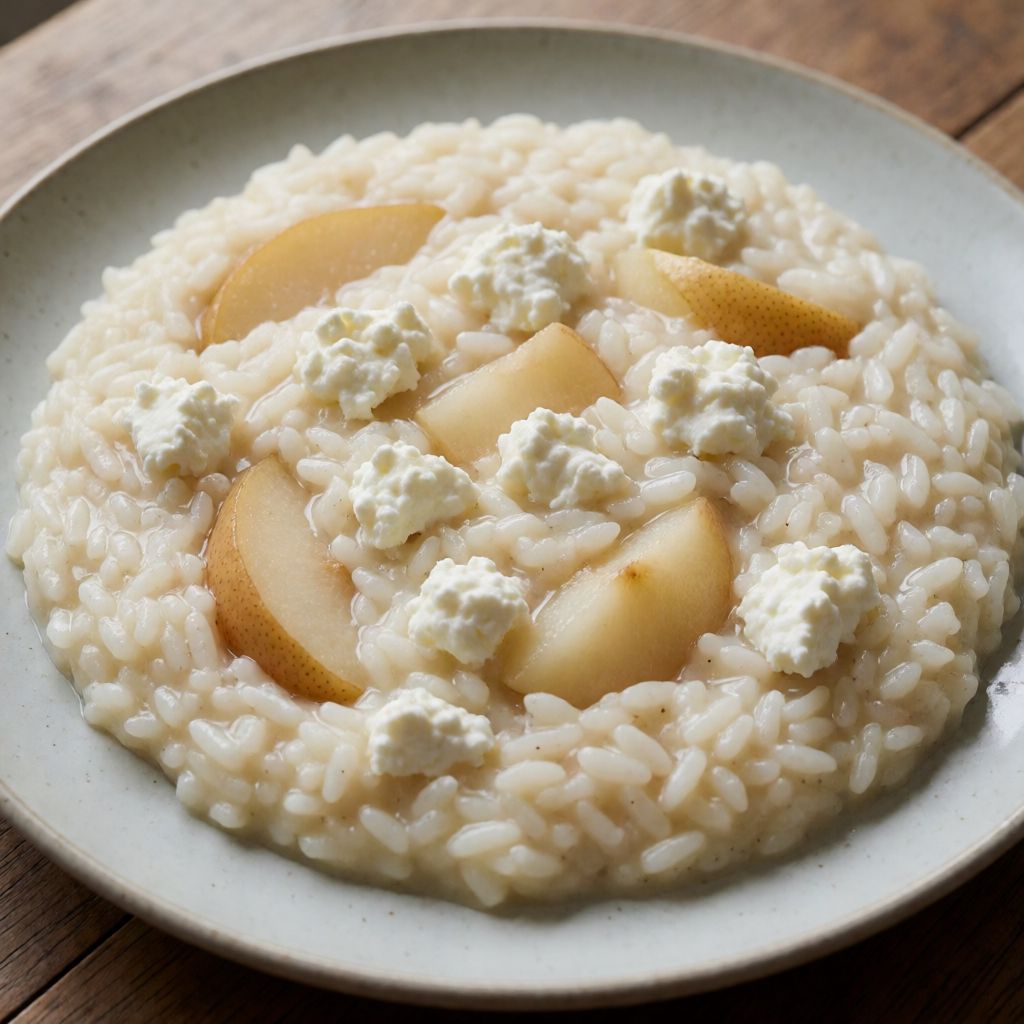
Pear Risotto with Goat's Cheese
A creamy risotto finished with pear and goat's cheese, lifted with a splash of rosé wine and sage.
Labels are worked out automatically from the ingredients and can be wrong. Check the packaging if it matters to you.
Ingredients
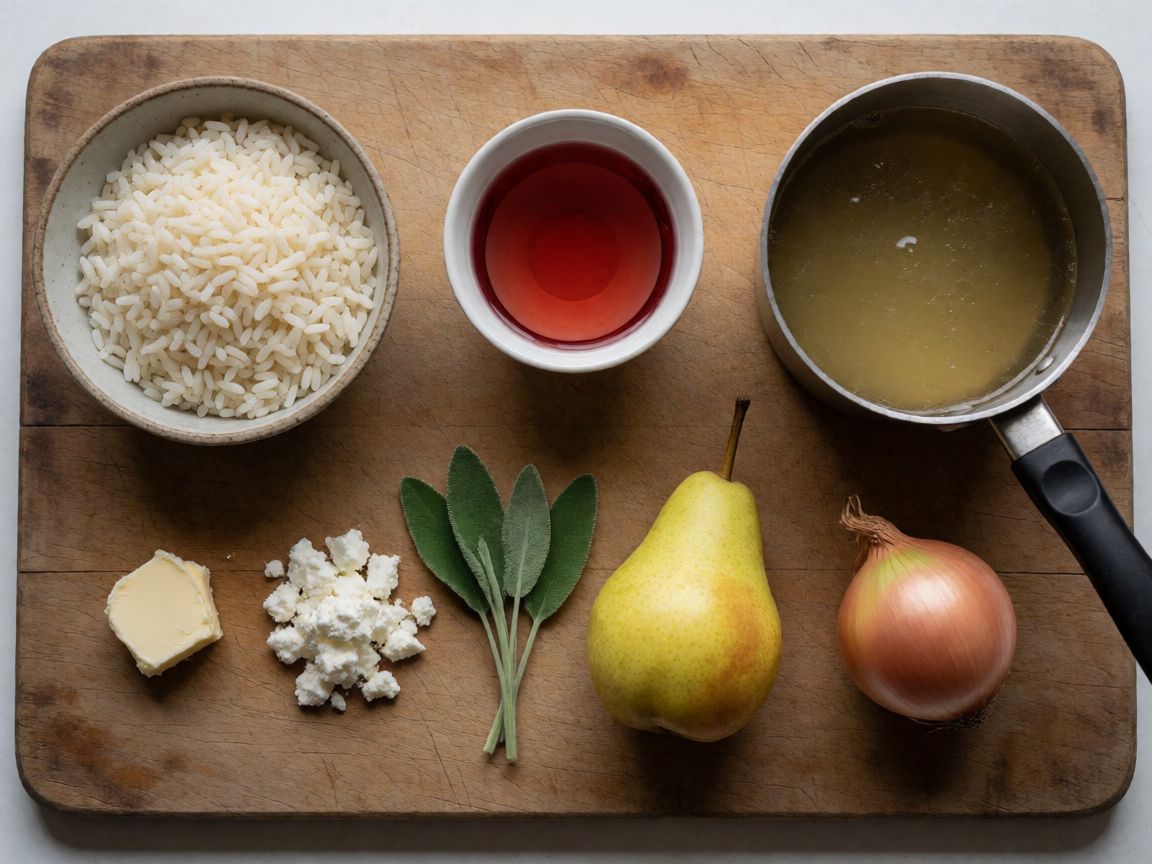
- 350 g Risotto rice
- 1 tbsp Olive oil
- 20 g Butter
- 50 g Aged goat's cheese
- Salt to taste
- Black pepper to taste
- 1 pcs Pear
- Sage to taste
- 120 ml Rosé wine
- 1 l Vegetable stock
- 1 pcs Onion
- Parmesan to taste












Steps
Fry the onion in olive oil in a pan.
Add the rice and toast it, then pour in the rosé wine and let it evaporate completely.
Start cooking the risotto, gradually adding vegetable stock as needed.
10 minAfter 10 minutes, add the pear, cut into small cubes.
Season with salt and black pepper to taste.
Remove from the heat and stir in the goat's cheese and butter until smooth, then sprinkle with a pinch of sage.
Serve sprinkled with Parmesan.
Risotto is not a recipe, it's a method — rice releasing starch slowly into liquid until the whole pot turns creamy on its own, no cream required. Here that method gets pointed at a sweet-savoury pairing: pear's sugar and juice against a cheese sharp enough to argue back. The dish lives or dies on two things: whether the rice ends up creamy-but-separate (not porridge, not stubborn pellets), and whether the pear keeps some bite instead of dissolving into mush.
Some say you must stir risotto constantly, arm aching, like it's a ritual of devotion. No — you need to stir *enough* to keep starch in contact with liquid and to stop a skin forming at the bottom of the pan, but a wide domestic pan and occasional attention does the job fine. A kazan-sized pot on a gas ring in a flat is wasted effort; this is a shallow, wide-pan job, and your widest frying pan with a lid substitute (a plate does nicely) is the right tool, not a betrayal of anything.
The wine step matters more than it looks. You toast the rice first so each grain gets a thin seal of fat — this is what stops it collapsing into starch soup later. Then the wine goes in and must fully cook off, not just "mostly" — if it doesn't, you're left with a raw alcohol sharpness sitting under the stock instead of the fruity acidity rosé is there for. Listen for it: the sizzle changes, the smell loses that sharp vapour edge.
Risotto rice — this is not a flavour choice, it's a starch-ratio choice. You need a short, fat grain (Arborio is the one UK supermarkets stock, Carnaroli if you find it and want more forgiveness against overcooking) because it carries a high-amylopectin starch that leaches into the stock and thickens it into sauce around the grain, while the grain's core stays textured. Long-grain rice won't do this — it just gets wet and falls apart. There's no real substitute here; this is the one ingredient that is the mechanism.
The stock is your actual seasoning base, so "vegetable stock" means something with real flavour already in it, not hot water with a cube dissolved reluctantly. Keep it hot in a separate pan on the stove — adding cold stock to hot rice shocks the starch release and stalls the whole process, and you'll be standing there twice as long. Ladle it in, let it mostly disappear, add more; that "mostly disappear" moment, not a clock, is what tells you to add the next ladle.
The onion is there for sweetness and base, finely chopped so it melts into background rather than announcing itself as a vegetable in the finished dish — you're not after onion rings in your risotto. Olive oil plus butter at the start and butter again at the end is doing two different jobs: the oil can take the initial heat of frying the onion without burning, the butter at the end is stirred in off the heat purely for gloss and richness, melting into the starch slurry rather than frying in it.
The pear should be ripe enough to have sugar but firm enough to hold a cube shape — a soft, bruised pear will just disintegrate in ten minutes and you'll lose the contrast that's the whole point of putting fruit in a savoury dish. If pears are poor, a firm apple works on the same logic (sugar plus structure), though the flavour obviously shifts.
Aged goat's cheese is chosen for sharpness, not creaminess — a young, mild goat's cheese won't push back against the pear's sweetness the way this dish needs. If you can't get it, a hard, tangy cheese like a mature Pecorino gets you closer than a soft fresh goat's cheese would. It goes in off the heat because direct heat on a good cheese just squeezes out its fat and leaves grain — you want it melting into warmth, not cooking.
Rosé wine specifically because its acidity is lighter than a dry white's and its faint fruitiness doesn't fight the pear — a full dry white works as a substitute, but skip anything sweet or heavily oaked, which will throw the balance toward dessert.
Sage at the very end, barely — it's there as a background herb note against the sweetness, not a flavour you should be able to name on the first bite. And finally: don't rush this. Risotto punishes impatience by turning either gluey (too much stock dumped in at once, rice never gets the chance to absorb and release in rhythm) or crunchy (not enough time, not enough liquid contact). Twenty-five minutes isn't a suggestion you can shortcut by cranking the heat — the starch needs the time, not the fire.