
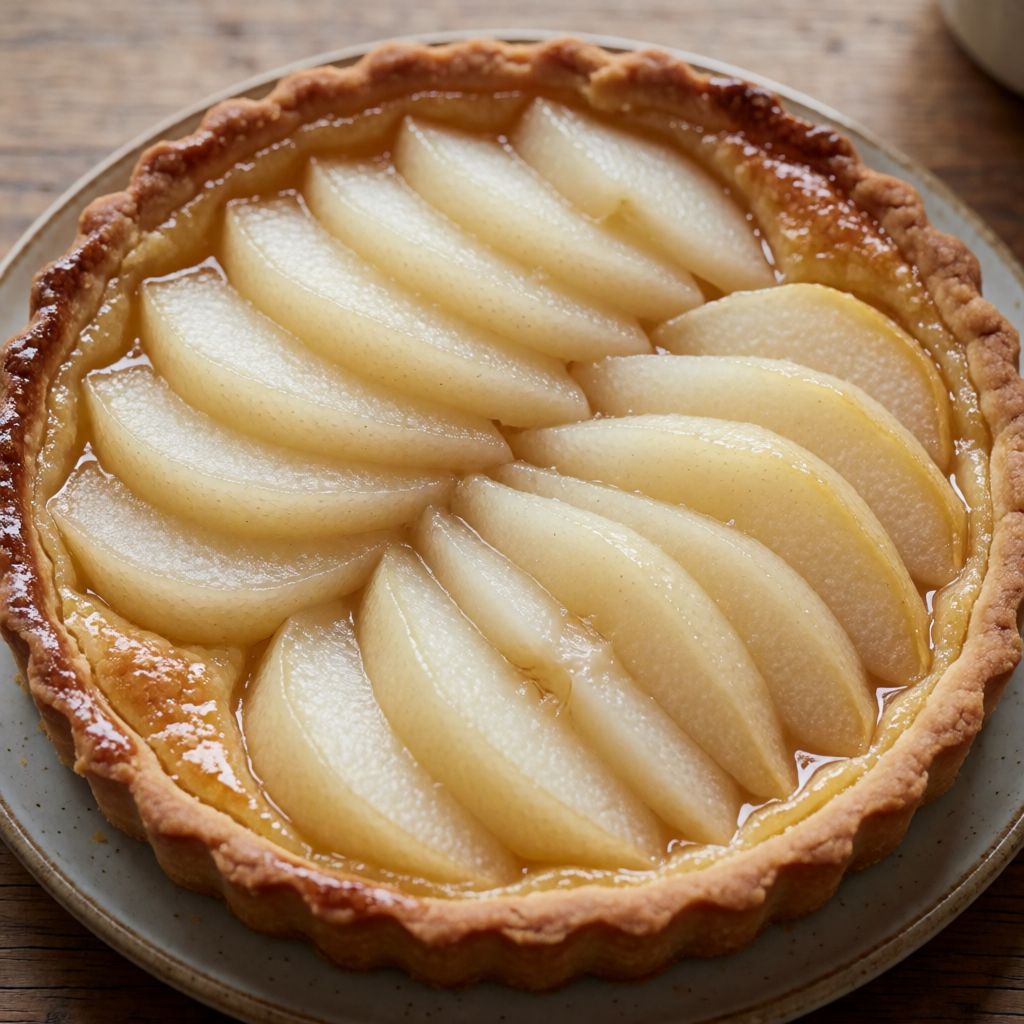
 AI photo
Pear Tart
A buttery pastry tart filled with almond cream and fresh pear slices over a layer of dark chocolate.
Labels are worked out automatically from the ingredients and can be wrong. Check the packaging if it matters to you.
Ingredients
- 240 g Plain flour
- 50 g Icing sugar
- 1 pinch Salt a pinch
- 120 g Butter cold
- 1 pcs Eggs beaten
- Water cold, as needed
- 100 g Butter room temperature
- 75 g Caster sugar
- 100 g Ground almonds
- 2 pcs Eggs
- 175 g Pear
- 50 g Dark chocolate chopped







Steps
Mix the plain flour, icing sugar, salt and butter in a food processor in short pulses until combined.
Gather the dough into a bowl, adding the beaten egg and a little cold water if needed.
Roll out the dough between two sheets of baking paper.
Chill the dough in the fridge for 30 minutes.
30 minButter a 24 cm tart tin and line it with the dough.
Press the dough gently into the edges and trim to get a neat border.
Prick the base with a fork and cover the dough with a sheet of baking paper.
Fill the base with dried beans or ceramic baking beads and blind bake in a fan oven preheated to 175°C for about 15 minutes.
15 minBeat the butter with the sugar until light and fluffy.
Mix in the ground almonds and eggs.
Sprinkle the chopped chocolate over the tart base.
Spread the almond cream over the chocolate.
Arrange the pear slices in a neat pattern.
Bake the tart in a fan oven preheated to 175°C for 30-35 minutes.
32 min
A pear tart is really two doughs doing two different jobs, stacked on top of each other, and the whole thing stands or falls on whether you keep them separate. Underneath: a sweet shortcrust, pâte sucrée if you want the French, but there's no magic in the name — it's flour, cold butter, sugar, egg, held together with the least water you can get away with. Over the top: frangipane, which is just butter, sugar, ground almonds and egg beaten into a thick paste. One is dry and crisp by design. One is wet and bakes into a soft, barely-set custard. Put them together raw and the wet one soaks straight into the dry one — that's the "soggy bottom" everyone's so frightened of, and it isn't bad luck, it's physics. The fix is blind-baking the case first, so it's already set and sealed before the frangipane ever touches it.
The chocolate scattered on the base before the almond cream goes in isn't decoration, it's a second line of defence — it melts and forms a thin waterproof layer between pastry and frangipane, so even where the blind-bake missed a pinhole, the base stays dry. Small amount, real job.
Flour is just flour here — plain, nothing clever, because you want gluten development low and a processor pulsing in short bursts keeps it that way. Pulse too long, or use warm hands instead of a machine, and you build gluten you don't want; the pastry turns tough and shrinks hard in the tin instead of holding its shape. Icing sugar rather than caster dissolves without grit and keeps the dough tender — caster would work at a pinch, you'd just feel it on the tongue. The pinch of salt isn't for salinity, it's for flavour contrast; leave it out and the tart tastes flatter, not sweeter.
Butter has to be cold, cut in pieces, and left in visible flecks when you stop pulsing — that's not fussiness, that's the whole mechanism of shortcrust. Those flecks melt in the oven and the water in them turns to steam, pushing tiny gaps through the dough. No cold fat, no steam, no shatter — you'd get a biscuit instead of pastry. The beaten egg and "a little cold water if needed" is the minimum-liquid rule: just enough to bring the crumbs together, because excess water is what develops gluten and toughens the case later. Some say you must use ice water from the fridge specifically — no, because what matters is that the fat stays solid when it meets the liquid, cold tap water does the same job in most British kitchens.
The 30-minute chill isn't about the dough getting cold for its own sake — it's about the gluten relaxing and the butter firming back up after you've handled it, so the pastry doesn't slump or shrink when it hits the heat. Skip it and you'll watch your neat border slide down the sides in the oven. Blind baking with beans or ceramic beads weighs the base down so steam doesn't lift it into a dome — if you don't own proper baking beads, dried chickpeas or rice from the cupboard do exactly the same weighting job, they just don't cook afterwards.
For the frangipane, butter at room temperature is non-negotiable for the opposite reason pastry butter is cold: here you want it soft enough to trap air when beaten with sugar, which is where all the lightness in the baked cream comes from — there's no baking powder to rescue you if you skip this stage. Ground almonds give body and that faint bitter-sweet backbone; if you're out, or need it nut-free, ground sunflower seeds get you closer than you'd expect, though the flavour shifts. Caster sugar rather than icing sugar here because you're creaming, not dissolving — icing sugar would sink.
Pear at 175 g is roughly one decent pear once peeled and cored — choose one that's ripe but still holds a knife-edge when sliced; too soft and the slices collapse into the cream rather than sitting on top of it, too hard and they won't cook through before the frangipane sets and the top catches colour. Dark chocolate works better than milk here precisely because it's more bitter — milk chocolate would just make the whole tart sweeter, which it doesn't need. A fan oven at 175°C runs that way for both bakes because even, steady heat all round is what sets a custard-like frangipane gently rather than scorching its surface before the centre's cooked — the 30-35 minute window at the end is your lower bound; the real tell is a frangipane that's puffed and no longer wobbles in the middle, and pear slices that have gone soft enough to yield to a fork but still show their shape. Let it cool before you cut it — the frangipane is still setting as it comes down from the oven, and a warm slice will just slump on the plate.