
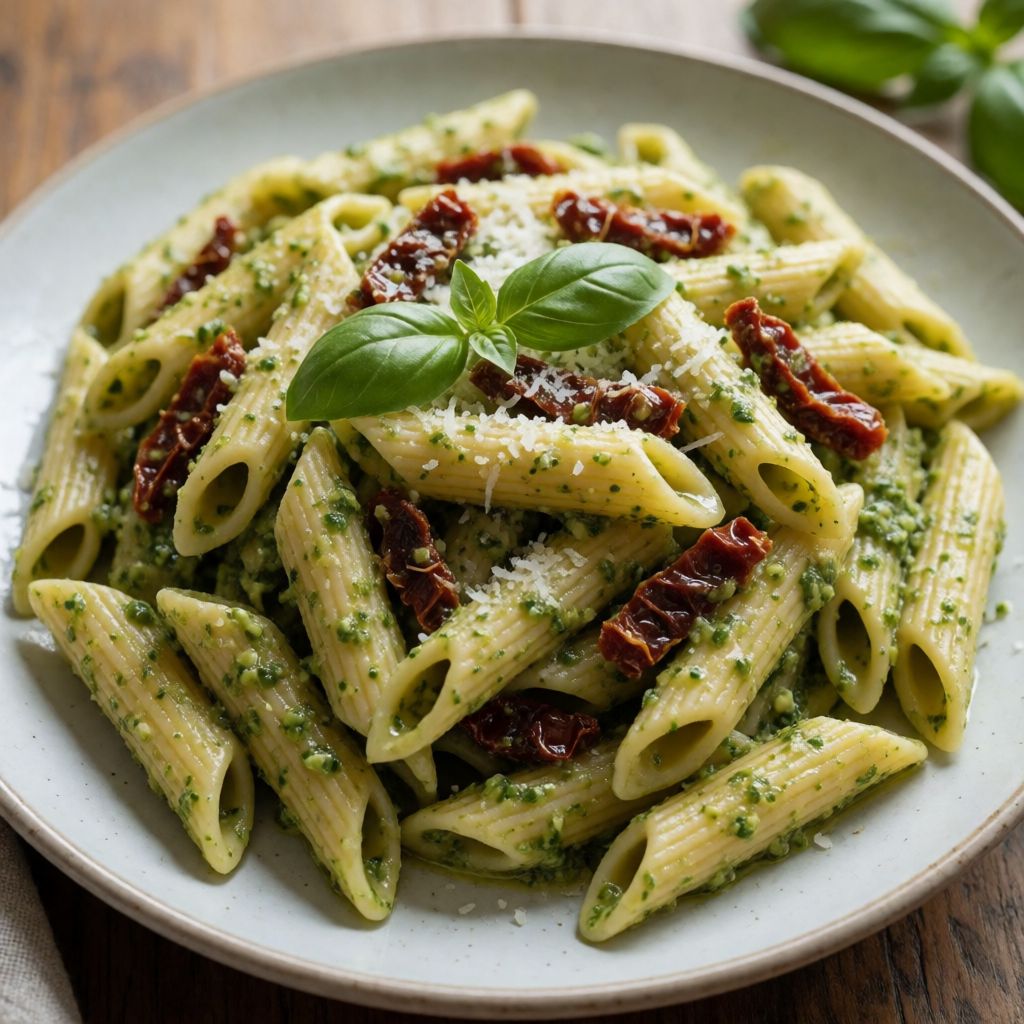
 AI photo
Penne with Basil Pesto and Sun-Dried Tomatoes
A quick pasta dish with homemade basil pesto, toasted almonds and sun-dried tomatoes.
Labels are worked out automatically from the ingredients and can be wrong. Check the packaging if it matters to you.
Ingredients
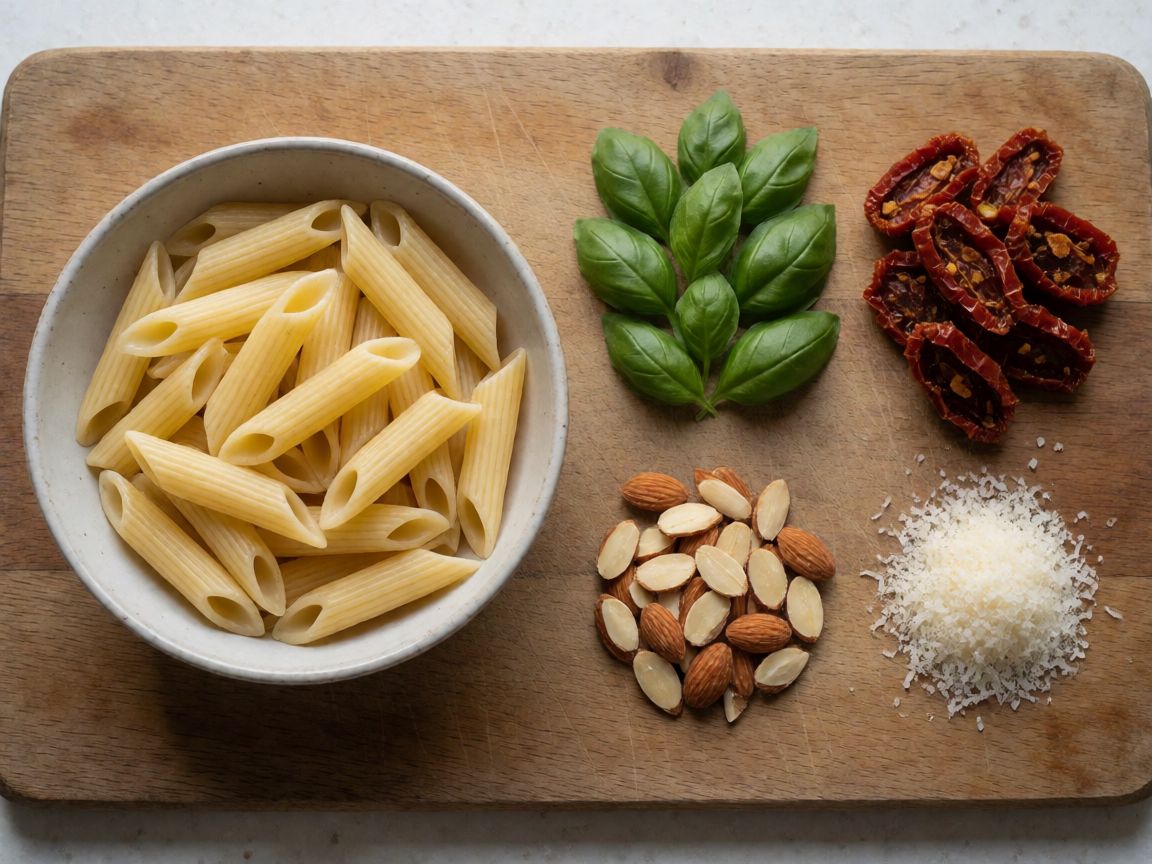
- 400 g Penne
- 10 pcs Basil leaves
- Salt to taste
- 15 pcs Sun-dried tomatoes
- 40 g Almonds toasted
- 2 tbsp Pecorino Romano grated
- Olive oil to taste
- Black pepper ground








Steps
Cook the penne in a large pot of salted boiling water.
Blend the basil with a pinch of salt in a food processor.
Add the sun-dried tomatoes, toasted almonds and grated Pecorino Romano.
Pour in the olive oil in a thin stream and blend until smooth.
Drain the pasta al dente and transfer it to a pan with the prepared pesto.
Add ground black pepper, sprinkle with grated Pecorino Romano and toss to combine.
Serve immediately.
This is not a sauce you cook — it's a paste you make while the water comes to the boil, and the hot pasta is what finishes it. Everything happens raw in the blender: basil, almonds, sun-dried tomato, cheese, oil. The only heat the sauce ever sees is borrowed, for thirty seconds, from the pasta itself. That's the whole logic of pesto — it's a dish built around not having a stove free, or not wanting one.
What decides whether it works is restraint at two points. First: how far you blend the basil. Go too long and the blade heats the leaf, the chlorophyll breaks down, and green turns to khaki — bitter, not fresh. Second: how much pasta water goes back in with the penne. The pesto out of the processor is a thick, almost dry paste. Without a splash of the starchy cooking water, it sits on the pasta like glue instead of coating it like a varnish. That water is the actual emulsifier here, not the oil.
Some say pesto needs a marble mortar and a wooden pestle, that a food processor 'bruises' the basil and ruins the flavour. No — a blade cuts clean if you don't run it too long; a worn pestle can bruise just as badly if you're heavy-handed. What actually matters is heat, not the tool. A food processor in a flat is fine. Just don't let it run until the bowl feels warm.
Basil: go for leaves, not stems — stems are fibrous and bitter, and a food processor won't break them down properly, you'll just taste shredded wood. Ten leaves for four people sounds stingy until you remember this isn't a salad; basil here is seasoning, not bulk. If your basil's gone a bit sad in its supermarket bag, don't throw it out, just blend it harder with the salt first — the salt draws moisture out and helps it break down smoothly rather than mulch unevenly.
Almonds, toasted: raw almonds taste of almost nothing — a flat, waxy sweetness. Toasting is what gives them smell. You're waiting for them to turn pale gold and for the kitchen to smell faintly of marzipan; that's the oil in the nut finally cooperating. A dry frying pan on the hob does this in a few minutes if you don't own a toaster oven — just don't walk away, almonds go from golden to burnt in the time it takes to answer the phone. No almonds in the house? Any other oily nut works on the same principle — walnuts, cashews, even pine nuts if you've got the budget for them. The point isn't the nut, it's the fat and the crunch it brings to a sauce that's otherwise just leaf and oil.
Sun-dried tomatoes: these are doing the savoury, salty, slightly sweet work that garlic or anchovy would do in other pesto traditions. Buy them oil-packed if you can — dry ones are tougher and need soaking first, or they'll jam the blade instead of blending. Fifteen pieces for four portions is a generous hand; if yours are very salty, taste before you add more salt elsewhere, because the dish is easy to oversalt twice without noticing.
Pecorino Romano: a hard sheep's cheese, sharper and saltier than Parmesan. That saltiness is the point — it's standing in for some of the salt you'd otherwise add by hand. If you only have Parmesan, use it, but taste your salt levels again at the end, Parmesan is milder and you may need a pinch more. Grated fine, not grated like cheddar for a sandwich — fine grating means it melts into the warm pasta instead of sitting on top in clumps.
Olive oil: here it's not a neutral cooking fat, it's a flavour in its own right, so don't reach for the cheapest bottle meant for frying. Extra virgin, something that actually smells of olive when you open the cap. Pour it in slowly while the blender runs — this is the one place in the method that behaves like making mayonnaise: a thin stream lets the oil break into tiny droplets and bind with the other ingredients instead of pooling on top as a separate layer of grease.
Penne, salted water: salt the water properly, enough that it tastes like a weak soup — this isn't about tradition, it's because pasta itself has almost no salt in it, and that's the only chance you get to season it from the inside. Al dente means the pasta still has a very slight resistance at the centre when you bite it, not a raw crunch. Cook it a minute past that and it turns slack, and slack pasta can't hold a thick paste like this — the sauce slides off instead of clinging. And toss the pasta with the pesto the moment it's drained, off any direct heat — the dish has no second act. It's at its best for the few minutes right after mixing, which is also why step seven just says serve immediately: patience belongs earlier, in the toasting and the blending, not here at the end.