
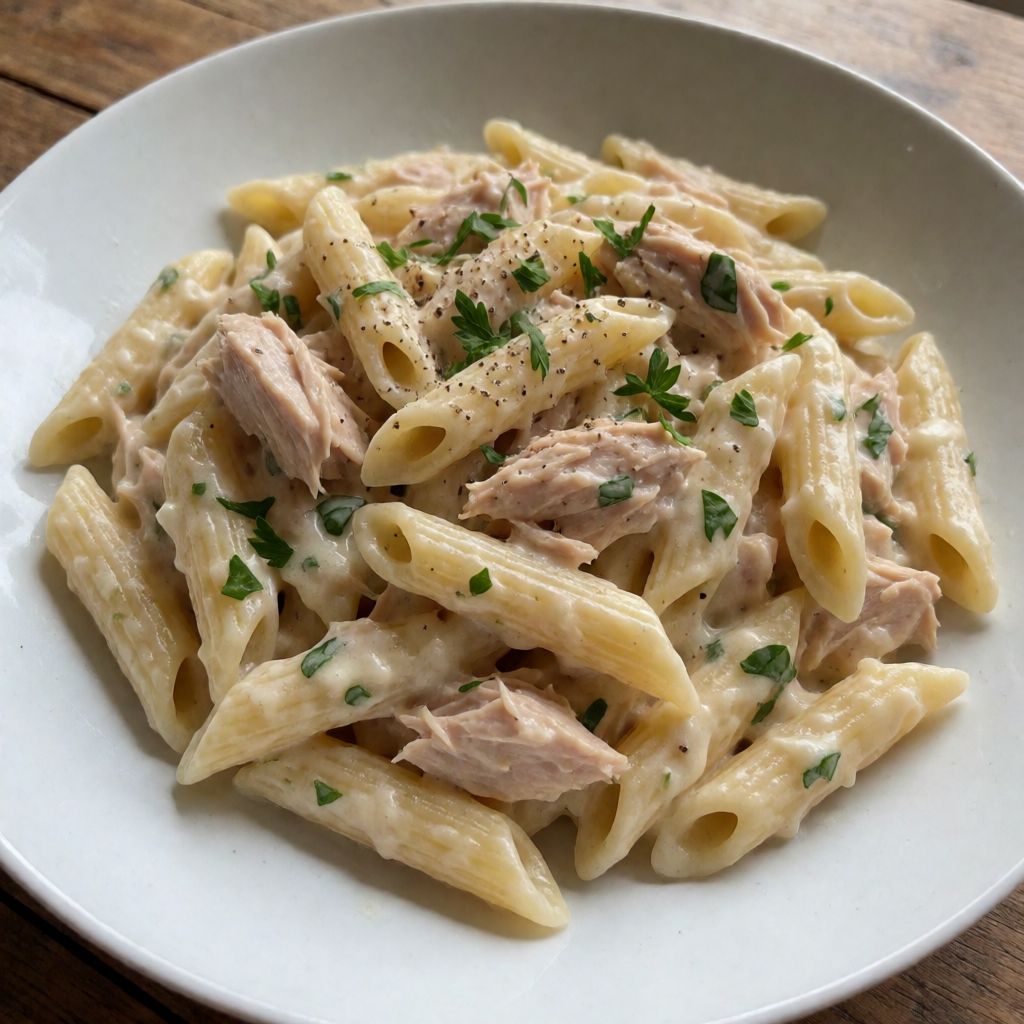
 AI photo
Creamy Pennette with Tuna and Cream Cheese
A quick, creamy pasta dish combining tuna and cream cheese for an easy midweek dinner.
Labels are worked out automatically from the ingredients and can be wrong. Check the packaging if it matters to you.
Ingredients
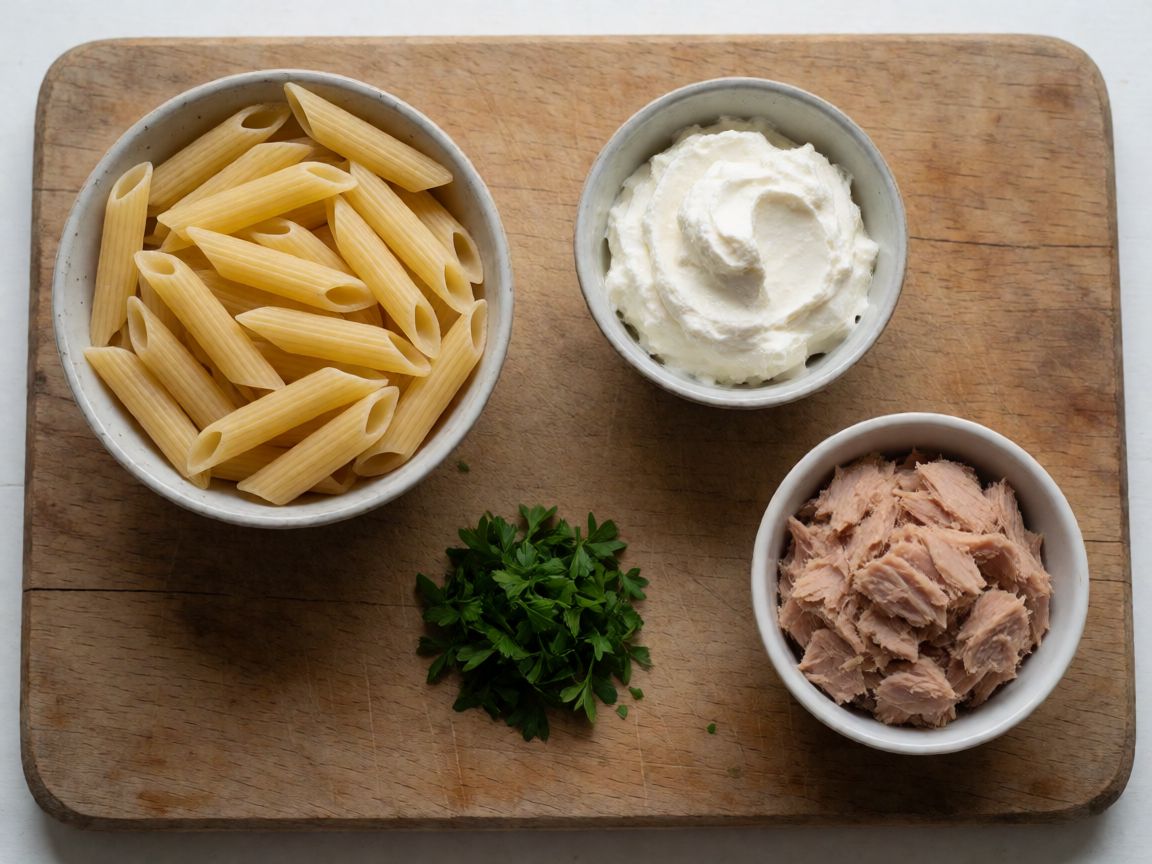
- 400 g Penne Rigate
- 200 g Cream Cheese
- 160 g Tuna
- 1 bunch Parsley
- Salt to taste
- Black Pepper to taste
- Olive Oil to taste







Steps
Blitz the tuna with the cream cheese, black pepper and a tablespoon of parsley in a blender until smooth and creamy.
5 minCook the penne rigate in salted water until al dente, then drain.
10 minToss the pasta with the cream sauce and serve, sprinkled with parsley on top.
5 min
This is not a sauce you cook — it is a sauce you build cold and then wake up with heat you already paid for. Tuna, cream cheese, pepper and a bit of parsley go into the blender raw; the pasta's heat and its own water do the rest. That's the whole trick, and it's also where the dish is won or lost: not in a pan, but in whether you keep enough of the starchy water to loosen what you blitzed.
Cream cheese straight from the blender is thick, almost stiff — fine on a bagel, wrong on pasta. Toss it onto bone-dry drained penne and you get little paste-balls clinging to some strands and nothing on the rest, because there's nothing fluid to carry it. The fix isn't more cream cheese or a splash of milk — it's the cloudy water the pasta just came out of. That water is full of starch, it's hot, and it has exactly the salt level the dish needs already built in. A mugful, added gradually as you toss, turns stiff paste into something that actually coats a noodle.
Some say a creamy pasta needs proper cream, or a knob of butter, to get that silky finish. No — because cream cheese already carries fat and protein in the right structure; adding more fat on top just makes it heavy, not smoother. What it's missing isn't fat, it's liquid, and that liquid is sitting right there in the pot you're about to tip down the sink.
Tuna: tinned, oil-packed gives you a smoother blend because that oil becomes part of the emulsion — it's doing real work, not just flavour. Water-packed tuna is leaner and drier, and the sauce will sit a touch stiffer; if that's what you have, add a spoon of olive oil to the blender to replace what you're missing, rather than more pasta water, or you'll thin the flavour along with the texture. Either way, drain it — you don't want tin liquid going in, only the fish.
Cream cheese: full-fat blends smoother and holds together better once it meets hot pasta; a "light" version has more water and less fat, so it's more prone to looking a bit grainy or separated once warmed through. Any soft, mild, spreadable cheese with that same fat-to-water balance will do the job — a soft herbed cheese, even a thick natural yoghurt mixed with a little oil in a pinch, though you lose some richness.
Parsley does two different jobs here and that's why it appears twice. The spoon blitzed into the sauce is there for background — a grassy note folded into the fat so you don't quite notice it as parsley. What goes on top at the end is a different ingredient in effect: raw, cold, slightly bitter, it cuts through all that cream cheese richness the moment it hits your tongue. Skip the topping and the dish tastes one-note heavy by the third forkful.
Salt and pepper: go easy on salt in the blender — tuna and cream cheese both carry some already, and the pasta water you'll be stirring in later is salted too. Taste before you reach for more; it's much easier to under-salt and correct at the table than to fix an oversalted sauce.
Olive oil isn't doing heavy lifting in this recipe — a drizzle to help the blender turn, maybe a finish over the top. Any oil with no smell of its own works; you don't need your best bottle here, save that for where you'd actually taste it.
Penne rigate's ridges exist for exactly this kind of sauce — they trap it, instead of letting it slide off the way a smooth tube would. Any short pasta with ridges or a hollow — fusilli, rigatoni — will behave the same way. On doneness: pull a piece out and bite it before the packet's time is up; you want resistance in the centre, not crunch, not mush. The clock on the box is a lower bound, your teeth are the real judge. And once it's drained — mug of water saved first, always — don't rush straight to the table. Give it thirty seconds of tossing with the sauce off the heat; that's the patience this dish asks for, and it's the difference between pasta that looks dressed and pasta that's actually been fed.