
 AI photo
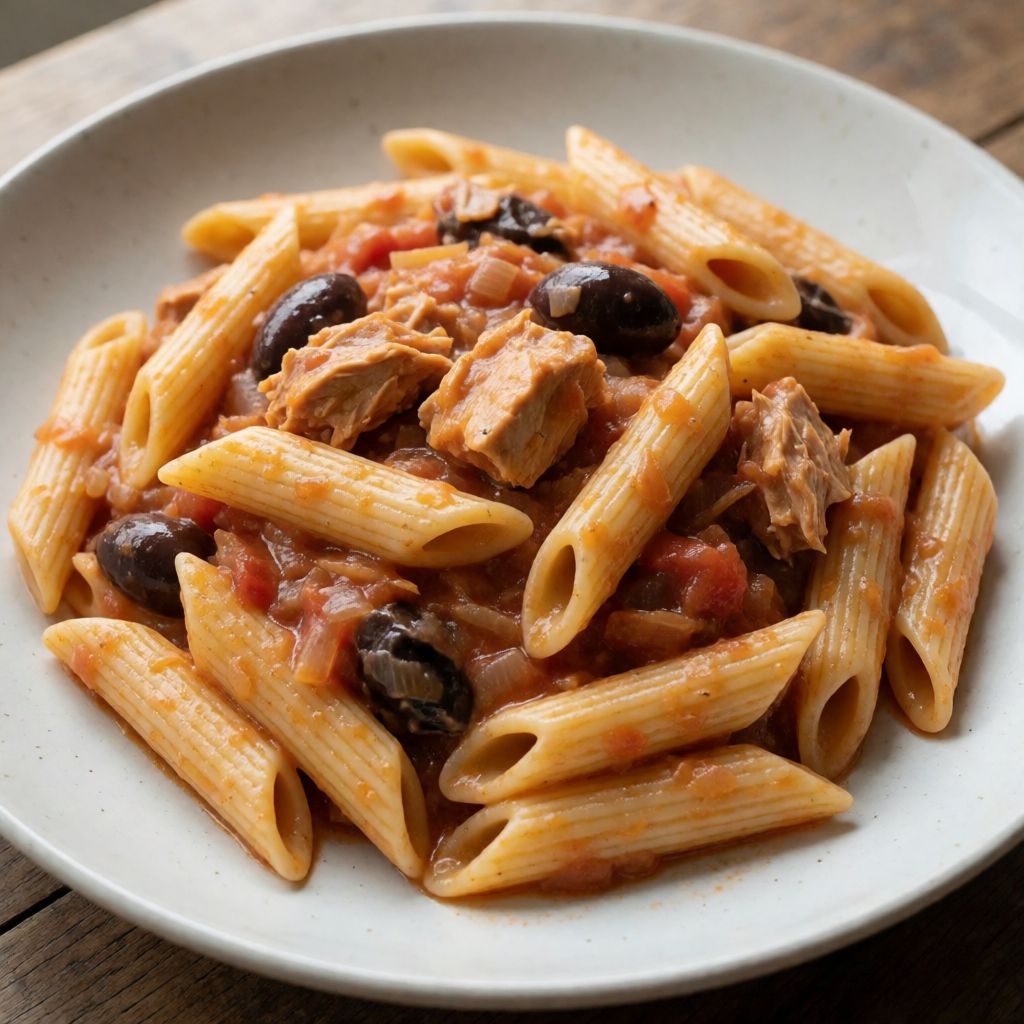
Penne with Tuna and Olive Sauce
A quick stovetop pasta with tuna, olives and a light tomato sauce, ready in under half an hour.
Labels are worked out automatically from the ingredients and can be wrong. Check the packaging if it matters to you.
Ingredients
- 400 g Penne
- 1 pcs Shallot
- 200 g Tomato passata
- 160 g Tuna drained
- 2 pcs Anchovies in oil
- 125 ml White wine
- 1 tbsp Pitted Taggiasca olives in oil
- Olive oil to taste
- Parsley to taste
- Chilli pepper to taste
- Salt to taste







Steps
In a pan, sauté the shallot, mash in the anchovies in oil and add the chilli pepper.
Add the tuna, drained of its oil, and the pitted Taggiasca olives in oil.
Pour in the white wine and let it evaporate.
Add the tomato passata, reduce the heat and simmer gently.
10 minCook the penne in salted water until al dente.
Toss the pasta with the sauce in a large bowl, generously sprinkled with parsley.
This is a tin-and-jar pasta, the kind a fisherman's wife in Liguria would make on a Tuesday when the boat came back empty-handed but the larder was full. Tuna from a can, anchovies from a jar, olives in oil, a splash of whatever white wine was open — nothing here needs a trip to the shop. Some say tuna and tomato don't belong in the same pan, that it's fish fighting with fruit. No — this isn't a fine-dining collision of land and sea, it's coastal poverty cooking: tomatoes grew on the hill, fish came from the water, and nobody asked permission to put them in the same pot.
What decides whether it works is mostly invisible by the time you eat it. The anchovies have to dissolve, not fry — melt into the oil until you can't see them anymore, just taste their salt sitting under everything else. The wine has to actually finish evaporating, not just get added and simmered for show — raw alcohol tastes sharp and thin, cooked-off wine leaves only its acidity behind, which is what lifts the tomato. And the tuna goes in late and stays soft; it's already cooked, you're only warming it through, not turning it into dry flakes of regret.
The tomato sauce itself wants to be gentle and short — ten minutes is the floor, not a stopwatch. You'll know it's ready when the passata stops looking like liquid and starts looking like sauce: a little oil visible at the edge of the pan, the surface gone matte instead of glossy and thin. Rush that stage on a high flame and you cook out the sweetness and keep the acid — tinny tomato, not rounded tomato.
Start with the shallot: it's there for sweetness without the sharp bite of raw onion, and because it's smaller and quicker to soften than a full onion — useful when you're also timing pasta water. You sauté it, you don't brown it. Colour here is the wrong target; translucent and soft is the right one, because browning would add a toasted note this sauce doesn't want competing with the fish. No shallot in the house? A small onion, finely chopped, does the same job, just give it a minute longer.
The anchovies are not a fish course, they're a seasoning — this is the one thing worth saying twice. Mash them into the shallot while the pan is still gentle; if the oil's too hot they fry rather than dissolve, turn bitter and dark, and you lose the whole point of them, which is to vanish and leave salt and depth behind. If you've genuinely got none, a good splash of Worcestershire sauce gets you partway there — not the same, but it understands the assignment: salt that isn't just salt.
Drain the tuna and drain it properly. Tinned oil is a preserving medium, not a flavouring one — it hasn't been near garlic or chilli, it's just stopping the fish drying out in the tin. Keeping it in the pan adds grease without adding taste, and a greasy sauce is the most common way this dish goes wrong. The olives — Taggiasca, if you can get them, are small, oil-cured, mild rather than brutally brined — bring a background bitterness that balances the tomato's sweetness. Any black olive works as a substitute as long as it's not aggressively salty; if it is, go easier on any extra salt later, because the dish is already carrying enough from the anchovies.
The wine's job is acidity and lift, nothing more romantic than that. Pour it in, let it bubble hard enough that you can see it reducing — on a domestic hob this takes longer than in a professional kitchen with a roaring flame, so give it the time rather than turning up the heat past where the pan can handle it safely. You're done when the sharp vinous smell has gone and what's left smells more like fruit than alcohol. No wine, or none you want to open? A splash of water with a squeeze of lemon gets you the acidity without the alcohol — not the same drink, but the same chemistry.
Chilli and parsley are both to taste because they're doing different, personal jobs: chilli is heat you calibrate to your own tolerance, parsley is freshness thrown on raw at the very end so it stays green and sharp instead of cooking down into the sauce. Salt the pasta water properly — it's the only seasoning the penne itself gets, and under-salted water is the quiet reason a lot of pasta dishes taste flat even when the sauce is good. Cook the penne until it bends without snapping and still has a faint resistance at the centre, then let it finish the last half-minute in the sauce itself, not alone in a colander — that's how the two actually become one dish instead of pasta with sauce poured on top.