
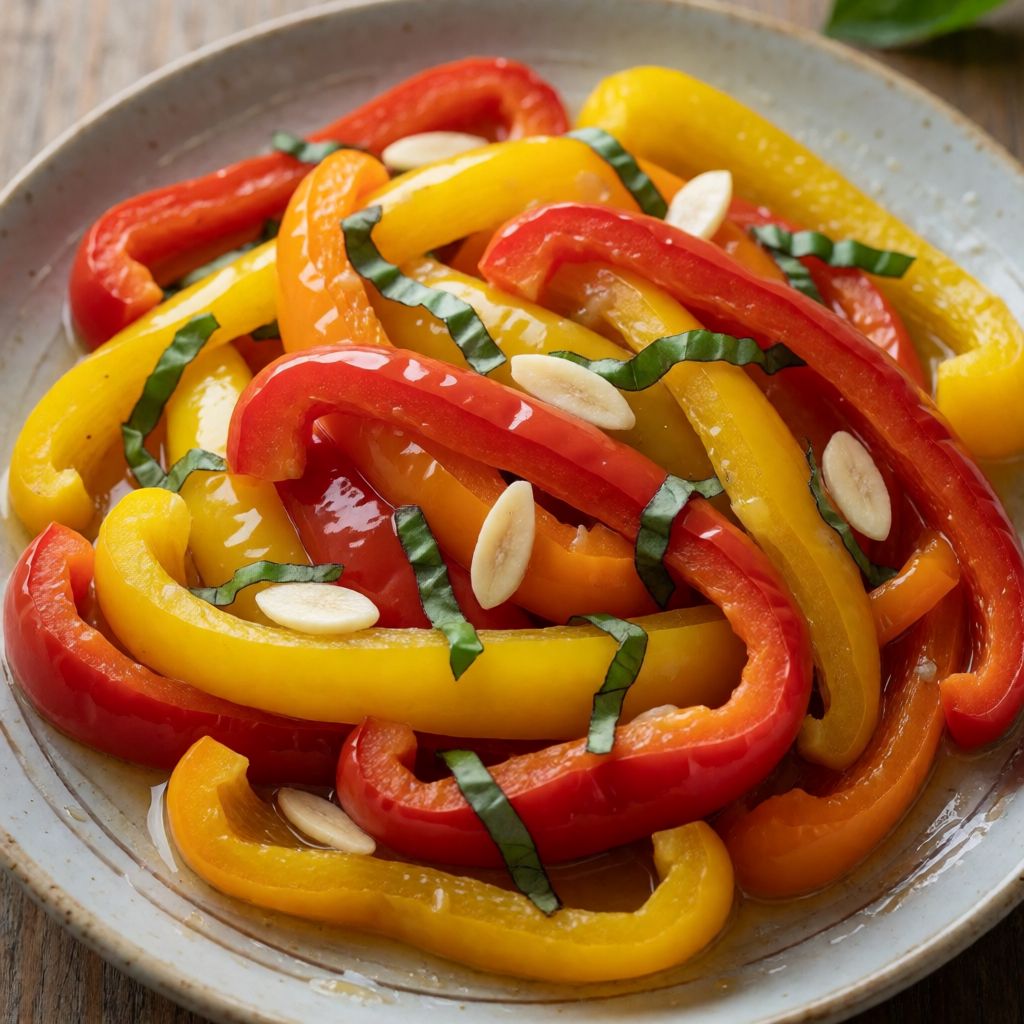
 AI photo
Peppers in Oil
Sweet peppers blanched in a vinegar brine, then layered in jars with garlic, basil and olive oil.
Labels are worked out automatically from the ingredients and can be wrong. Check the packaging if it matters to you.
Ingredients
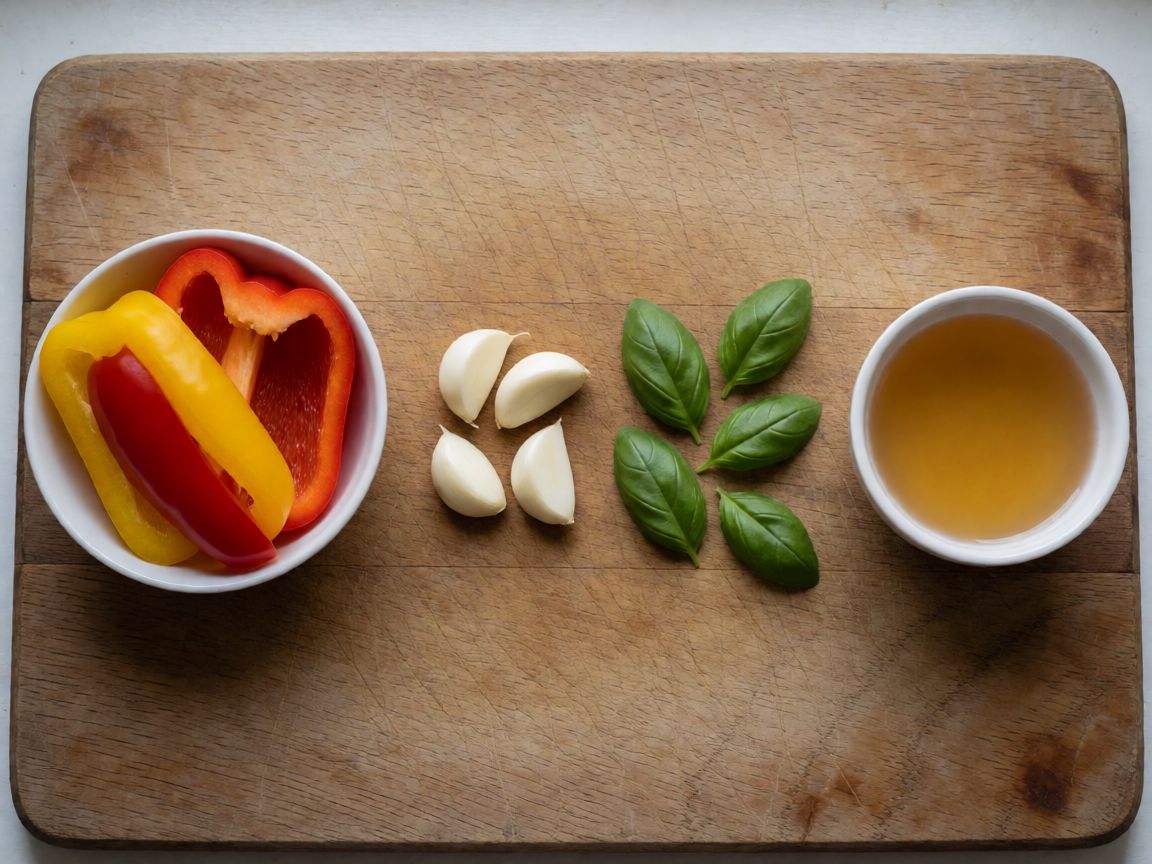
- 500 g Bell peppers
- 4 clove Garlic
- 4 pcs Basil sprigs
- 1 l Water
- 100 ml Apple cider vinegar
- 5 g Salt
- Black pepper to taste
- Olive oil to taste








Steps
Wash the fresh bell peppers thoroughly. Remove the stalk, deseed and remove the white membranes, then cut into strips.
Put a pot of water on the heat, add the apple cider vinegar and salt, and bring to the boil.
Plunge the peppers into the boiling liquid and cook for about 3 minutes.
3 minDrain in a colander and leave to cool completely.
Wash the basil, peel the garlic and cut it into small pieces.
Take some jars, sterilise them, then layer in the peppers, alternating with garlic, basil and black pepper.
Fill the jar with olive oil right to the brim — it's important that the oil fully covers the contents.
Seal the jars tightly and move on to pasteurising.
Wrap the jars in clean tea towels, place them in a pot and cover with cold water.
Bring to the boil and cook, then turn off the heat, cover with a lid and leave to cool.
Check that a vacuum has formed (the lid should not flex).
This is peppers put to sleep in oil — not pickled, not raw, somewhere between. The vinegar bath is brief and brutal on purpose: three minutes in boiling acid water is enough to collapse the pepper's cell walls just slightly, so it stops being crunchy-raw but stays short of mush. What decides whether this works isn't the pepper at all — it's whether the oil actually seals the jar, because oil with no gaps, no trapped air, no peeking pepper tip above the surface, is what keeps this safe and keeps it from turning sour and slimy in week two.
Some say vinegar is there for flavour. No — vinegar here is doing a safety job first, flavour second. Peppers are a low-acid vegetable sitting in oil with no oxygen, which is exactly the environment botulism spores like. The vinegar dip pushes a little acidity into the flesh before the oil ever goes in, so you're not relying on oil alone to protect you. That's also why "to taste" on the vinegar is a bit of a trap — taste it by all means, but don't thin it out so much it stops doing its real job.
The pasteurising step at the end is the second lock, not decoration. Submerging sealed jars and bringing them back to a boil drives out the remaining air pocket inside, and as the jar cools that air contracts and pulls the lid down — that's your vacuum seal, the little dimple that won't flex under a thumb. If it flexes, the jar didn't seal, and that jar goes in the fridge and gets eaten this week, not stored on a shelf for winter.
Peppers: pick ones with thick, firm walls — the fleshy bell peppers, not the thin-skinned ones that collapse to rag the moment they meet heat. Thin walls give you mush after the vinegar dip and then mush again after weeks swimming in oil; thick walls give you something with a bit of bite left, which is the whole point of bothering with this jar instead of just roasting peppers and eating them that night. 500g is roughly three to four peppers, enough to fill a couple of standard jam jars and feed six as a starter, a few strips each alongside bread and cheese — this is not a dish you eat alone with a spoon.
Garlic and basil are not seasoning sprinkled in for show — they're infusing into oil that's going to sit for weeks, so a little goes a long way and gets stronger, not weaker, with time. Cut the garlic small so it sits flat against the pepper strips rather than floating as a whole clove nobody wants to bite into cold. If basil isn't to hand, use oregano or thyme sprigs instead — the criterion is a herb that holds its shape and flavour dried or half-wilted, not one that goes slimy and brown, which rules out something soft like parsley.
Apple cider vinegar is specified, but any vinegar with roughly 5% acidity does the same chemical job — white wine vinegar, plain white vinegar, even malt vinegar if you don't mind the darker colour and stronger smell it leaves behind. What you can't substitute is the acidity itself; don't swap in lemon juice unless you know its acidity matches, because that's gambling with the one ingredient here that's doing safety work, not flavour work.
Olive oil: the brief here is "fully covers," so use an oil you're happy to see a lot of and that won't solidify oddly in a cold larder — a middling olive oil, not your good finishing bottle, since most of what you taste will be garlic and basil anyway. Any oil with no strong smell of its own works as a stand-in — sunflower, a mild rapeseed — but skip anything that solidifies like coconut oil, because a cloudy, seized jar looks exactly like spoilage even when it isn't, and nobody wants that doubt staring back at them from the shelf.
Salt and black pepper are the only truly "to taste" items, and that's fine — they're not holding the jar together chemically, they're just making it taste like something rather than nothing.
Patience is the real ingredient most people skip, and it's the one that makes the dish what it is rather than just stewed peppers. The cooling after blanching, the full cooling after pasteurising, and then the waiting — these peppers are better in two weeks than on day one, because the garlic and basil need that time to actually move into the oil and the pepper, not just sit next to them. Open the jar early and you've made yourself a slightly odd pepper salad. Wait, and you've made a proper antipasto.