
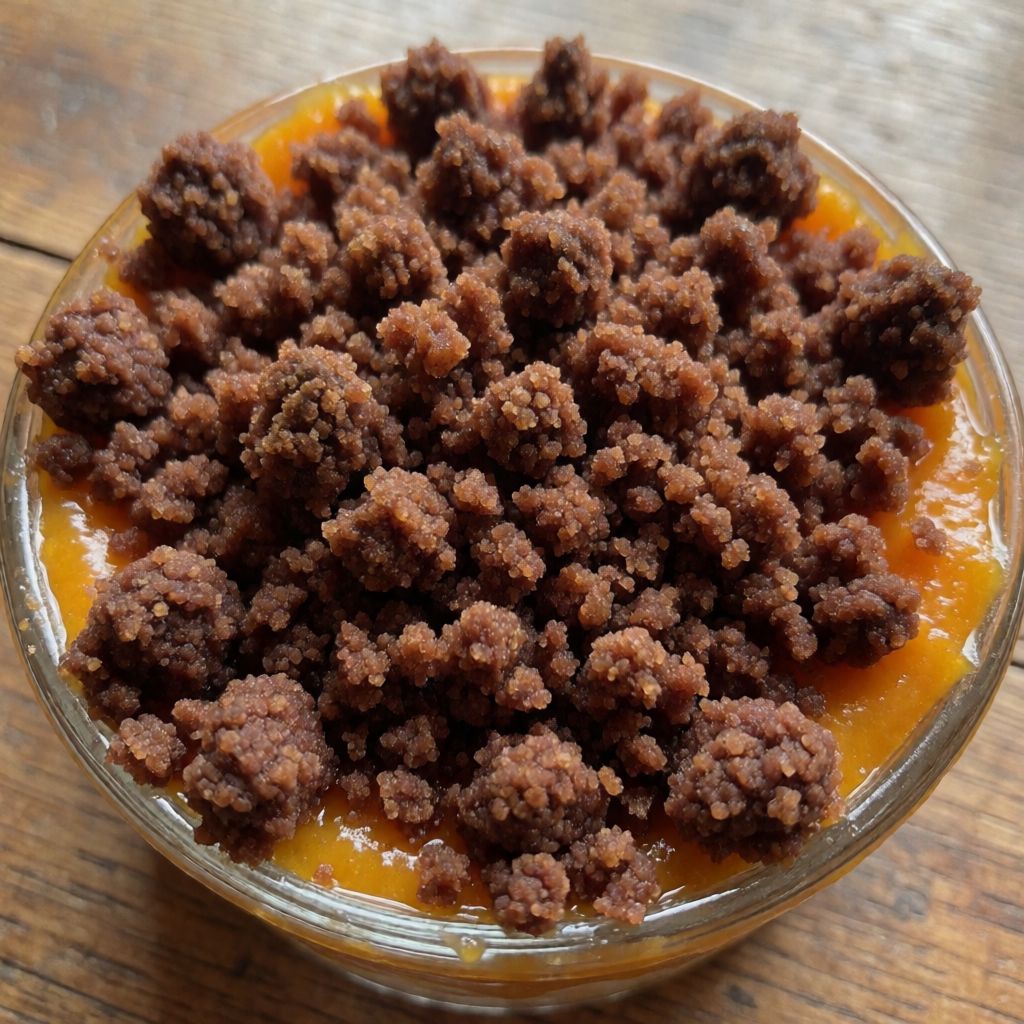
 AI photo
Crumble with Persimmon Cream
A crumbly cocoa pastry filled with a silky persimmon custard cream.
Labels are worked out automatically from the ingredients and can be wrong. Check the packaging if it matters to you.
Ingredients
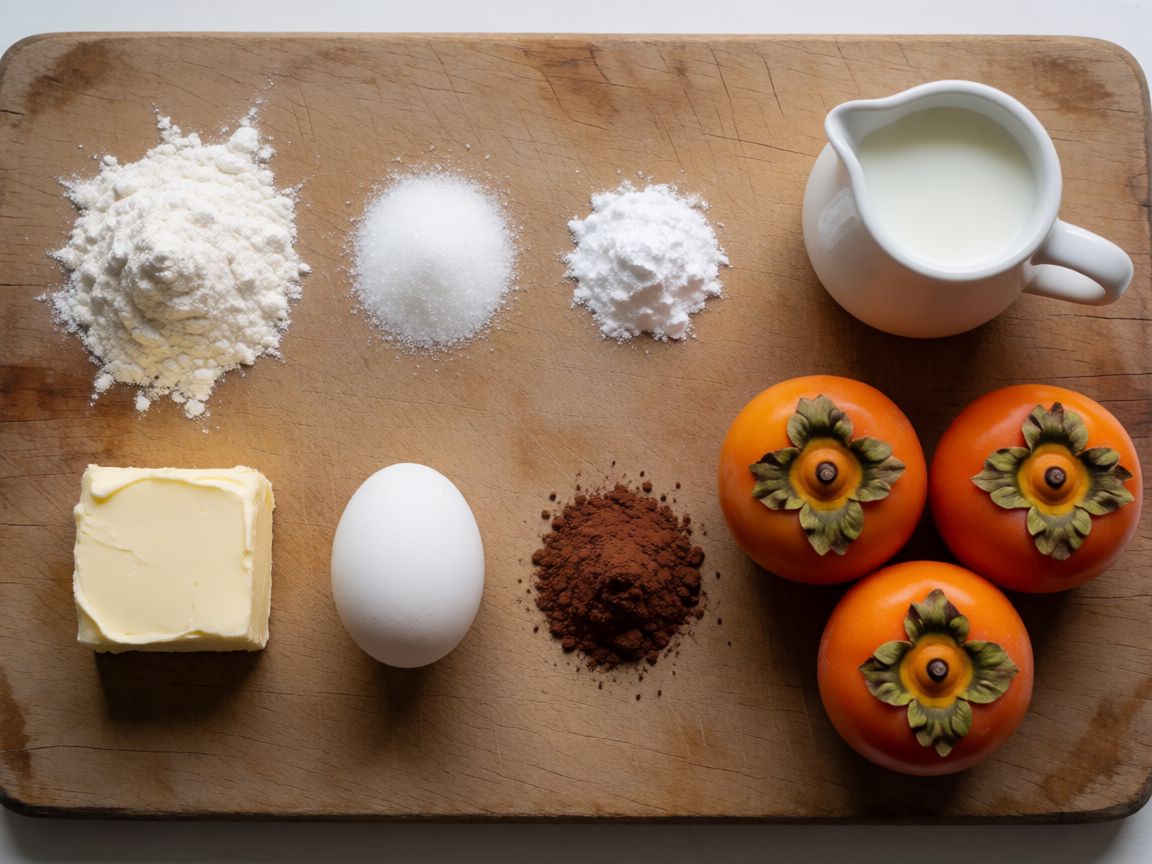
- 300 g Plain flour
- 100 g Caster sugar
- 15 g Baking powder
- 100 g Butter cold
- 1 pcs Egg
- 50 g Cocoa powder
- 3 pcs Persimmon about 700 g
- 300 ml Milk
- 1 pcs Lemon zest half a lemon's worth
- 50 g Plain flour
- 2 pcs Egg yolk
- 100 g Caster sugar









Steps
Whisk the egg yolks with the sugar using a mixer, then add the sifted flour.
Bring the milk to the boil with the lemon zest in a small saucepan.
Remove the milk from the heat, stir in the yolk and flour mixture and the chopped persimmon flesh.
Return to the heat and, stirring constantly, cook the cream until thickened.
Transfer the finished cream to a separate bowl and leave to cool.
Combine the flour, cold butter and sugar, then add the egg, baking powder and cocoa powder.
Rub everything together by hand into fine crumbs.
Tip two-thirds of the mixture into a 24 cm tin lined with baking paper and press firmly over the base.
Spread the persimmon cream on top, then cover with the remaining crumble mixture.
Bake in an oven preheated to 170°C for about 30 minutes.
30 minLet the cake cool slightly before serving.
This isn't the crumble you think it is — no fruit baked soft under an oat topping, no custard jug on the side. It's a chocolate shortbread tin, the kind you'd press into a flan case, holding a set persimmon custard, then sealed over with more of the same crumb. You end up with something closer to a bar cake or a rustic tart than a Sunday crumble, and that's the first myth to drop: "crumble" here is doing duty for "crumbly," not for the pudding your gran made with Bramleys. The word's borrowed, the mechanism isn't.
What decides whether it works is the custard, not the crumble. You're making a crème pâtissière with persimmon folded in instead of vanilla — egg yolks and flour whisked together, then shocked with hot milk, then cooked again until it thickens. The flour is there to let you boil this custard without it curdling into scrambled egg; a plain egg custard can't take direct heat past about 80°C, but flour-thickened cream can go to a full simmer and stay silky. That's the whole trick of pastry cream as a category, and it's why you keep stirring — stop, and the bottom scorches onto the pan before the centre's even warm.
On the dry crumb: flour, sugar, cold butter, cocoa, baking powder, one egg, rubbed in by hand. This is shortbread logic, not scone logic — you want the butter to stay in small, separate flecks, not melt into the flour, because those undissolved bits of fat are what flash to steam in the oven and prise the crumbs apart into a short, sandy texture instead of a dense biscuit. That's why the butter is specified cold — warm butter smears instead of flaking, and you'd end up with something closer to dough than crumb. If your kitchen is warm (a British summer, rare but it happens, or just a hob-side counter in winter when the central heating's on), work fast and don't linger — your hands warm the butter faster than you'd think.
Cocoa powder here is for colour and a mild bitter edge against the sweet persimmon — not for a chocolate flavour you're meant to taste dominating. If you haven't got cocoa, leave it out and add the weight back in flour; you'll get a pale crumble instead of a dark one, which changes nothing structurally.
The egg in the crumb binds the crumbs just enough that two-thirds of the mixture can be pressed into a base that holds its shape when you cut into it later — without it, you'd have a sandy layer that collapses the moment the custard's spoon goes near it. Baking powder gives the crumb crust a slight lift so it doesn't bake down into something leathery and flat; 15 g for 300 g flour is a fairly generous lift, enough that this layer stays short and open rather than dense.
For the cream: egg yolks (not whole eggs — the whites would thin it and risk a rubbery set) whisked with sugar first, until pale, which dissolves the sugar into the yolk rather than leaving grit, and also starts breaking the yolk's structure so it won't seize into lumps the second hot milk hits it. The flour added after is the stabiliser already discussed. Milk is boiled with lemon zest not for heat efficiency but for extraction — heat pulls the citrus oils out of the zest's surface into the fat in the milk faster than a cold infusion would, and that aromatic lift cuts through what would otherwise be a one-note, cloying sweetness from persimmon plus sugar plus sugar again in the crumb.
If you're sceptical of a fruit custard holding its shape when sliced: it will, the same way any crème pâtissière holds in an éclair — the flour's starch network sets as it cools, trapping the fruit pulp inside it rather than letting it weep.
Tin size matters more than the recipe lets on: 24 cm is what calibrates your base-to-filling ratio. Go wider and the custard layer thins out, go narrower and you risk a soupy centre that hasn't had time to firm before the crumble on top is dry. In a British kitchen without a proper flan tin, a springform cake tin lined with baking paper does the job — just make sure the base seals well, since persimmon custard is thinner raw than it will be baked, and it will find any gap.
On the 170°C and "about 30 minutes": that's an oven running true. Most domestic ovens drift a little hot or cold, especially fan versus conventional, so treat 30 minutes as the floor, not the finish line — look instead for the top crumble turning matte and slightly darker at the edges, not glossy-wet, and a very gentle give rather than wobble if you nudge the tin. Patience here means not opening the door early to check — the custard beneath is still setting past the point the top looks done, and a blast of cold air can sink a crust that hasn't quite finished.