
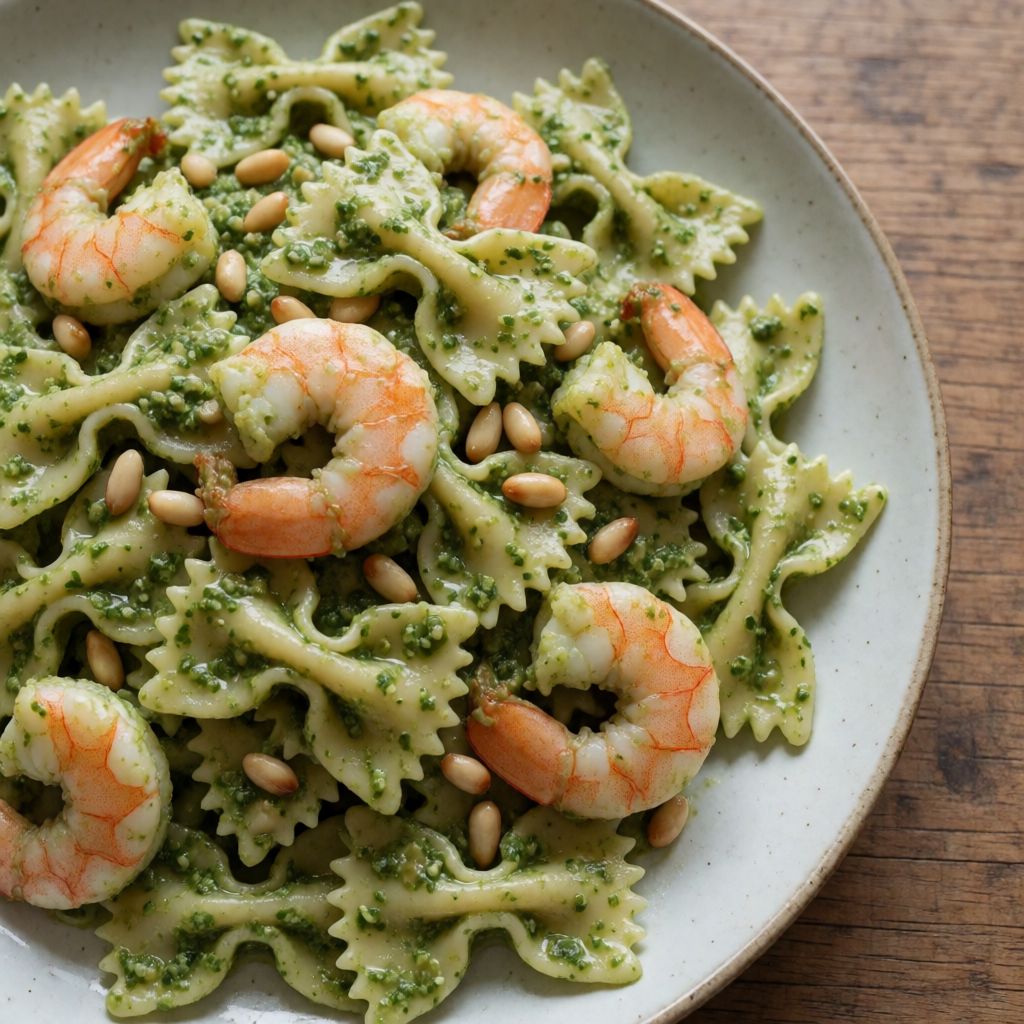
 AI photo
Farfalle with Pesto and Prawns
A quick pasta dish with homemade basil pesto and pan-seared prawns.
Labels are worked out automatically from the ingredients and can be wrong. Check the packaging if it matters to you.
Ingredients
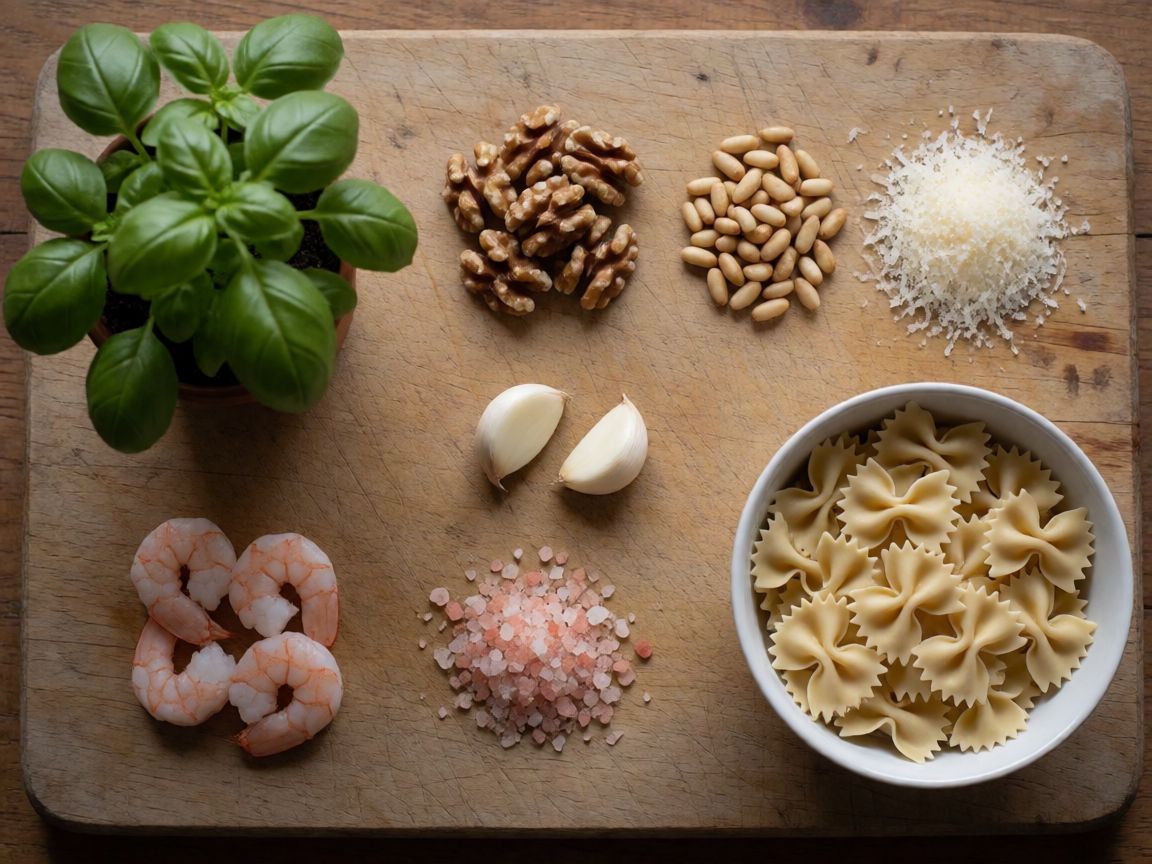










Steps
Blend the basil, walnuts, pine nuts, one garlic clove, a pinch of salt, black pepper, Parmesan and olive oil in a blender until smooth.
5 minCook the farfalle pasta in plenty of salted boiling water.
10 minHeat olive oil with garlic in a pan and fry the prawns until cooked through, seasoning with Himalayan pink salt. They are done when the thickest part reaches 63°C.
5 minDrain the pasta al dente and tip it into the pan with the prawns, then add the pesto.
2 minStir and warm through for a few minutes, adding a splash of water if needed. Serve immediately.
3 min
This is not really a cooked dish — it's a raw herb paste that borrows heat from cooked things at the very last moment. Pasta boils, prawns fry, pesto stays green and alive in its bowl, and only at the end do all three meet in one pan for a couple of minutes of shared warmth. The whole success of the plate is about keeping that meeting brief. Nothing here wants a long simmer; everything here wants to be just barely married.
The pesto is the part people get wrong by over-managing it. Some say you should cook pesto a little once it's in the pan, to 'bring the flavours together' — no, because basil is mostly chlorophyll and thin-walled cells, and heat turns that bright green into a tired khaki and the fresh smell into something bitter and grassy. The blender does all the cooking this sauce will ever need: it breaks the cell walls so the flavour comes out, and the oil coats what's broken so it doesn't oxidise and go bitter on its own, long before any pan touches it. So when the pesto joins the hot pasta and prawns, it goes in off the heat, or on heat so gentle it's really just borrowed warmth from the other two. You're not cooking it — you're letting it melt into what's already cooked.
Basil is the whole point, so buy it the day you cook, not before — once cut, it bruises and blackens at the edges within a day or two, a sign the leaf tissue is already breaking down and souring before your blender ever touches it. One full bunch, stems mostly out, is enough for four — the stems are fibrous and bitter and will fight the blender for no gain.
Walnuts and pine nuts are doing two different jobs, which is why the recipe uses both rather than one. Pine nuts are soft, resinous, and genuinely pine-flavoured — that's the 'classic' note, and also the expensive one, which is exactly why cheaper versions of this sauce the world over cut them with something else. Walnuts bring bulk fat and a slight bitterness that rounds the sharpness of raw garlic and basil — any starchy, oily nut with a mild flavour of its own will do the same structural job; cashews or blanched almonds work, hazelnuts less so because their flavour is too loud. Don't toast them for this — raw keeps the sauce pale green and clean; toasting adds a flavour the basil didn't ask for.
Parmesan's job here is salt crystal and umami, not just 'cheese taste' — the hard aged texture means it grinds down to grit rather than paste in the blender, and that grit is part of the sauce's texture. Any hard, aged, salty grating cheese does the same mechanical job — Grana Padano, an aged Pecorino if you want more bite, or a strong mature Cheddar in a pinch, since Britain has no shortage of that and it brings its own sharp saltiness that isn't wrong here, just different.
Garlic appears twice and does two different things, which is worth noticing. The clove blended raw into the pesto stays sharp and a little fierce — raw garlic's bite comes from allicin, a compound that only forms when the cell is crushed, and it doesn't have time to mellow before it hits your plate. The garlic fried with the prawns is the opposite: heat converts that sharpness into something sweeter and rounder within a minute or so, which is why it's cooked separately rather than thrown in with the first. Use oil with no smell of its own for the frying — a light olive oil, sunflower, anything neutral — so the garlic and prawn fat carry the flavour, not the oil.
On salt: Himalayan pink salt here is doing nothing that ordinary sea salt wouldn't — it dissolves and seasons the same way, the pink colour comes from trace minerals that don't register on the tongue in the amounts used. Use it if you like the look of it on the prawns; don't believe it seasons 'more purely', because mechanically it's just salt. Farfalle's bowtie fold is the one real structural reason for this pasta shape over another — the pleats trap pesto and small bits of prawn in a way a flat shape can't, so if you swap it, pick something else with a fold or a hollow (fusilli, conchiglie), not a flat ribbon that lets the sauce slide off. And keep back a cup of the pasta water before you drain — its starch is what loosens a thick pesto back into something that coats rather than clumps, and in a UK kitchen with a wide frying pan standing in for a kazan, that splash of water is often the difference between a dish that clings and one that just sits there separate, oil on top, pasta underneath.