
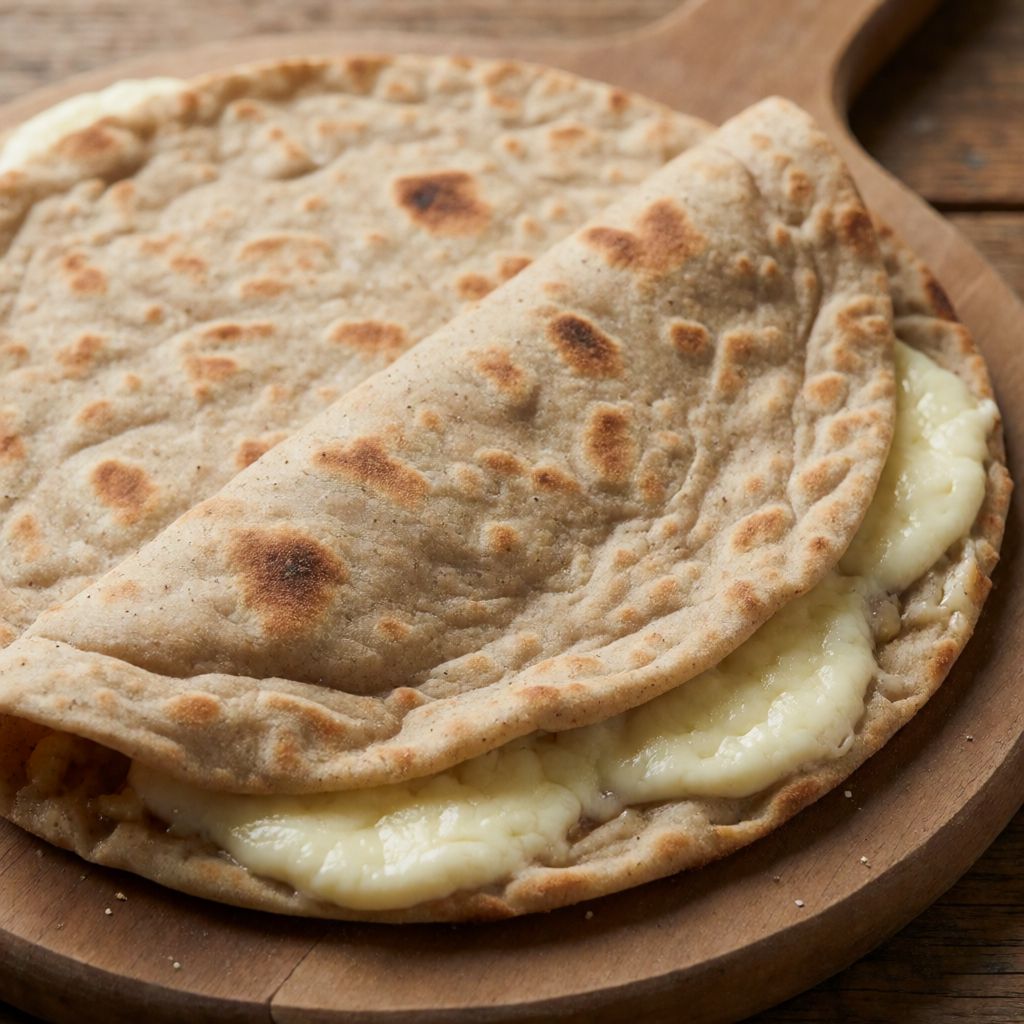
 AI photo
Buckwheat Flour Piada: A Quick Gluten-Free Lunch
A quick gluten-free buckwheat piada filled with ham, mozzarella and lettuce, ready in minutes.
Labels are worked out automatically from the ingredients and can be wrong. Check the packaging if it matters to you.
Ingredients
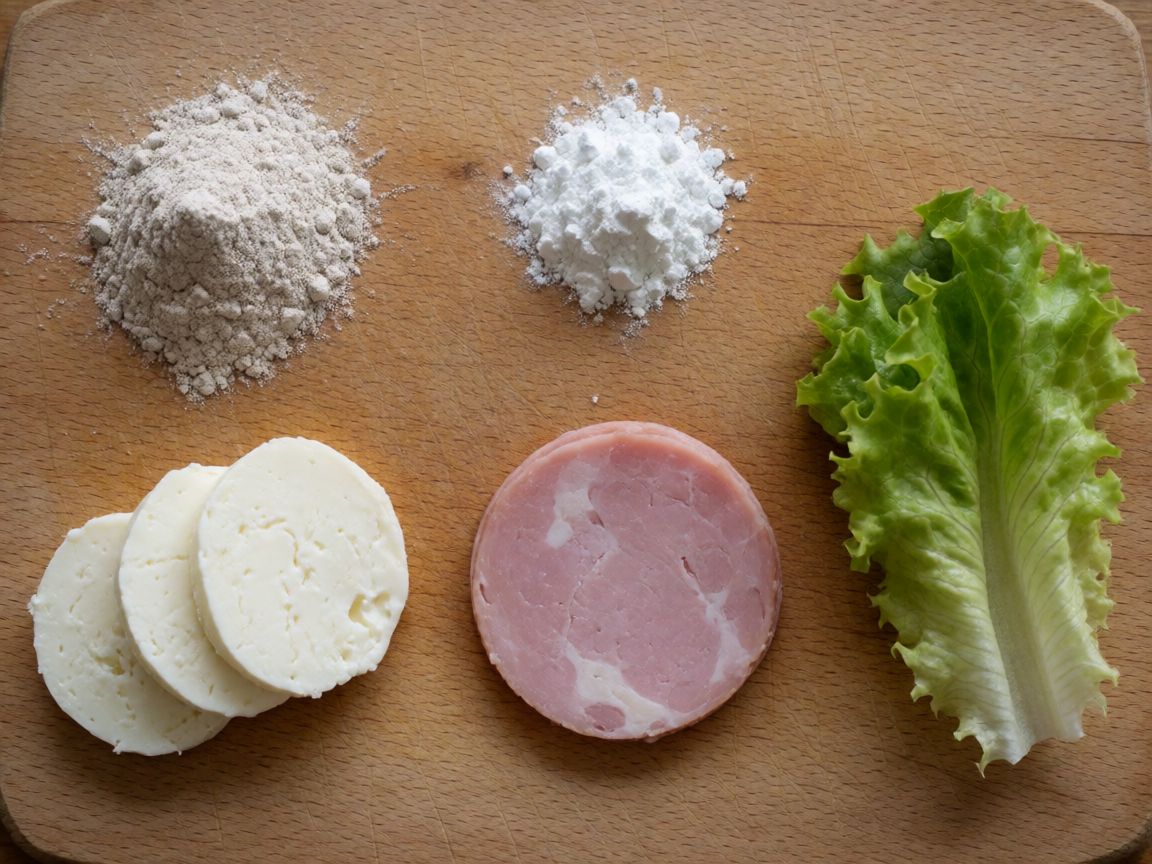
- 100 g Buckwheat flour
- 50 g Potato starch
- 75 ml Water
- 10 g Olive oil
- 1 pinch Salt
- Mozzarella to taste, sliced
- Ham to taste
- Lettuce to taste




Steps
In a bowl, mix the buckwheat flour with the potato starch.
Add the water, olive oil and a pinch of salt. Stir with a spoon, then knead by hand into a soft, pliable dough.
Roll out the dough with a rolling pin on baking paper until thin, dusting with starch if needed.
Cut out a neat circle using a plate as a template.
Heat a non-stick frying pan and transfer the piada onto it.
Fry with the lid on.
Carefully flip the piada and fry on the other side.
Lay the ham, mozzarella and lettuce over one half of the piada, then fold it in half.
Leave for a few seconds until the cheese melts, then serve.
This is a piadina stripped of wheat — the flatbread the farmers of Romagna used to fry on a hot clay disc called a testo because they had no oven, just a fire and a round of dough rolled thin enough to cook through in a minute. Here the wheat is gone entirely, swapped for buckwheat flour and potato starch, so the bread still works for a stomach that can't take gluten, without turning into a cracker.
What decides whether this comes out right has nothing to do with the filling — ham, mozzarella, lettuce, that part is just common sense. It's the dough. Wheat dough forgives you: knead it, stretch it, it springs back, it holds air, it stretches thin without tearing because gluten gives it elastic memory. Buckwheat has none of that. Rolled too thin or too roughly, it just rips, the way a dry autumn leaf tears rather than bends. The potato starch is there to make up for the missing gluten — once it meets heat and moisture it gels, and that gel is what gives the dough enough give to fold without cracking. So the real skill here is handling: roll from the centre out, in one direction at a time, dust with starch the moment it looks tacky, and stop pushing when it resists.
Buckwheat flour is the backbone and the reason this is gluten-free at all — it's not a wheat relative, it's a seed related to rhubarb and sorrel, ground into a flour with its own dark, slightly bitter, earthy taste. That taste is not a flaw to mask; it's most of why this bread is interesting instead of just a blank carrier for ham. If you can't find it, any other gluten-free flour blend will hold together, but you lose that flavour and you'll need to adjust the water, since every gluten-free flour drinks differently.
Potato starch is doing the structural work that gluten would normally do in a wheat dough. On its own it has no flavour and almost no nutrition — it's nearly pure starch granules — but heated with water those granules swell and turn into a clear gel, and that gel is what lets this dough bend instead of snap when you fold the finished piada in half. The criterion for substituting it is simple: you need a starch that turns clear and slightly sticky in hot water, not a flour that stays cloudy. Cornflour (what's sold in the UK as cornflour, not the American cornmeal) does the same job, as does tapioca starch if you have it from other baking.
Olive oil is the fat, and its job is to get between the starch granules and stop them binding into something tough and biscuit-like — a short dough rather than a hard one. Traditional piadina in Romagna was made with lard, because lard was what a farmhouse had in quantity and oil was for better-off tables; olive oil here is the modern, lighter stand-in, and any oil with a flavour you actually want in the finished bread works the same way structurally. Water is the other half of that balance — too little and the dough tears the moment you try to roll it thin, too much and it sticks to everything including itself, so add it gradually rather than trusting the number blindly, flours vary batch to batch.
For the filling, mozzarella should be the firmer, lower-moisture kind sliced rather than the soft ball packed in water — pat it dry if that's what you have, because the water it sheds inside a hot fold turns the dough underneath soggy instead of crisp. Ham is only there for salt and chew, so use whatever you have — Sunday's roast ham leftovers do this job better than anything you'd buy specially, which is rather the point of a dish like this: quick lunch built from what's already in the fridge. Lettuce goes in for a cold, crisp contrast against the hot cheese, and it wilts a little from residual heat once folded in — that's expected, not a mistake, so don't leave it in there a long time waiting for you.
Patience shows up in one place only: letting the rolled dough rest a moment before you try to lift it, so it doesn't collapse or tear on the way to the pan, and in waiting those last few seconds after folding for the cheese to actually melt rather than serving it half-stiff because you're hungry. There isn't much time invested in this dish — that's its whole appeal — but the bit it asks for still has to be paid.