
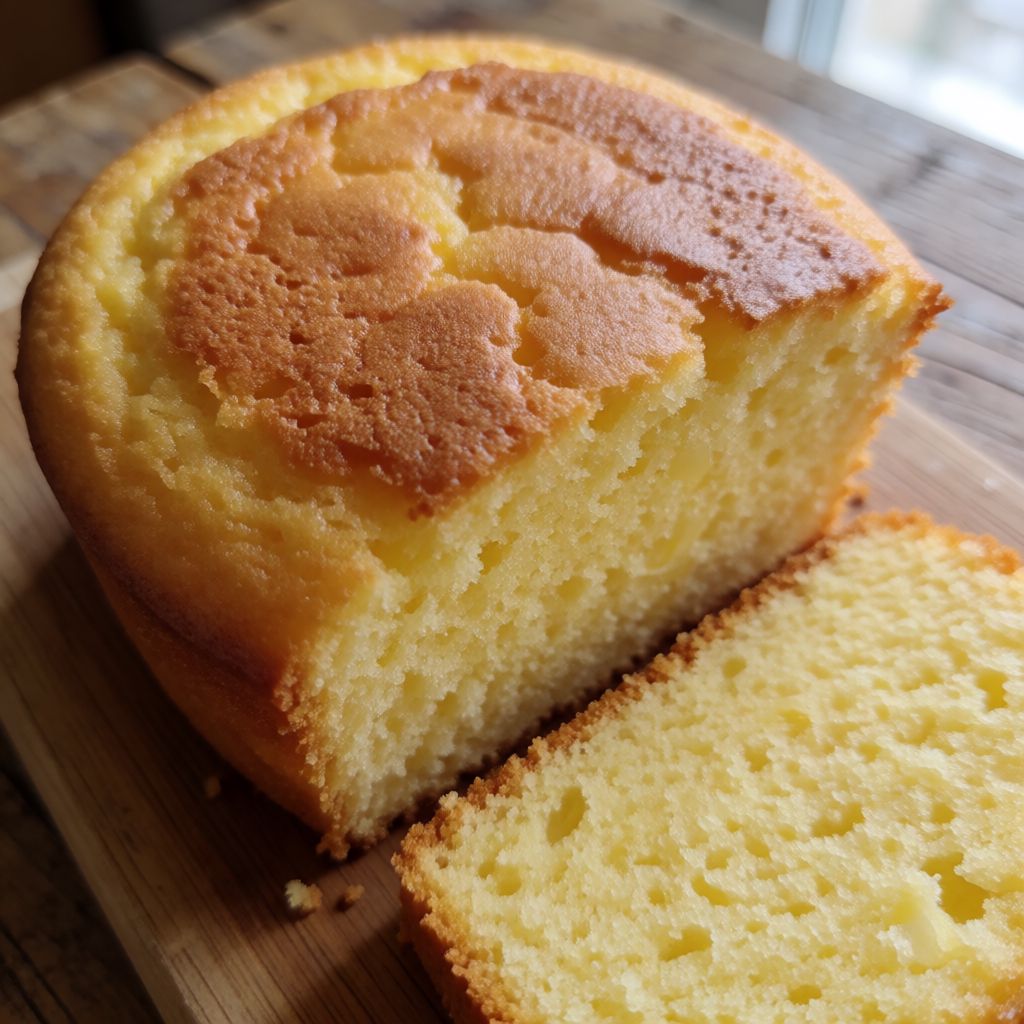
 AI photo
Pineapple Cake
A light, fluffy pineapple sponge cake made with fresh or tinned pineapple and a hint of pineapple yogurt.
Labels are worked out automatically from the ingredients and can be wrong. Check the packaging if it matters to you.
Ingredients
- 3 pcs Eggs
- 180 g Caster sugar
- 50 ml Milk
- 90 g Vegetable oil
- 150 ml Pineapple yogurt
- 270 g Plain flour
- 15 g Baking powder
- 200 g Pineapple fresh or tinned
- 1 pinch Icing sugar for dusting









Steps
In a large bowl, whisk the eggs with the caster sugar until light, pale and fluffy.
Still whisking, slowly pour in the milk, then the vegetable oil and pineapple yogurt.
Sift the flour and baking powder together, fold into the wet mixture and mix until smooth.
Cut the pineapple into cubes and stir into the batter, draining it well first if using tinned pineapple.
Pour the batter into a 22 cm cake tin, greased and lightly dusted with flour.
Bake in a preheated oven at 180°C for about 48 minutes.
48 minCheck it's done with a skewer, then leave to cool, dust with icing sugar and serve.
This is not a laid cake, built layer by layer — it is a foam that gets rescued twice. First by the eggs, beaten with sugar until they trap enough air to carry flour on their back, and second by the baking powder, which finishes the lift once the oven heat tells it to. Two engines, because a home oven is not reliable enough to trust just one.
What decides whether this works is not the oven at all — it is the whisking stage and the folding stage, and they pull in opposite directions. You whisk the eggs and sugar hard, until the mixture goes pale and holds a ribbon when you lift the whisk — that is air, mechanically beaten into the egg proteins, with the sugar dissolving into the foam to stiffen its walls. Then everything after that — milk, oil, yogurt, flour — gets folded, not beaten, because every extra minute of mixing knocks bubbles back out of a foam that took you five minutes to build.
Some say oil makes a cake heavy and only butter gives lightness. No — the opposite happens here. Oil is liquid at room temperature, so it coats flour particles thinly and evenly, which gets in gluten's way and keeps the crumb soft days after baking, when a butter sponge has already gone dry and tight. Butter brings flavour, oil brings tenderness; this cake chose tenderness and borrows its flavour from pineapple instead.
Eggs are your scaffolding, so pull them out of the fridge early — cold egg whites foam more slowly and less fully, because the proteins are stiffer and resist unfolding. Three eggs for 270 g of flour is a light ratio; this is meant to be a soft, moist crumb, not a dense one, so do not add a fourth egg hoping for more lift — you will only add more weight for the same amount of air.
Caster sugar, not granulated, because the point of sugar here is not sweetness alone — it is grain size. Fine crystals dissolve into the egg foam as you whisk, instead of sitting undissolved and tearing bubbles as they slide past. If you only have granulated, give it a few extra minutes in the food processor, or a few extra minutes of patient whisking — sugar that has not dissolved by the time you fold in flour will show up as a gritty crust later.
Milk, oil, and pineapple yogurt go in together as the liquid phase, but the order in the method — milk first, then oil, then yogurt, slowly, still whisking — exists to keep the foam from collapsing under a sudden weight of liquid. Any flavourless oil works: sunflower, rapeseed, vegetable. Olive oil will fight the pineapple for your attention, so leave it for the roast. The yogurt does two jobs — its acidity gives the baking powder something to react against for a second, smaller rise, and its fat keeps the crumb from drying out. No pineapple yogurt in the shop? Plain yogurt with a spoon of pineapple juice stirred in does the same chemistry.
Flour and baking powder are sifted together for one reason only — so the baking powder, a fine powder in a sea of flour, ends up in every spoonful instead of clumped in one corner, which is how you get a bitter metallic pocket in one slice and a flat one next to it. Use plain flour, not self-raising — self-raising already has leavening built in, and doubling up on baking powder will make the cake rise fast and then collapse, because the structure cannot hold air it was never built to hold.
Fresh or tinned pineapple both work, but tinned must be drained properly, pressed in a sieve, not just tipped out — the syrup it was packed in is sugar water with nowhere to go in a batter that is not expecting it. Fresh pineapple brings a sharper edge and a trace of bromelain, an enzyme that softens proteins — harmless here because the oven heat kills it off before it can do anything, unlike in a cold gelatin pudding where it would ruin the set.
A 22 cm tin greased and dusted with flour is not a nicety — it is what lets the cake release a few minutes after the tin leaves the oven instead of clinging to the sides and tearing. On doneness: your oven's 180°C and my oven's 180°C are not the same temperature, UK ovens especially run anywhere from honest to optimistic — so treat 48 minutes as where you start checking, not when you stop. A skewer coming out dry means the starches have set and the egg proteins have finished coagulating; wet crumb on the skewer means give it more time, lid or no lid, patience is the ingredient this step actually needs. Dust the icing sugar once the cake has cooled — sugar on a warm surface just melts into a damp patch and disappears, which defeats the only decorative gesture this cake asks for.