
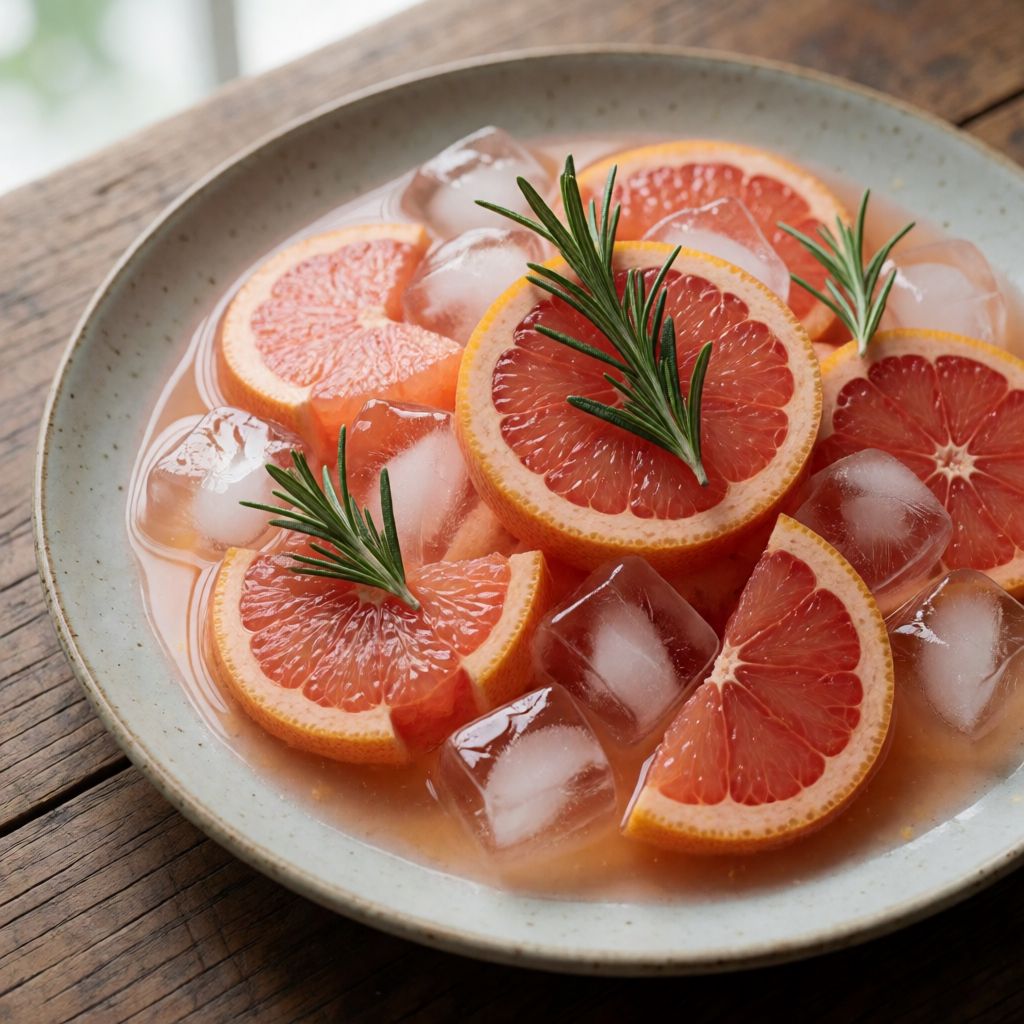
 AI photo
Pink Grapefruit Cocktail with Gin and Rosemary
A refreshing pink grapefruit cocktail mixed with gin and a homemade rosemary syrup.
Labels are worked out automatically from the ingredients and can be wrong. Check the packaging if it matters to you.
Ingredients
- 4 pcs Grapefruit
- 50 ml Gin
- 50 ml Rosemary syrup
- 10 pcs Ice cubes
- 2 pcs Rosemary for the syrup
- 45 g Sugar
- 75 ml Water






for serving
- 1 pcs Grapefruit 2 wedges, skewered on a cocktail stick, for serving
- 2 pcs Rosemary
Steps
For the rosemary syrup, put the rosemary, sugar and water in a saucepan. Bring to the boil and cook until the sugar has dissolved.
5 minLet the syrup cool.
Put the grapefruit juice, gin, rosemary syrup and ice cubes in a shaker and shake well until the cocktail is ice-cold.
1 minPour into two glasses and serve with a sprig of rosemary and a wedge of grapefruit.
1 min
This is a cold drink built on contrast: bitter-sweet pink grapefruit against the resin of gin, and running underneath it, a note of rosemary that you put there deliberately, cooked into a syrup rather than dropped in raw. It looks like a garnish cocktail — sprig, wedge, stick — but the garnish is not what decides whether it works. Two things decide it.
First: the syrup. You are not just dissolving sugar in water, you are pulling the oil out of rosemary needles, and that oil does not give itself up to cold liquid — it needs heat to let go. Boil it too briefly and you get sweet water with a rosemary smell standing politely at the door, never coming in. Boil it right and the needles go slightly grey, spent, and the liquid smells of rosemary the way a roast lamb leg smells of it — which, if you're used to a Sunday roast, you already know the cue for.
Second: the shake. 'Ice-cold' is doing real work in that instruction — it is not a flourish. Ice in a shaker does two jobs at once: it chills the liquid and it waters it down, and the two are in a race. Shake too little and the drink is merely cool and too strong-tasting; shake properly and the cold wins fast enough that the dilution stays modest. You're not stirring a G&T here, you're assaulting it briefly and letting go.
Grapefruit juice is the one ingredient you can't outsource to a bottle without the drink noticing. Squeeze it yourself, and squeeze it without leaning on the rind — that's where the bitter pith oil lives, and it travels into the juice the moment you press too hard.
Grapefruit, pink ones specifically, for two reasons that aren't about colour theatre. Pink grapefruit carries more sugar and less of the aggressive bitterness of the white-fleshed kind, so it sits better against gin without needing extra syrup to apologise for it. Four fruit for two glasses looks generous, but juice yield from a grapefruit is modest and inconsistent fruit to fruit — some give you sixty millilitres, some forty — so you buy a margin, plus one spare fruit purely for the wedge on the stick, which doesn't need to be juiced at all.
Gin: any London dry style works, because the thing you want from it here is juniper and a dry backbone, not a personality of its own. Avoid the flavoured gins — the pink ones, the elderflower ones — not out of snobbery, but because you've already built flavour into the syrup, and two aromatic ideas competing in one glass just cancel each other into mud. If gin isn't in the house, a dry white vermouth at the same volume gets you something related, though it's a different drink by then, lower in strength and sweeter — know that going in.
Rosemary syrup is simple syrup with a job added. Simple syrup on its own is sugar and water in roughly equal volume, boiled until the sugar disappears into the liquid — you're looking for the point where the water stops looking gritty and starts looking like water again, nothing more technical than that. The rosemary rides along in the same pot because heat is cheap to share: once you're boiling water anyway, you may as well extract the herb oil while you're at it, rather than running a second process. Let it cool before you use it — hot syrup into a shaker full of ice just melts your ice early and leaves you with warm, weak cocktail. Patience here costs you ten minutes on a worktop; impatience costs you the whole drink.
Some say fresh rosemary is non-negotiable, dried is a crime. No — because what dried rosemary lacks isn't flavour, it's volume: the oil is more concentrated but there's less surface area releasing it, so halve the quantity and boil a minute longer, and it will do the job. What dried rosemary won't give you is the pretty sprig for the glass — for that you do want it fresh, even just one good sprig kept back.
Ice: ten cubes for a shaker sounds like a lot until you remember most of that ice is there to be sacrificed, melting fast to drop the temperature, with only a fraction of it surviving to actually dilute the drink. If your freezer only makes small, fast-melting cubes, that's fine — it just means shake a little less hard and a little shorter, because small ice gives up its cold quicker. No cocktail shaker in the flat is not a reason to skip this — a jam jar with a tight lid, held firmly, does exactly the same mechanical job: cold liquid plus cold ice plus violent movement, that's the whole trick, the branded tin adds nothing but status.