
 AI photo
Pinolata
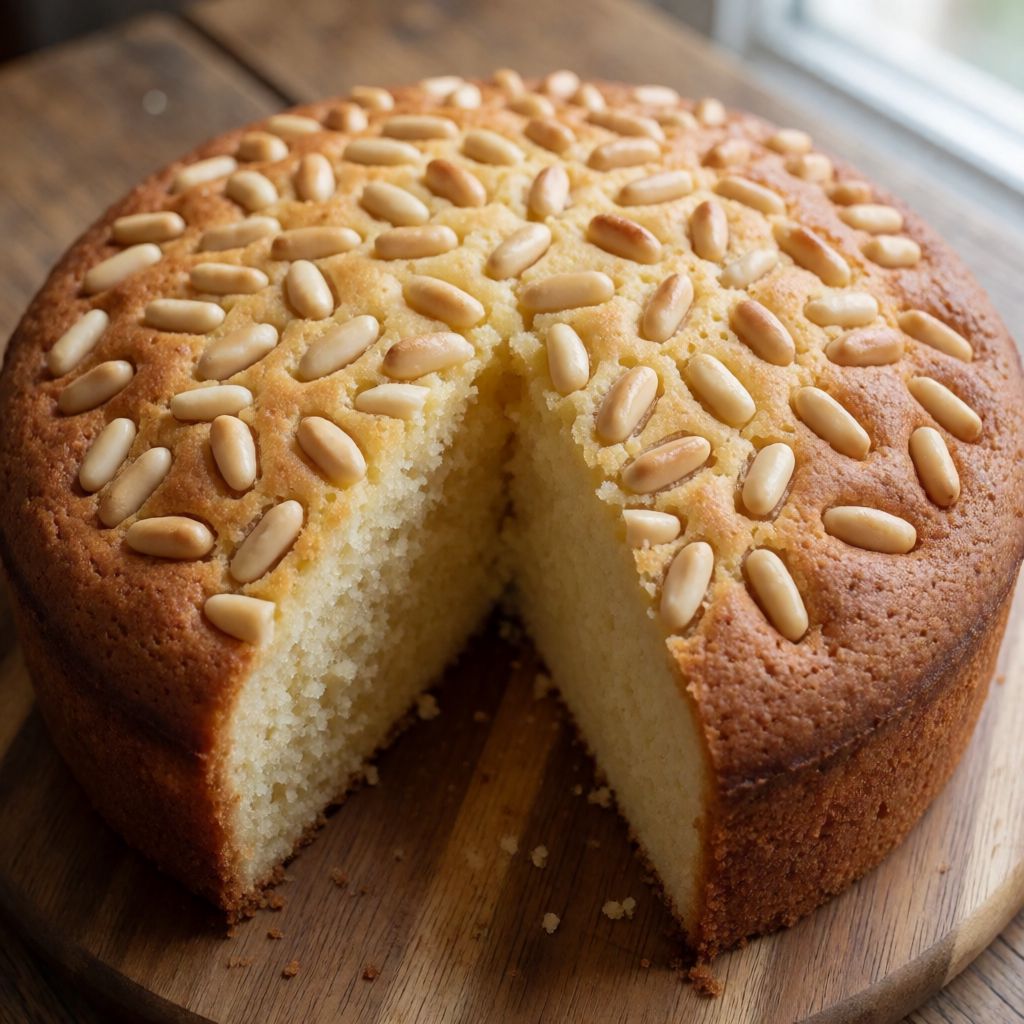
A classic layered cake filled with custard cream studded with raisins soaked in Vinsanto, and topped with pine nuts.
Labels are worked out automatically from the ingredients and can be wrong. Check the packaging if it matters to you.
Ingredients
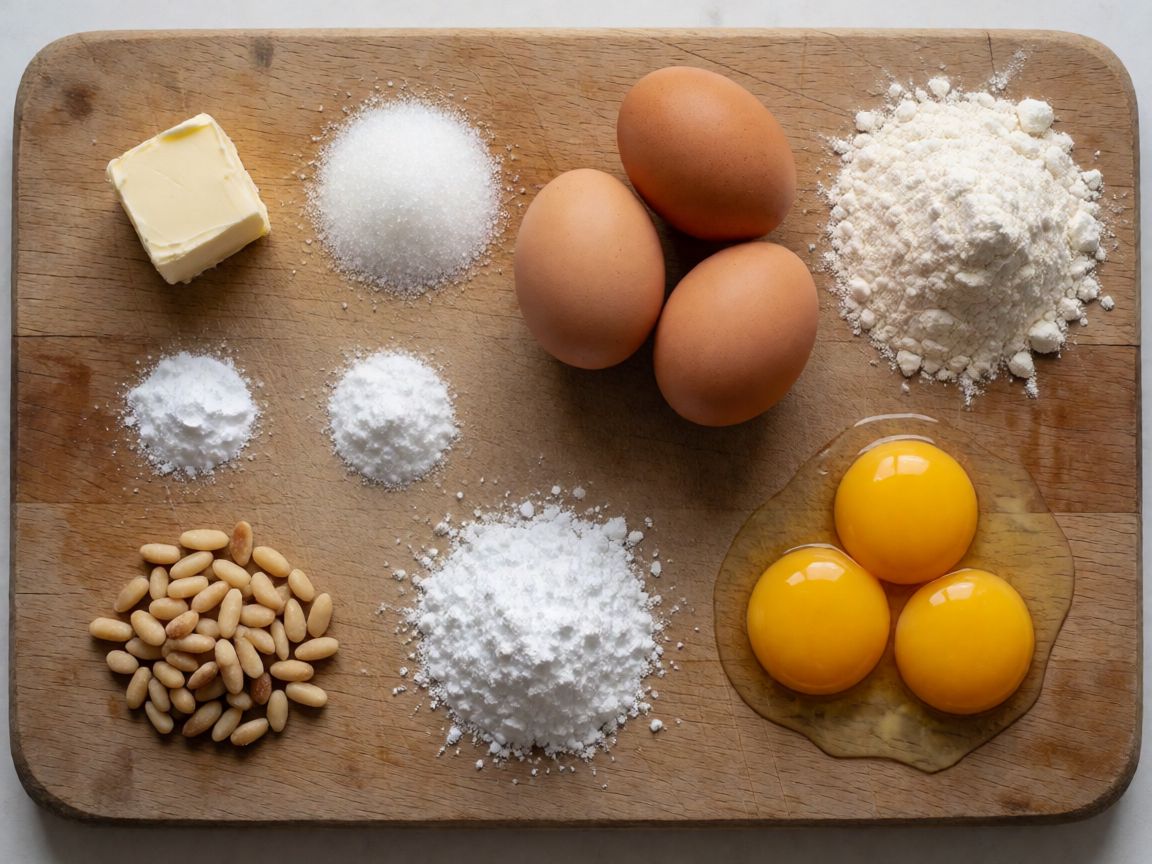
- 180 g Butter
- 100 g Caster sugar
- 3 pcs Eggs
- 180 g Plain flour
- 0.5 pcs Baking powder
- 50 g Pine nuts
- Icing sugar to taste
- 3 pcs Egg yolks
- 100 g Caster sugar
- 30 g Plain flour or cornflour
- 500 ml Milk
- 50 g Raisins soaked in Vinsanto



Steps
Whisk the egg yolks with the sugar and flour, then pour in the hot milk in a thin stream.
Pour the mixture into a small saucepan and cook over heat until thickened, stirring constantly.
Remove from the heat, add the raisins soaked in Vinsanto and let the custard cool.
Combine room-temperature butter with the sugar and beat until smooth.
Add the eggs one at a time, waiting until each is fully incorporated.
Sift the flour with the baking powder and fold it into the mixture together with some of the pine nuts.
Butter a round 22-24 cm tin and spread in half of the batter.
Spread the cooled custard on top and cover with the other half of the batter, piping it on in circles with a piping bag.
Decorate with the remaining pine nuts, spreading them evenly over the surface.
Bake at 180°C.
38 minLet cool and dust with icing sugar.
Pinolata is a Tuscan cake built like a sandwich: a soft butter sponge on the bottom, a layer of custard thick enough to hold its shape in the middle, more sponge piped over the top, and a crust of pine nuts toasting in the oven heat. Cut it and you see the three bands clearly — that's the whole point of the dish, and it's also the whole risk. If the custard is too loose it sinks into the batter below and you get a soggy cake instead of a layered one. If it's too thick it won't spread, it'll tear the batter underneath when you try.
What decides whether it works is timing two separate cooking processes so they meet at the tin rather than fighting each other. The custard has to be made first and properly cooled — not just off the heat, actually cold — because a warm custard will melt the butter in the batter sitting under it and the layers blur. The sponge has to be a batter stiff enough to pipe, which is why the butter goes in at room temperature and gets properly creamed with the sugar: you're beating air into fat, not just mixing, and that air is what keeps the top layer light enough to rise over a wet filling instead of being weighed down by it.
Butter: this is the structural fat of the sponge and it has one job before you even open the flour bag — it has to be soft enough to trap air when beaten with the sugar, but not so soft it's oily, because oily butter won't hold bubbles, it'll just coat them and let them escape. Leave it out of the fridge an hour before you start; in a British kitchen in winter that's often not enough, so stand the bowl near — not on — a warm hob or radiator for ten minutes if it's still cold and dense when you press it. No butter with a strong flavour of its own here; this is one place you do want the "tastes of butter" taste, so don't swap in a neutral oil, it'll give you a flat, dense crumb instead of a risen one.
Caster sugar, twice in this recipe, two different jobs. In the sponge it's beaten into the butter to create the air pockets the eggs will later stabilise — caster dissolves faster than granulated, which matters because undissolved sugar grains tear those air pockets as they're folded in later. In the custard it's there to thicken alongside the flour and to stop the egg yolks from scrambling: sugar competes with the proteins for the water in the yolk and raises the temperature at which they curdle, which is also why you whisk the yolks with the sugar before any heat touches them, never after.
Eggs, added one at a time and waited out — not a ritual, a defence against the batter splitting. A butter-and-sugar cream can only hold so much water before the fat and water separate into something that looks like scrambled curds instead of a smooth mixture; adding the eggs gradually lets each one get absorbed into the fat before the next lot of water arrives. If it looks like it's splitting anyway, a spoonful of the flour stirred in will pull it back together — the starch soaks up the excess liquid.
Plain flour with baking powder: the baking powder is the only leavening in the sponge beyond the air you beat in by hand, so don't skip "sift" as a word that means nothing — sifting breaks up clumps of baking powder so you don't get one bitter pocket of lift in one bite and none in the next. Half a sachet is an odd amount to measure by eye; weigh it if your scale does small enough increments, because too much baking powder gives a soapy aftertaste, not just more rise.
Egg yolks, sugar, flour or cornflour, milk — this is a crème pâtissière, and the flour here is doing a specific job: it's a starch that has to gelatinise, meaning it has to actually reach a near-boil briefly while you stir, or it stays raw-tasting and thin no matter how long it sits on the heat looking thick. Cornflour instead of plain flour gives a glossier, slightly less "bready" set — use it if you want the custard layer to look more translucent when you cut the cake, use plain flour if you want it to taste more like a baked custard than a glaze. Pour the hot milk into the yolks in a thin stream while whisking, not the other way round — that's tempering, and it's there to raise the yolks' temperature gradually so they don't cook into grains the instant they hit the heat.
Raisins soaked in Vinsanto: Vin Santo is a sweet, oxidised Tuscan wine, and soaking plumps the raisins back up with liquid they lost drying, so they don't sit in the custard as hard little stones. No Vin Santo in a UK cupboard — fair enough, it's not a bottle most people keep. Any sweet fortified wine with a nutty, raisiny character of its own works on the same logic: a cream sherry, a Marsala, even a strong sweet tea with a splash of brandy if you want it alcohol-light. The point isn't the specific bottle, it's "sweet, slightly oxidised liquid that won't fight the custard."
Pine nuts, split between inside the batter and on top. Buy them pale, not yellowed — yellowing means the oils inside have started to turn, and pine nuts are high-fat enough that this happens faster than with most nuts, which is also why a sealed bag from a shop with slow turnover is worth being suspicious of. If pine nuts are the expensive stumbling block — and in the UK they usually are — flaked almonds on top will toast the same way and give you the crunch, though you lose that faint resinous taste that's actually the point of the name.
Icing sugar at the end is cosmetic, not structural — it's there because the top of the cake, once cooled, looks plain without it, and a cake this layered on the inside deserves a bit of care on the outside too. Dust it only once the cake is properly cool, or it melts into the surface and you lose the contrast of white against gold.