
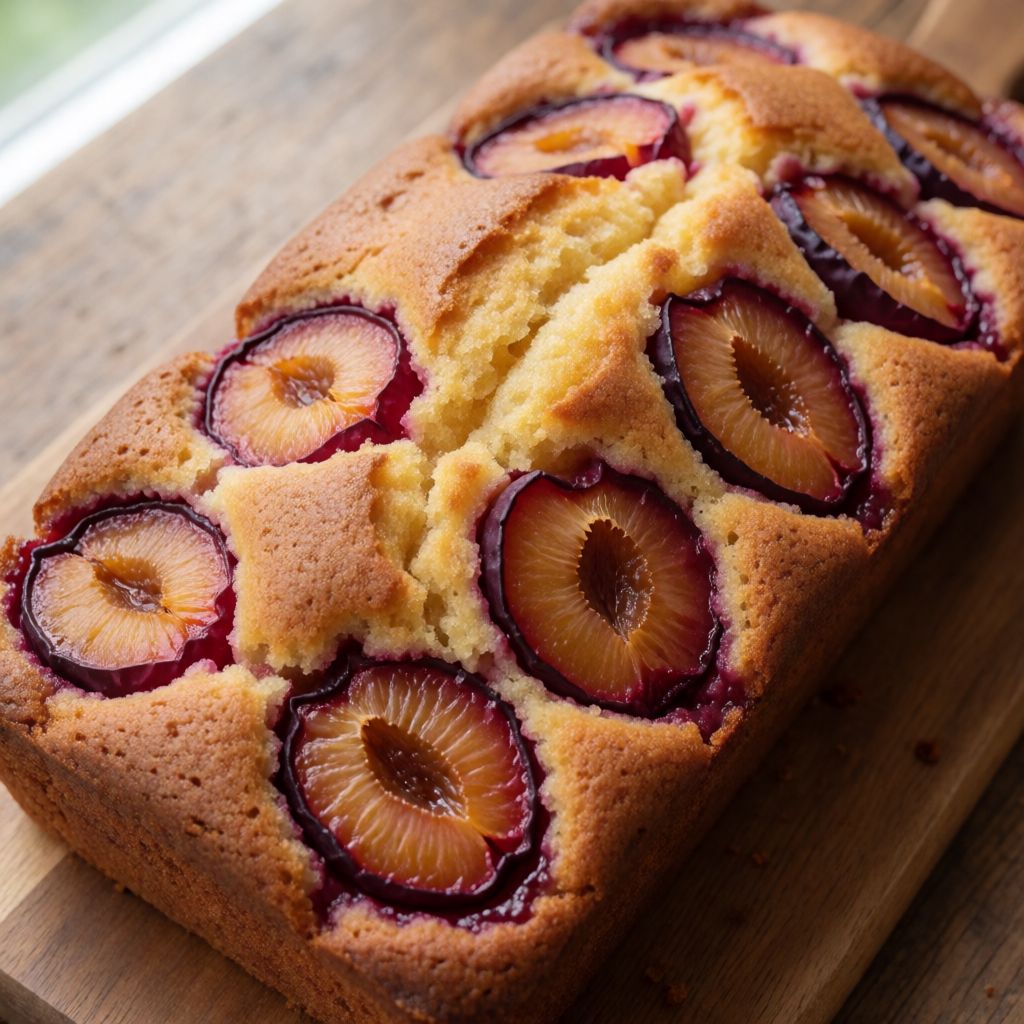
 AI photo
Butterless Plum Cake
A moist plum cake made without butter, a simple way to use up ripe plums.
Labels are worked out automatically from the ingredients and can be wrong. Check the packaging if it matters to you.
Ingredients
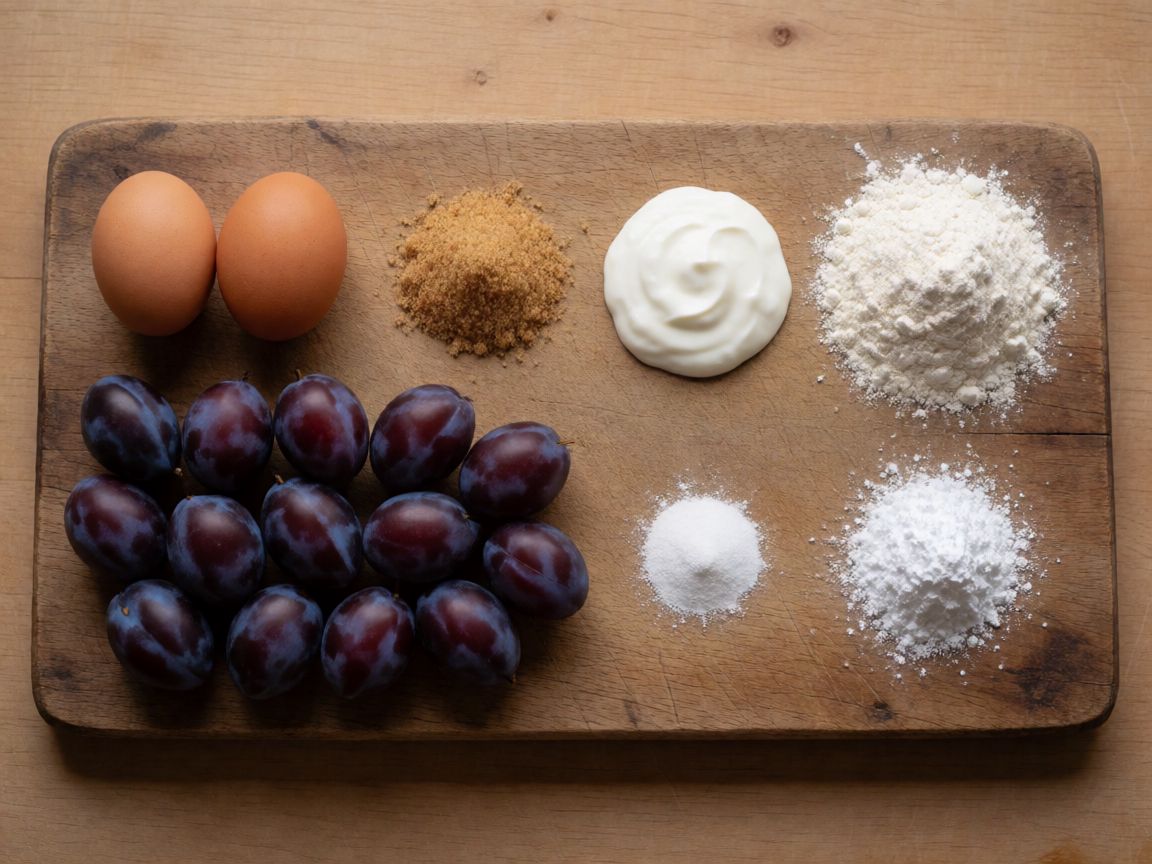
- 2 pcs Eggs
- 100 g Brown sugar
- 150 g Yogurt plain or Greek
- 250 g Plain flour pre-sifted
- 75 ml Vegetable oil
- 15 pcs Plums
- 15 g Baking powder
- 1 pinch Icing sugar for dusting








Steps
Beat the eggs with the brown sugar in a large bowl using a mixer until light and fluffy.
Add the yogurt and continue mixing.
Pour in the oil in a thin stream, add the baking powder and the sifted flour, and mix well.
Wash 6–7 plums, pat dry, cut into small pieces and fold into the batter.
Grease a 22 cm cake tin with oil and dust with flour, then pour in the batter.
Slice the remaining plums and arrange them in a sunburst pattern on top of the cake, pressing them lightly into the batter.
Bake in an oven preheated to 180°C for about 45 minutes.
45 minRemove the cake, let it cool, and dust with icing sugar on top.
This is a plum tart dressed as a cake — a flat disc of batter holding fifteen plums, some chopped and buried, some sliced and fanned on top like petals round a sun. No butter anywhere. That's not a diet trick, it's structural: the whole cake stands on oil and yogurt doing jobs that butter usually does separately, and on eggs whipped with sugar doing the job creamed butter usually does — trapping air.
What decides whether it works is the beating in step one. With butter you cream it with sugar and the fat itself holds the air pockets. Here there's no fat to hold anything yet — the air has to come from egg foam, full stop. Beat the eggs and sugar until the mixture goes pale and thick enough to leave a ribbon when you lift the whisk. Rush this and the cake comes out flat and dense, because nothing downstream puts the lift back.
Some say an oil cake can't be as rich as a butter cake — no, because richness here doesn't come from the fat at all, it comes from the yogurt. Yogurt brings fat, acid and water in one ingredient, and the acid is what wakes the baking powder properly, giving you a second small rise in the oven on top of the one you built by hand with the whisk. Oil's only job is to coat the flour and keep gluten short, so the crumb stays tender instead of chewy. It's a division of labour, not a compromise.
Eggs here aren't just binding, they're the lifting mechanism, so use them at room temperature — cold eggs don't whip to volume as readily, the proteins unwind slower and you lose minutes of air for nothing. Brown sugar isn't an aesthetic choice either: it's hygroscopic, it pulls in and holds moisture, which matters in a cake with no butter fat to keep things from drying as it sits. White sugar works if that's what's in the cupboard, but the cake stales a day sooner and the crumb is paler, less amber.
Yogurt should be plain, full fat if you can, because the fat percentage is doing real work — a 0%-fat yogurt leaves the cake leaner and slightly rubbery, since you've taken away part of the only fat that was carrying flavour. Greek yogurt is thicker and gives a denser, more pound-cake crumb; a runnier natural yogurt gives something lighter. Soured cream or buttermilk will both stand in — anything with the same combination of acid, fat and water does the job, the label on the tub is less important than that balance.
The oil needs to have no character of its own, because it has no cooking to disguise it — it goes in raw and stays raw in the finished cake, just dispersed through the crumb. Sunflower or rapeseed, both easy to find in any British supermarket, are right for this. Olive oil will work structurally but it leaves its own taste behind, and in a plum cake that fights the fruit rather than supporting it.
Flour is sifted beforehand for the same reason you sift for any cake — not ritual, just to break up compacted lumps so the baking powder distributes evenly through it instead of clumping in pockets that fizz out unevenly in the oven. Fifteen grams of baking powder looks generous against 250 g of flour, but this batter is carrying real weight — yogurt, oil, and a kilo or so of fruit — and it needs the extra lift to still rise through all that.
For the plums, look for fruit that's ripe enough to be sweet but still firm enough to hold its shape when you press a thumb into it — the British Victoria plum, in season, is exactly this kind of fruit, and it's what I'd reach for here. A plum gone soft collapses into syrup under heat and you lose the sunburst pattern entirely. If plums aren't in season, greengages, apricots, or even firm nectarines work on the same logic: sliceable, not mushy, with enough acid to balance the sugar in the batter.
On the oven — 180°C is where the structure sets: egg proteins coagulate, the second lift from the baking powder finishes, and the sugars on the exposed plum slices start to caramelise at the edges without burning. A fan oven runs hotter for the same dial number than a conventional one, and plenty of home ovens drift ten degrees either way from what the dial claims, so don't trust the number blindly — trust the cake. It's done when a skewer through the centre, between two plum pieces, comes out without wet batter clinging to it, and the top springs back when you press it rather than leaving a dent. Forty-five minutes is where to start checking, not where to stop the clock. And let it cool properly before you dust the icing sugar — dust it hot and the sugar just melts into the surface and disappears, all effort, no effect.