
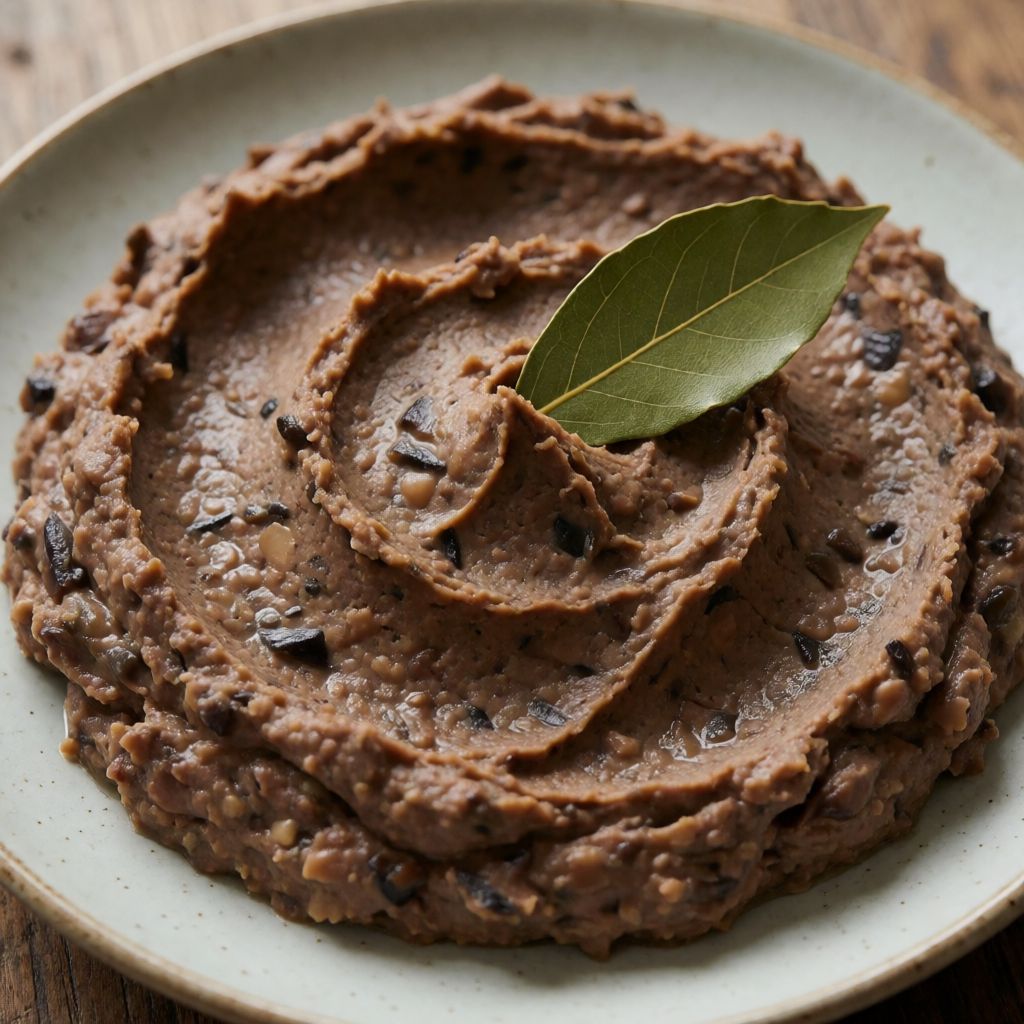
 AI photo
Porcini Mushroom Pâté
A creamy pâté made from porcini mushrooms, butter and white wine, blended until smooth.
Labels are worked out automatically from the ingredients and can be wrong. Check the packaging if it matters to you.
Ingredients
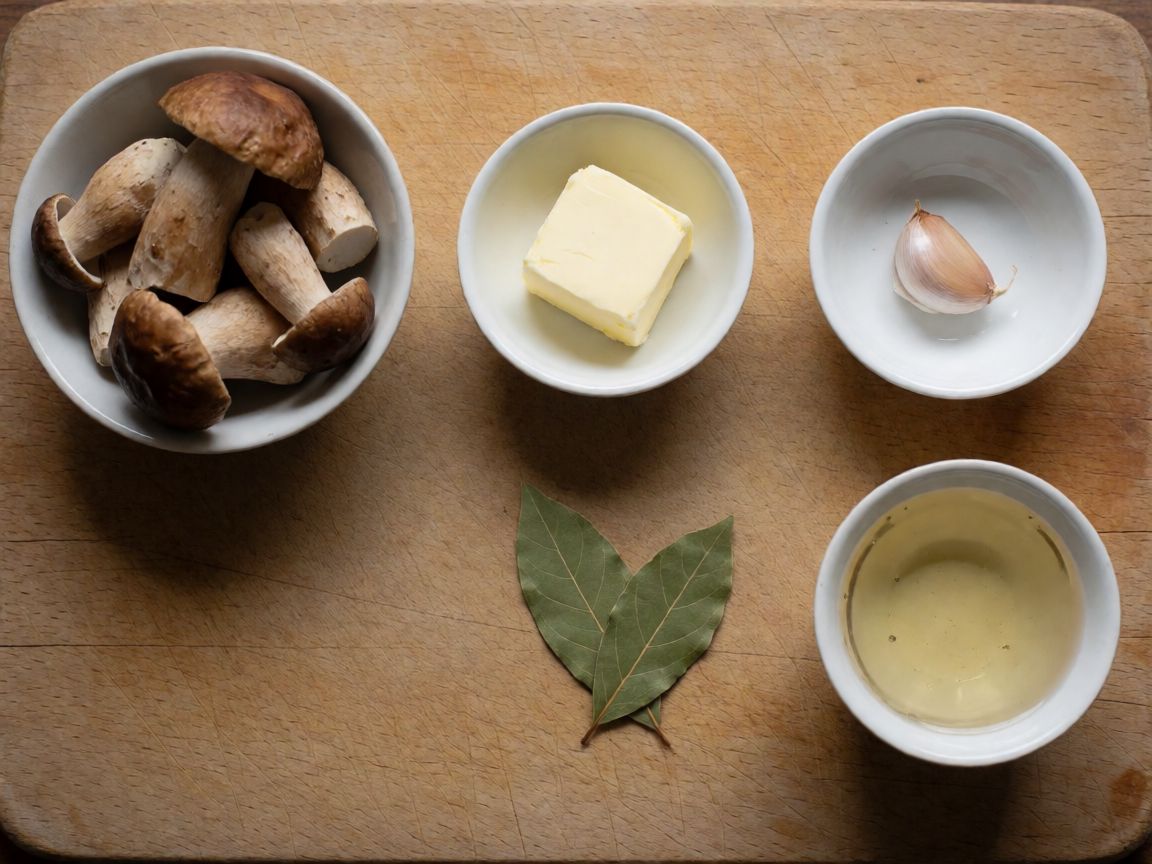
- 500 g Porcini mushrooms
- 200 g Butter
- 1 clove Garlic
- Olive oil to taste, plus extra for blending if needed
- 2 pcs Bay leaves
- 250 ml White wine dry
- Salt to taste
- Black pepper to taste








Steps
Thoroughly clean the mushrooms, scraping the base of the stem and removing any excess soil. Wipe with a damp cloth, separate the cap from the stem and chop into small pieces.
Heat the olive oil in a frying pan, sauté the garlic until golden, then add the mushrooms and bay leaves.
Cook gently, adding the wine a little at a time and stirring occasionally.
30 minSeason with salt and pepper and let the wine evaporate.
In a saucepan, melt the butter over low heat, taking care not to let it burn.
Add the mushrooms to the butter and warm through together so the flavours combine.
Let the mixture cool, then transfer to a blender and blitz until creamy, adding a little more olive oil if needed.
This is not a dip, it's mushroom butter — fat carrying an aroma that otherwise lasts three weeks a year. Porcini have a short season and a short memory: cook them today, lose that smell tomorrow. Someone worked out that if you trap the flavour in butter and let it set cold, you can eat September in November. That's the whole idea, and it's the same logic behind potted shrimp or rillettes — nothing exotic, just fat as a time machine.
What decides whether it works is not the mushroom, it's three small moments you can wreck without noticing. Garlic has to go gold in the oil, not brown — gold releases its oil into the pan, brown turns bitter and that bitterness doesn't cook out later, it just rides along into the pâté. Wine goes in a splash at a time, not all at once, because you're not boiling the mushrooms, you're reducing around them — dump the whole 250 ml in and you steam them instead, and steamed porcini go slippery, not silky. And the butter melts low and slow on its own, before the mushrooms ever meet it — push it too far and the milk solids catch and brown, and suddenly your porcini pâté tastes of hazelnut, which is a different dish you didn't order.
Porcini themselves: buy them firm, the gills under the cap tight and dry, not dark or weeping — once they start weeping they're already losing the water you want staying out of your pan. Clean them with a damp cloth, not under the tap. Some say you have to wash wild mushrooms properly to get the forest off them — no, because porcini are sponges: running water goes into the flesh and has to come back out later, as steam, right when you're trying to concentrate flavour, not dilute it. A brush or a cloth takes the grit off the surface, which is all you actually need. If fresh porcini aren't to be found — and in a British supermarket in most months they won't be — dried porcini soaked in warm water for twenty minutes, squeezed out, with the soaking liquid saved and used instead of some of the wine, gets you most of the way there. Chestnut mushrooms alone won't: they're wetter and milder, fine for a Sunday roast side but too quiet to be the whole point of a pâté.
Butter is not a background player here, it's half the dish by weight once you think in terms of fat-to-mushroom ratio, so use one with a flavour you'd eat on its own — a decent block butter, not a spread designed for easy fridge-cold spreading, because those have water worked in and will fight you at the melting stage. Olive oil is only there to get the garlic and the first minute of mushroom cooking going; any oil with no smell of its own would do the sautéing job, but since the olive oil's taste does carry a little into the final blend, pick one you like rather than the cheapest bottle on the shelf.
One clove of garlic is correctly stingy. This isn't a garlic pâté wearing a mushroom costume — the garlic's job is to perfume the oil before the mushrooms arrive, nothing more, and a second clove starts arguing with the porcini instead of introducing it. Bay leaf works the same way, quietly, in the background, and you fish it out before blending — nobody wants bay leaf confetti in a smooth pâté, and it won't break down no matter how long you blitz it.
The wine needs to be dry for one reason: sugar. A sweet or off-dry white reduces into something sticky and slightly caramel, which pulls the whole thing toward dessert territory and away from the earthy, slightly bitter note porcini are actually good for. If there's no wine open, a splash of water with a squeeze of lemon gets you the acidity without the alcohol, though you lose some of the depth wine's own evaporation leaves behind — not a perfect swap, an honest one.
Salt and pepper are both "to taste" for a real reason, not vagueness: porcini vary season to season in how much savour they bring on their own, and butter mutes salt more than you expect, so taste after the butter goes in, not before — salting the mushrooms alone and judging by that will leave the finished pâté underseasoned once the fat has had its say.
In an ordinary kitchen, use the widest pan you own for the sauté stage — a narrow saucepan traps the steam the mushrooms throw off and you end up stewing, not reducing. Once it's blended and cooled, a sheet of baking paper pressed straight onto the surface works better than a lid for keeping a skin from forming while it sets in the fridge — the kind of improvising English kitchens are already good at, having spent a few centuries potting things under butter for exactly this reason.