
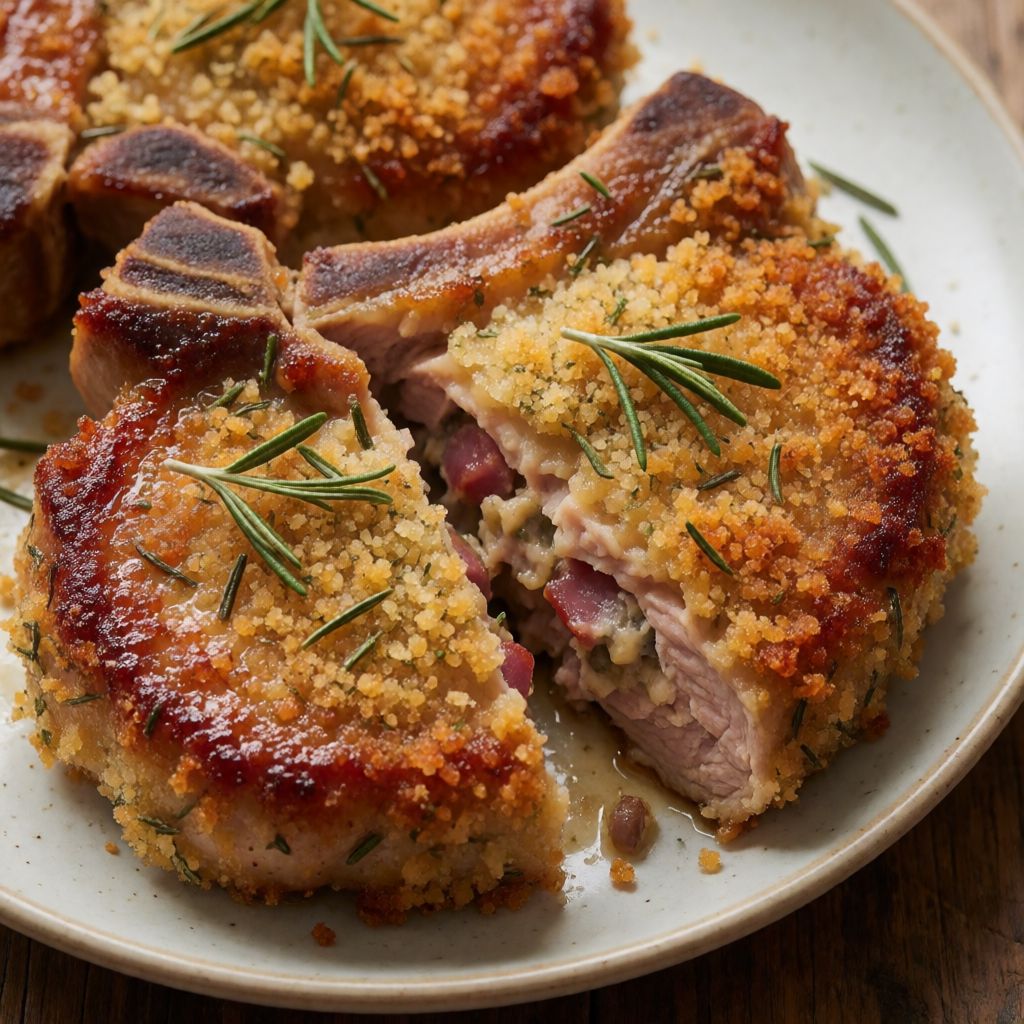
 AI photo
Pork Chops Stuffed with Fontina and Pancetta in Rosemary Breadcrumbs
Breaded pork chops stuffed with fontina cheese and pancetta, pan-fried until golden.
Labels are worked out automatically from the ingredients and can be wrong. Check the packaging if it matters to you.
Ingredients
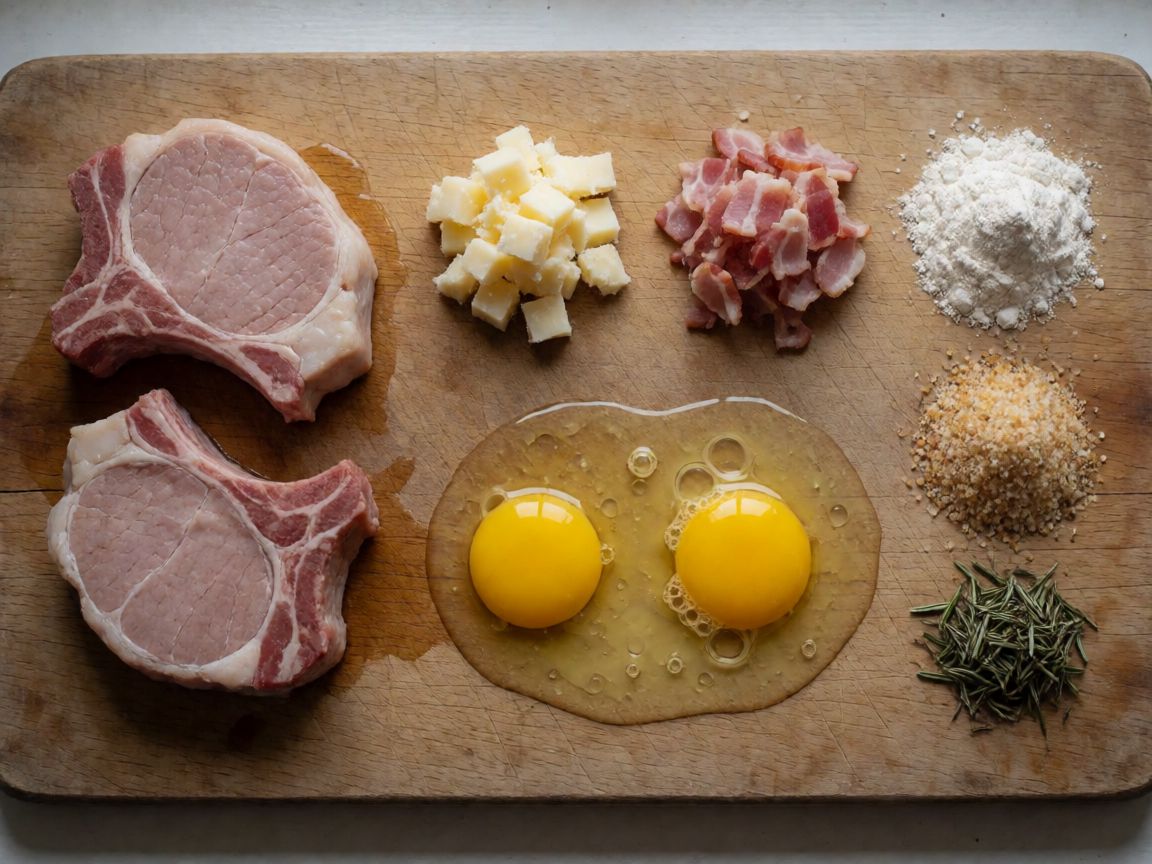
- 2 pcs Pork chop
- 30 g Fontina cheese
- 30 g Pancetta
- Plain flour to taste
- 2 pcs Eggs beaten
- Breadcrumbs to taste
- Rosemary to taste
- Salt to taste
- Vegetable oil for frying







Steps
Make a cut into each pork chop to form a pocket for the filling.
3 minPlace the pancetta and a few pieces of fontina inside the pocket, then close the chop.
2 minMix the breadcrumbs with the rosemary.
1 minCoat the chops: first in flour, then in beaten eggs, and finally in the rosemary breadcrumbs.
3 minHeat the oil for frying in a pan.
2 minAdd the chops and fry, seasoning with salt on both sides. They are ready when the inside reaches 70°C.
15 minPlace the cooked meat on a plate lined with paper towel to remove excess oil.
1 min
Think of this as a Sunday roast chop reduced to a single serving and turned inside-out: instead of a joint that feeds six and sits in the oven for hours, you get one piece of pork doing all the work — meat, melted cheese, cured pork fat — breaded and fried in under half an hour. It's a cutlet that behaves like a parcel. Cut a pocket into the chop, slide in the fontina and pancetta, and you've built a sealed packet that bastes itself from the inside while the crumb crust does the sealing from the outside.
What decides whether it works has nothing to do with the breadcrumbs looking pretty. It's two things: how well the pocket is closed, and how hot the oil is when the chop goes in. A pocket that gapes lets the cheese run out into the oil the moment it melts — it burns on contact, smokes, and tastes of nothing but bitter dairy. And oil that isn't properly hot doesn't fry, it soaks: the crumb drinks oil instead of crisping, and you end up with a greasy, pale coating over meat that's stewing rather than browning. You want the surface sealed fast, so the inside has time to come up to heat gently behind that crust.
On the pork itself: you want a chop thick enough to take a pocket without falling into two thin flaps. A boneless loin chop is easier here than a bone-in one — the bone gives you nothing to cut through in the middle, and all it does is get in the way of a clean pocket. If your chop is thin, don't force a deep cut; a shallow pocket with less filling beats a split chop with cheese running out both ends before it ever sees the pan.
Fontina is chosen for how it melts — smooth, without splitting into oil and curd the way some hard cheeses do under heat. The rule for swapping it isn't "use a similar-sounding Italian cheese", it's: anything that melts clean and doesn't carry a strong smell of its own, because that smell will fight the rosemary and the pancetta instead of sitting quietly under them. Mozzarella works. A young, mild gruyère works. A mature, sharp cheddar is the wrong direction — it can turn oily and stringy when it hits real heat, and its flavour will shout over everything else in the pocket.
Pancetta is there for fat and salt, not for bulk. As it heats inside the pocket it renders a little, and that fat is what carries flavour into the meat around it and keeps the cheese from drying at the edges. If you haven't got pancetta, streaky bacon is the honest substitute — it's the same idea, cured pork belly, just smoked instead of air-dried, so expect a smokier note rather than a lesser one. The reason pancetta is traditional and not bacon has nothing to do with superiority: it's simply what was hanging in an Italian larder, cured without smoke because that's how that region preserved its pork.
The breadcrumbs and rosemary are a pairing, not a flourish. Dried breadcrumbs give a crisper, more even crust than fresh ones, which tend to clump and brown unevenly. Rosemary needs to be chopped fine and mixed through properly — a whole needle sitting on the surface will char before the crust is even coloured, and burnt rosemary turns bitter fast, which is the one note you don't want fighting the cheese. If you've no fresh rosemary, dried is genuinely fine here; it's sturdy enough to survive frying, unlike softer herbs such as basil, which would just scorch.
For the oil, the rule is the same as always: anything with no flavour of its own and a smoke point high enough to fry without protest — sunflower or rapeseed, both easy to find in a UK kitchen, rather than olive oil, which starts to smoke and turn bitter well before your chop is properly sealed. You're shallow-frying in a pan, not deep-frying, so you don't need to fill the pan — enough oil to come partway up the chop, and you turn it rather than submerge it. Drop a pinch of breadcrumbs in first: if they sizzle and colour steadily rather than sitting inert or blackening instantly, the oil's ready.
The paper towel at the end isn't decoration, it's drainage — a domestic kitchen rarely has a wire rack standing by, and a plate lined with paper does the same job: pulls the surface oil off before it sits and turns the crust soggy from underneath. And give the chop the few minutes it needs before cutting into it — patience here isn't optional extra care, it's what keeps the fontina inside as a pool rather than letting it all run out onto the plate the second you cut, impatient, straight from the pan.