
 AI photo
Pork Neck Roast
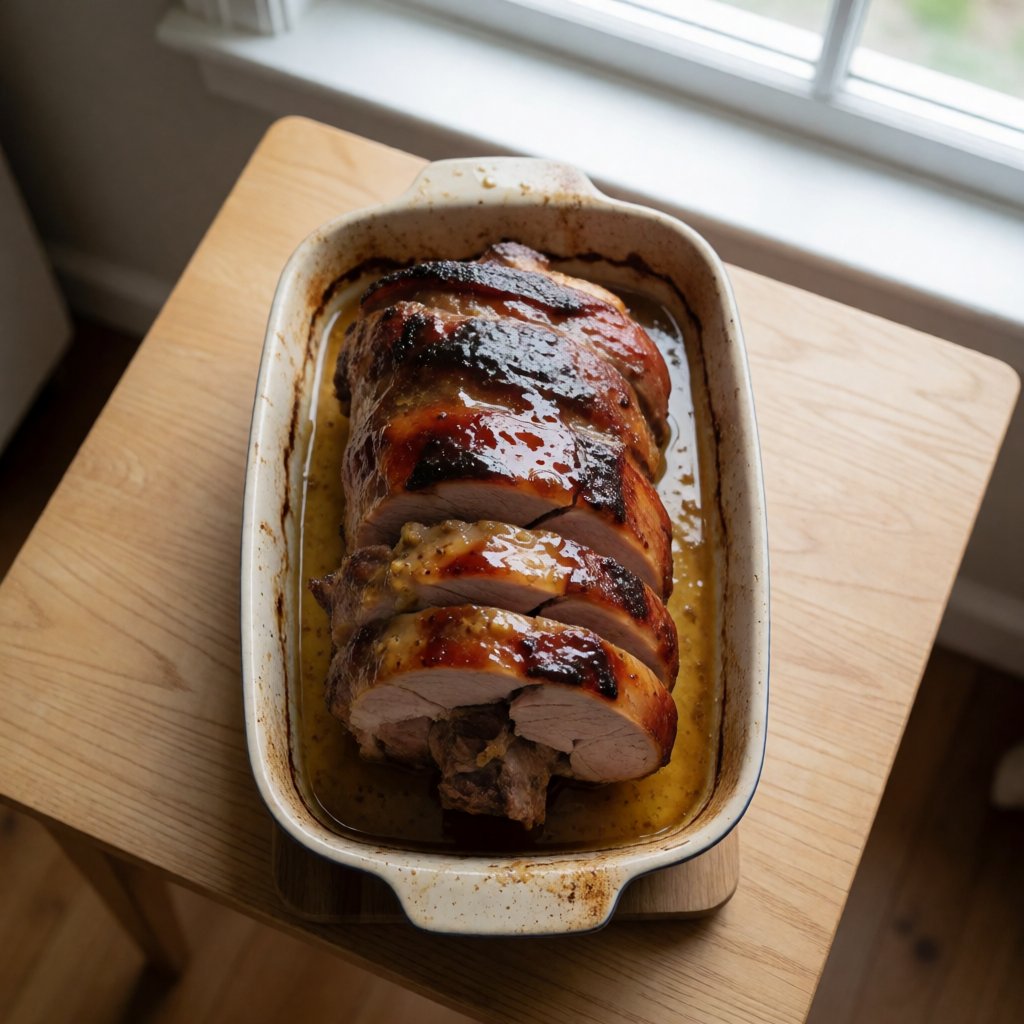
A whole piece of pork neck rubbed with mustard, garlic and black pepper, then roasted until tender and juicy.
Ingredients
- 500 g Pork neck in one piece
- 1 tbsp Mustard
- 2 clove Garlic crushed
- 1 tbsp Sunflower oil
- 1 pinch Salt or to taste
- 1 pinch Black pepper or to taste





Steps
Rub the piece of meat with salt, pepper, mustard and garlic.
Cover with foil and place in the oven at 200°C for 40 minutes.
40 minRemove the foil and cook for a further 15 minutes, until the internal temperature reaches 71°C.
15 minTake the dish out of the oven and let the meat rest for 10 minutes.
10 min
This is a single piece of pork neck, not a joint carved from a bigger cut for show — just under half a kilo, rubbed and roasted whole, enough for two people with a reasonable appetite and maybe a roast potato apology on the side. It behaves like a Sunday roast shrunk down to a weekday size, and that changes nothing about how it works, only how long you wait for it.
What decides the result is the fat running through the neck, not around it. Neck has fat threaded between the muscle fibres, and that fat is the thing doing the actual basting while you stand in the next room doing something else. If you bought a lean loin instead and tried this same method, you'd get a dry, sad disc of meat, because there's nothing inside it to melt and keep it wet.
The second thing that decides it is the two-stage oven time: covered, then uncovered. Covered, the meat comes up to temperature gently, the moisture stays in the pan instead of drying the surface before the centre is anywhere near ready. Uncovered, for the last stretch, the surface finally gets exposed to real heat and colours. Do it the other way round — crust first, cover after — and you get a dark, tough skin sealing in meat that's still cool at the core. Some say pork has to be cooked through to grey, no pink anywhere, because "pork is dangerous" — no, because that fear is from an era of different farming and different parasites; modern food safety guidance puts safe pork well below grey, and 71°C at the core is tender meat, not punishment.
Pork neck — sometimes sold as collar, or pork shoulder steak cut thick — is cheap for a reason that has nothing to do with quality and everything to do with where it sits on the animal. It's a working muscle, full of connective tissue, which is exactly why it rewards slow covered heat and punishes quick dry heat. If your butcher only has shoulder or a thick-cut collar steak, that's the same family of cut and will behave the same way. What you're choosing for is marbling you can actually see — streaks of fat through the meat, not just a fat cap on one side. A perfectly lean piece is the wrong cut for this method, full stop; there's nothing in it to melt.
Mustard here isn't flavour theatre, it's glue and a little acid. It clings to the surface where oil alone would just run off, and it gives the crust something to grab onto once the foil comes off. If you've no mustard, any paste with a bit of sharpness works on the same principle — a spoon of yoghurt with a squeeze of something sour, or a wholegrain mustard if you want texture as well as hold. What won't work is swapping it for more oil; oil slides, it doesn't stick.
Crushed garlic rather than whole cloves or slices is deliberate — crushing breaks the cells and gets more of the sharp raw punch into contact with the meat's surface in the short time it has before the oven. Sliced garlic under foil heat mostly just goes soft and mild; crushed garlic rubbed in gives you more smell and more bite for the same two cloves.
Sunflower oil's job is to spread the rub and help the surface take colour once uncovered — it needs no character of its own, because the mustard and garlic are already supplying character. Any neutral oil does this: rapeseed, groundnut, a flavourless vegetable oil. Olive oil isn't wrong, but it brings its own smell to a dish that doesn't ask for one, so use it only if you don't mind that.
Salt and pepper go on before the oven, not as an afterthought seasoning at the table — salt put on raw meat and left even ten minutes starts drawing moisture to the surface and then back in, carrying flavour with it. A pinch each sounds vague because it is vague on purpose: a piece this size needs enough to taste through, and your own hand knows that better than a measurement in grams ever will.
The 71°C marker matters more than any of the step timings — those minutes are a lower bound, not a clock you trust blindly, because every domestic oven lies a little about its own temperature, and a fan oven runs differently from a conventional one even at the same dial setting. A probe thermometer removes the guessing; without one you're reading tea leaves. And the ten minutes of rest afterward isn't dead time — it's the point where the juice that's been driven toward the centre by the heat redistributes itself back through the whole piece. Cut into it straight from the oven and that juice ends up on the board instead of in the meat. Patience here isn't virtue for its own sake, it's the last ingredient the recipe needs from you, and it's free.
·