
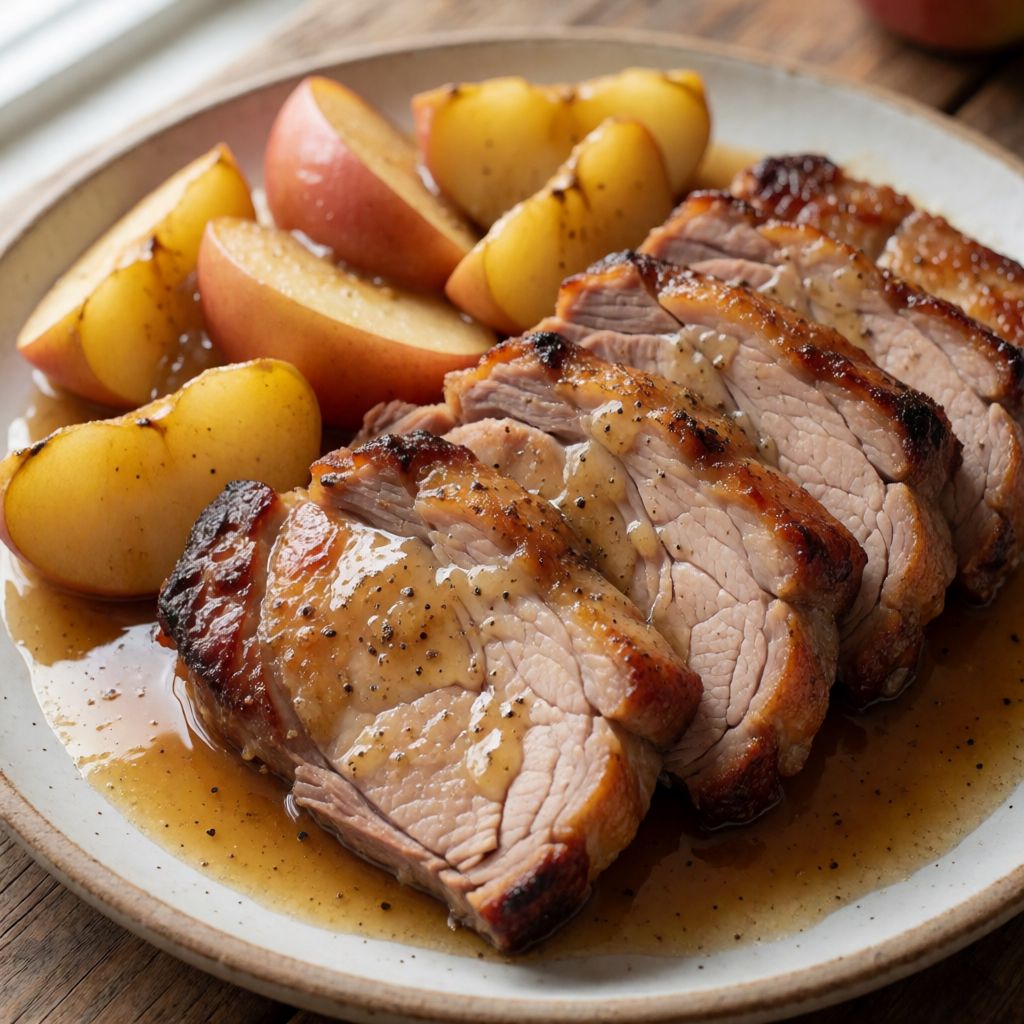
 AI photo
Pork Roast with Apples
A comforting pork roast cooked with apples until tender and richly flavoured.
Labels are worked out automatically from the ingredients and can be wrong. Check the packaging if it matters to you.
Ingredients
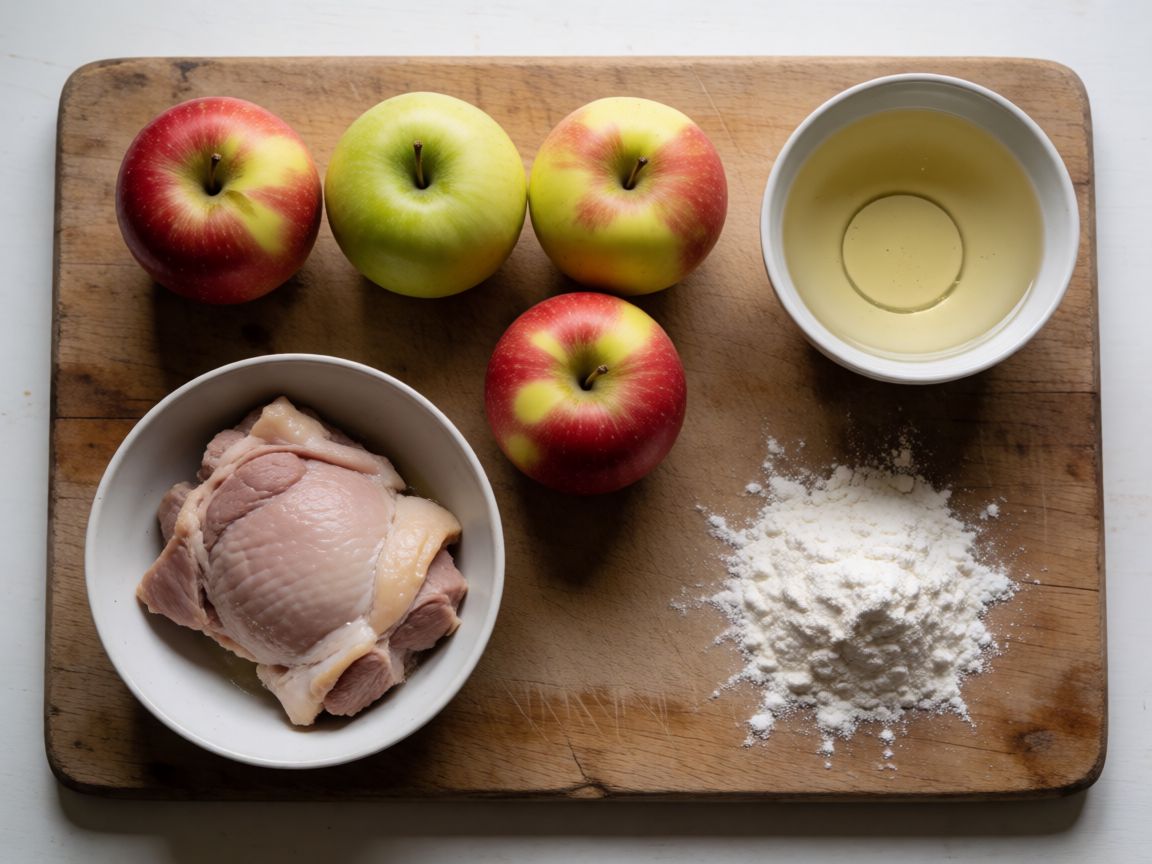
- 4 pcs Apple
- 3 tbsp Olive oil to taste, for frying
- 800 g Pork leg
- Salt to taste
- Black pepper to taste
- 450 ml White wine
- Plain flour to taste, for dusting







Steps
Season the meat with salt on all sides and brown it in a pressure cooker in the olive oil until golden.
Pour in the wine, add the black pepper and close the lid. Once the pressure cooker starts to whistle, reduce the heat.
Cook for 20 minutes in the pressure cooker.
20 minLet the dish cool slightly, open the pressure cooker and add the apples, cut into cubes.
Close the lid and cook for a further 20 minutes from the point of whistling until the meat is done. Doneness: internal temperature 70°C.
20 minIf needed, thicken the apple sauce with the flour.
Spoon the sauce over the roast and serve.
This is a leg of pork, braised under pressure with apples that melt into its own sauce — think of it as a Sunday roast that's been persuaded to behave in under an hour instead of three. Nobody browns a joint and expects dinner this fast normally. The pressure cooker is doing the heavy lifting here, and that's the whole trick worth understanding.
What decides whether this works isn't the whistle or the clock — it's whether the collagen running through that leg muscle has actually turned to gelatine. Pork leg does real work on a living animal, so it's laced with connective tissue that stays chewy right up until it isn't. The 70°C you're checking for at the end isn't a target for safety, it's the point past which that collagen has had enough heat and moisture to give up and turn soft. Open the lid too soon and the meat is tight and stringy — not because the method failed, but because that conversion simply hadn't finished.
Some say a leg joint needs hours low in the oven or it'll never be tender. No — because tenderness there is the same chemistry, just running slowly at normal boiling point. A pressure cooker seals the pot so the liquid inside can get well past 100°C before it boils, and that same collagen-to-gelatine conversion that takes three hours in an oven happens in a fraction of the time. Nothing mystical, just a higher boiling point doing the waiting for you.
Pork leg is the cheap, hardworking cut — the muscle that carries the animal around, which means more connective tissue than you'd find on a loin or a rack. That's precisely why it's the cut used for a family roast in the first place: it feeds four for not much money, as long as you're willing to give it the time its toughness demands. Pressure cooking is the twentieth-century answer to that demand — stovetop pressure cookers became a fixture in British kitchens exactly because they let you braise a cheap, tough joint without burning fuel for half a day. You're not cutting corners here, you're using the tool that was invented for this cut.
The olive oil's job is only to carry heat into the meat for browning — any oil with no smell of its own will do, so a flavourless vegetable oil works as well, and if you happen to have rendered pork fat on hand, that's historically closer to what would have gone in the pan, since nothing was wasted from the same animal. Don't mistake the browning for something that seals moisture in — it doesn't, juice still escapes regardless. What browning actually buys you is the Maillard crust and the fond stuck to the pan, which becomes the backbone of your sauce once the wine hits it.
White wine is there as a thin, acidic liquid — enough acidity to sit well with the apple, enough body once it reduces slightly to carry a sauce, but not so much flavour of its own that it fights the pork. If you've no wine open, dry cider is the obvious stand-in, given there's already apple in the pot; failing that, water with a spoon of vinegar will at least give you the acid, though not the depth.
Apple choice changes the character of the finished sauce more than people expect. A soft cooking apple, something like a Bramley, collapses almost on contact with heat and gives you a smooth, almost purée-like sauce. A firmer eating apple — a Cox, a Granny Smith — holds its cube shape much longer, so you get visible chunks of fruit sitting in the sauce rather than the sauce being the fruit. Neither is wrong; just decide which one you're buying before you're standing at the greengrocer wondering.
The flour at the end isn't a sign something went wrong — it's a correction for the fact that apple pectin, on its own, doesn't always thicken a sauce properly in the short time this cooks. Judge the amount by how it coats the back of a spoon, not by a measured spoonful; too much and you've made gravy, not sauce.
A stovetop pressure cooker with its lid shut is the one time in cooking you genuinely can't see, smell, or poke what's happening inside — you're relying entirely on the whistle telling you pressure's built, and the clock as a lower bound after that. Letting the pressure drop before you open it isn't a suggestion, it's what stops hot wine and apple from going over the ceiling. And because pork leg gives you no obvious visual tell the way, say, a chicken breast's clear juices do, an instant-read thermometer checking for that 70°C is worth more here than guesswork — patience applies twice in this recipe: once waiting for the whistle, once resisting the urge to open early.