
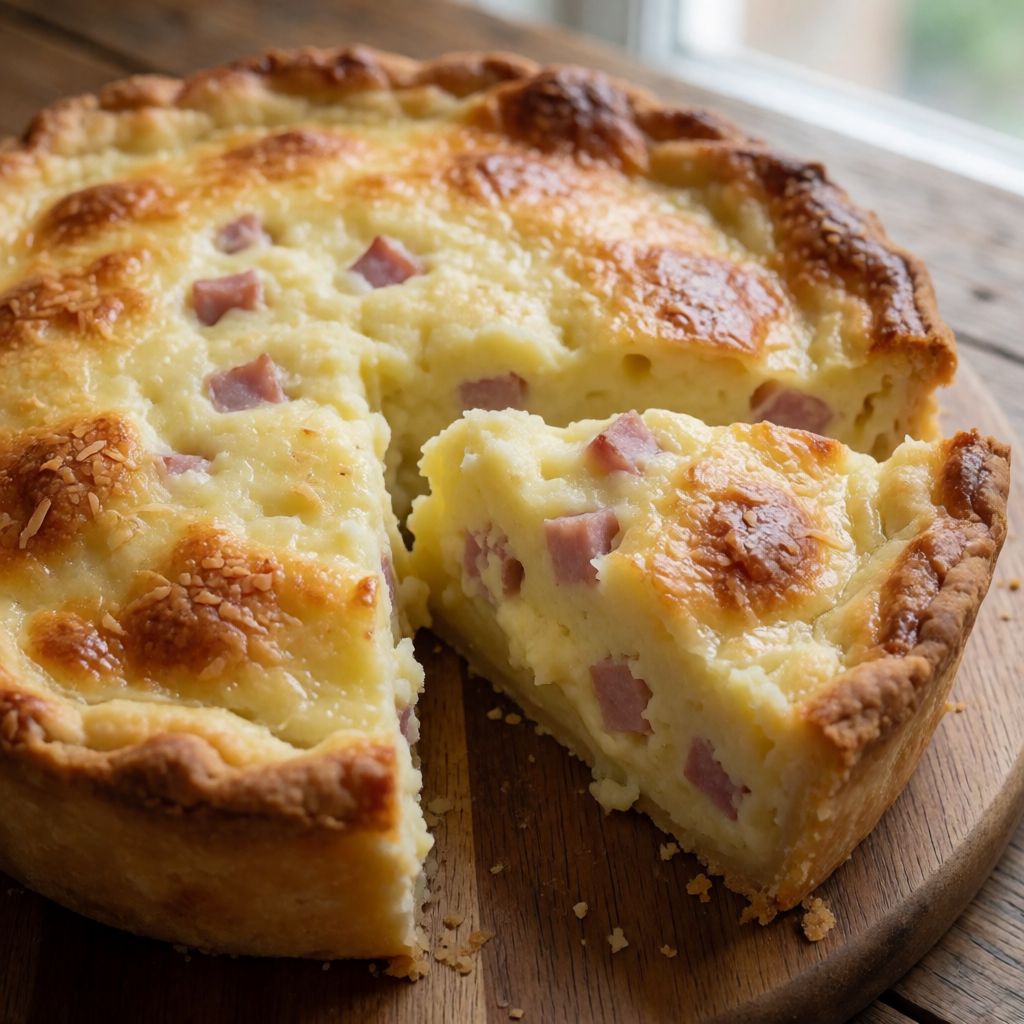
 AI photo
Potato Pie with Ham and Cheese
A comforting potato pie layered with ham and melted smoked scamorza cheese.
Labels are worked out automatically from the ingredients and can be wrong. Check the packaging if it matters to you.
Ingredients
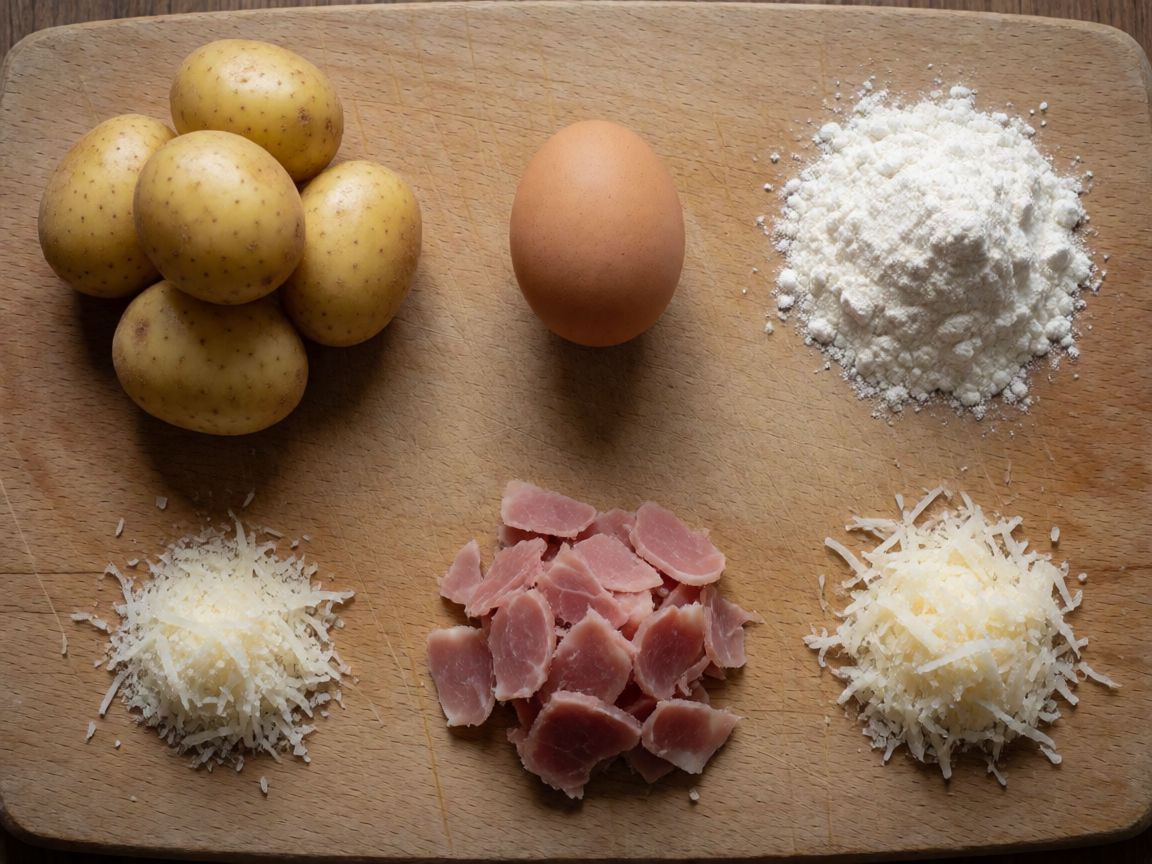
- 500 g Potatoes
- 1 pcs Egg
- 100 g Plain Flour
- 40 g Parmesan
- 100 g Ham
- 150 g Smoked Scamorza
- 1 pinch Salt






Steps
Boil the potatoes in their skins in boiling water until soft. Carefully peel once cooked.
28 minMash the potatoes with a potato masher, transfer to a bowl and add the egg.
Add the flour, salt and Parmesan and knead the mixture, keeping it almost crumbly.
Press half of the dough into a buttered baking dish, pressing it down well.
Add the filling of smoked scamorza and ham, cover with the remaining dough and sprinkle with Parmesan.
Bake in a fan oven at 180°C for about 30 minutes.
30 minRemove from the oven and serve while still warm.
Forget the British idea of "pie" — pastry wrapped around a filling. Here the crust is potato itself, turned into something that behaves like dough. Egg, flour and parmesan don't flavour the mash so much as recruit it: they give it enough backbone to be pressed flat, hold a filling, and come out as a slice rather than a scoop onto a plate. Everything about this dish turns on whether that potato dough behaves like dough, not like mash with delusions.
What decides it is the potato you start with. A floury one falls apart dry under the fork — that dryness is exactly what the egg and flour need to grip onto. A waxy, boiled-salad potato stays wet and slippery no matter how much flour you throw in, and then you're adding flour until the whole thing tastes of flour and nothing else. In a UK shop that's the difference between a Maris Piper, which wants to be mash, and a Jersey Royal, which wants to be potato salad and will resist you the whole way.
Second thing, and nobody tells you this one: when you add the egg. Potato straight off the boil scrambles egg on contact — you get flecks of cooked egg scattered through the mash instead of one smooth, bindable dough. Let it sit until it's just warm to the hand before the egg goes in. That's the whole trick, and it costs nothing but a few minutes you were going to spend peeling anyway.
Boil the potatoes in their skins, not peeled. The skin is there to keep water out of the flesh while it cooks — peel first and the cut surfaces soak up boiling water, the starch underneath goes soft and waterlogged before it's even cooked through, and that extra water is exactly what fights the egg and flour later. Peel once it's done and still hot: the skin has loosened with its own steam and slides off with a fork, no knife, no waste, no burnt fingers if you hold it with a tea towel.
Flour and parmesan give the dough its skeleton, but lightly. "Keep it almost crumbly" isn't vague instruction, it's a warning: knead this like bread and you develop the flour's gluten, and gluten bakes into something elastic and chewy — exactly the texture that fights a potato dish instead of carrying it. You want loose crumb, not stretch. Parmesan adds the salt and savoury weight that mash on its own doesn't have, and its own protein helps the egg bind things slightly as it melts. Any hard, aged, grating cheese with a sharp salty bite does the same work — grana padano, a well-matured cheddar if that's what's already in the fridge, pecorino if you want it sharper still.
Egg is the actual glue — it's what sets, under oven heat, into a structure that holds the slice together once you cut it. Hence the warm-not-hot rule above: test with a finger, it should feel like bathwater, not a cup of tea just made.
Ham and scamorza are the filling, and each has one condition to meet. Dice the ham small — there's no sauce in here to baste dry pockets of it, only the cheese melting around it, so smaller pieces stay moist and bigger ones dry out. Choose ham that isn't dripping brine; a wet ham wets the surrounding potato dough and stops it ever firming up properly. Scamorza is picked for being semi-firm — it melts and stretches rather than collapsing into a puddle of oil, and smoked gives you that outside-the-fire flavour mentioned already. The criterion for substitution: a cheese that holds some shape halfway through melting. Smoked provolone works the same way; a well-drained mozzarella with a pinch of smoked paprika over it gets you close if smoked cheese isn't on the shelf.
Some cooks treat this dough like a shortcrust and want to rest it in the fridge before pressing it in. Don't — there's no fat-and-flour structure here needing time to relax, the hold comes from egg protein setting in the oven and starch doing its job, not from chilling. Resting just stiffens it and makes it crack when you try to press it flat. Work it while it's still workable.
180°C in a fan oven does two things at once: it heats through fast enough to set the egg-and-starch structure before the top dries out, and it melts the cheese to a stretch rather than splitting it into oil and curd. No fan oven — add about twenty degrees, since a fan moves heat onto the food faster than still air does. Don't trust the clock as the real signal: watch for the exposed parmesan going pale gold at the edges, and listen or look for the cheese bubbling at the seam where the two layers of potato dough meet in the middle — that tells you the inside is properly molten, not just warm through. A light press in the centre should feel firm, not sloshy.
This is a leftovers dish by instinct, whatever country you're in — a bit of ham, a bit of cheese, not quite a meal on their own, stretched by a pile of potato into something that is. If there's cold boiled potato left over from a Sunday roast, skip the first boil entirely, but make sure it's genuinely cold and dry, not reheated and sweating — that brings back exactly the moisture problem the skin-on boiling was avoiding in the first place.
Serve it warm, not straight from the oven, and treat the wait as part of the recipe, not a delay before it. Cut it too soon and the cheese, still liquid, runs out onto the plate instead of staying inside the slice. Give it the ten minutes the recipe doesn't bother mentioning, same logic as resting a roast before you carve it — something a Sunday-roast household already half-knows without being told.