
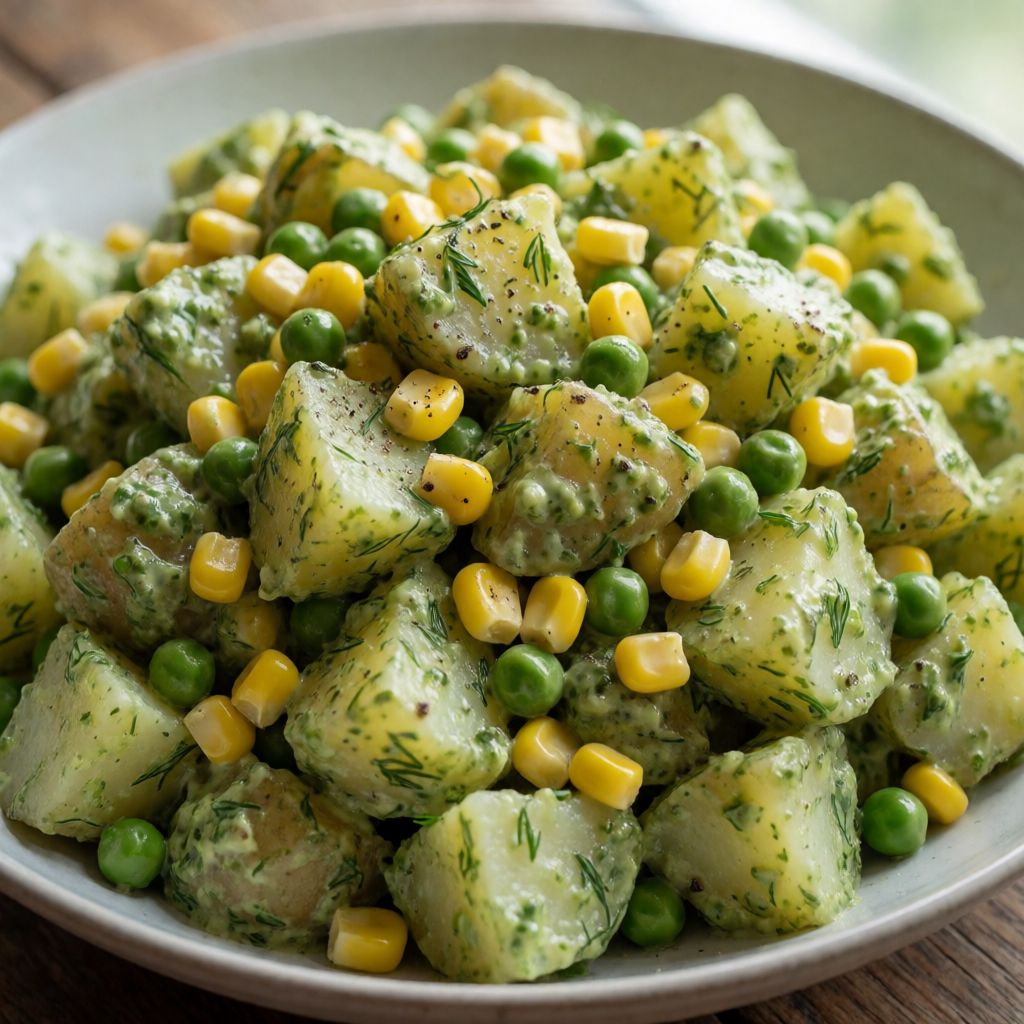
 AI photo
Green Potato Salad with Pesto
A fresh potato salad with sweetcorn and peas, tossed in a quick herb and parmesan pesto.
Labels are worked out automatically from the ingredients and can be wrong. Check the packaging if it matters to you.
Ingredients











Steps
Boil the potatoes and sweetcorn cobs until just tender but still slightly firm.
Cut the kernels off the cobs and chill the potatoes in a bowl in the fridge.
Put all the pesto ingredients into a food processor and blend until finely chopped.
Mix the pesto with the chilled potatoes, sweetcorn and peas, season with salt and pepper to taste, and sprinkle with dill before serving.
This is a potato salad that swapped mayonnaise for a raw herb paste, and that one swap changes almost nothing about the mechanism and everything about how it tastes. The job of any dressing here is the same: coat cooked potato with enough fat and sharpness — garlic, cheese — that every piece tastes seasoned, not just the bits you happened to stir past. Whether that works depends on two things that have nothing to do with the pesto recipe itself: the potato, and how hot it still is when the pesto meets it.
Myth first, because it gets in the way immediately: some say potato salad needs mayonnaise or it isn't potato salad. No — mayonnaise is one way to stick fat and acid onto starch so it holds and seasons evenly. Oil, hard cheese and crushed garlic do the same clinging job without an egg to worry about on a warm sideboard. What mayonnaise gives you is creaminess; what this gives you is brightness. Different tool, same task.
The potato decides more than people think. You want one that boils and stays itself — a waxy potato, not the floury kind you'd use for your Sunday roast spuds, because floury potato is bred to fall apart into fluff, which is exactly wrong here. Boil it until a knife goes in with a little resistance still, not until it slides through like butter — that resistance is the cell wall holding, and holding is what keeps this a salad and not a mash with corn in it.
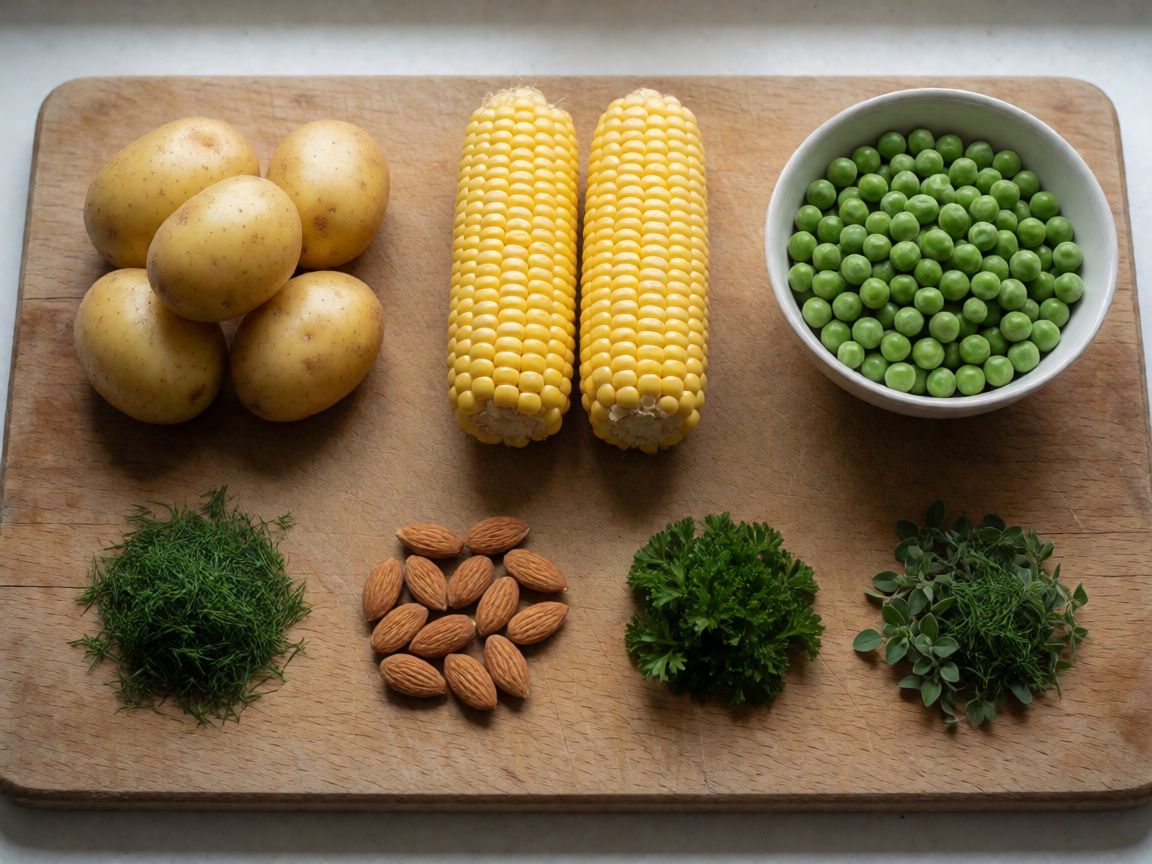
Potato first, since it carries everything else. Ask for a waxy variety — Charlotte, Jersey Royals in season, Maris Peer — low starch, holds its shape under a dressing. A floury one, Maris Piper or King Edward, still works, but you'll need to undercook it on purpose and accept a softer bite, because floury potato collapses the moment a knife meets it, which is exactly why it's good for roasting and wrong here.
Sweetcorn goes in on the cob and gets cut off after boiling, not before — raw kernels cut first bleed their milky starch straight into the water instead of keeping the sweetness inside. Tinned or frozen corn will do out of season, but it's already cooked; warm it through, don't boil it again, or you drive the sugar out a second time and it goes dull. Peas, if truly fresh and young, barely need anything — raw is sweet. Frozen peas, which is most of the year here, want a few seconds in just-boiled water and no longer; they were blanched once at the factory already, and a second long boil turns them grey and mealy.
The pesto itself isn't the classic basil one — no basil at all, it's parsley, dill and oregano, which is really a kitchen-garden pesto rather than an imported one. That's the economics of pesto everywhere it's made: it was never "basil sauce" specifically, it was whatever soft herb grows thick and cheap, crushed with oil, garlic, nuts and hard cheese. A Ligurian cook had a hillside of basil; you have an oversized supermarket bunch of parsley going limp in the fridge door. Same logic, different herb.
Almonds stand in for pine nuts here, and it's a fair swap on its own terms, not a compromise — any raw, mild, fatty nut thickens a pesto and rounds off raw garlic the same way. Walnuts or cashews do the job if that's what's in the cupboard, but keep them raw and unsalted; roasted nuts bring a flavour that fights the herbs instead of carrying them. One clove of garlic is deliberate, not stinginess — raw garlic is far sharper than cooked, because heat is what mellows its sulphur compounds, and nothing here gets heated. More garlic doesn't make it taste more garlicky in a good way, it makes it hard to eat twice.
Parmesan brings salt and a savoury depth, and melts just enough into the oil to help bind the paste. Any hard, aged, grating cheese does the same work — pecorino, Grana Padano, even a mature cheddar at a push, though that reads more farmhouse than Mediterranean, which isn't a problem. The olive oil is naked in this dressing — nothing cooks it, nothing hides it — so use one you'd happily taste on its own, not the bottle kept for frying. If olive oil's flavour isn't to your taste, the rule for any raw dressing oil applies: pick one with no smell of its own, a neutral rapeseed or sunflower, and let the herbs and garlic speak instead.
The dill listed twice isn't a slip — one bunch goes into the pesto, bruised and blended in with everything else, and a second gets scattered raw at the very end. Herbs lose their top notes the moment they're processed and left to sit in oil; what goes on last is there for lift, not depth, and that's worth the extra bunch. Give the potatoes proper time in the fridge before the pesto goes anywhere near them — a rushed, lukewarm salad tastes thin and oily instead of dressed, because the fat hasn't had the chance to sit on cooled starch and actually cling. Four people, as written, next to a Sunday roast or on its own with bread; double it without worry if the table's bigger.