
 AI photo
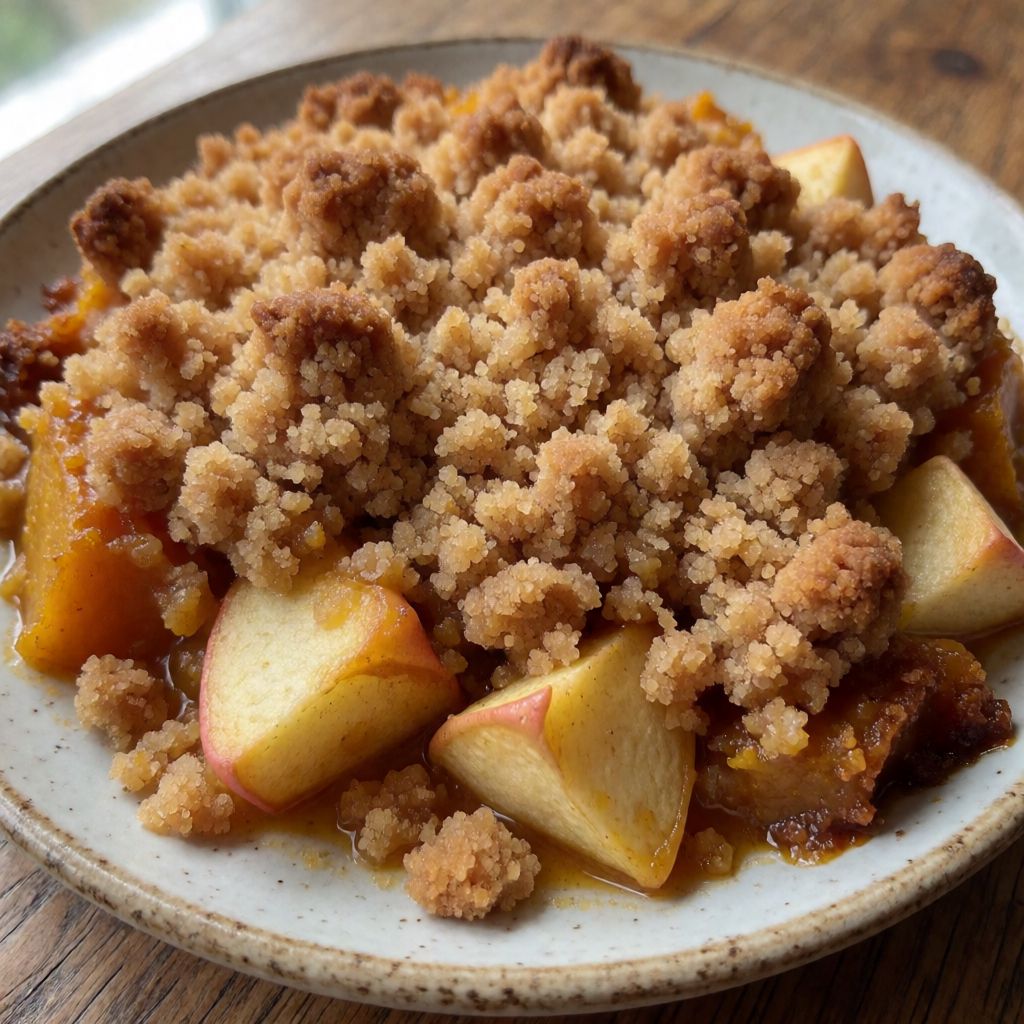
Pumpkin and Apple Crumble
A crumble with pumpkin, apple and crumbled amaretti biscuits, topped with a buttery crumb.
Labels are worked out automatically from the ingredients and can be wrong. Check the packaging if it matters to you.
Ingredients
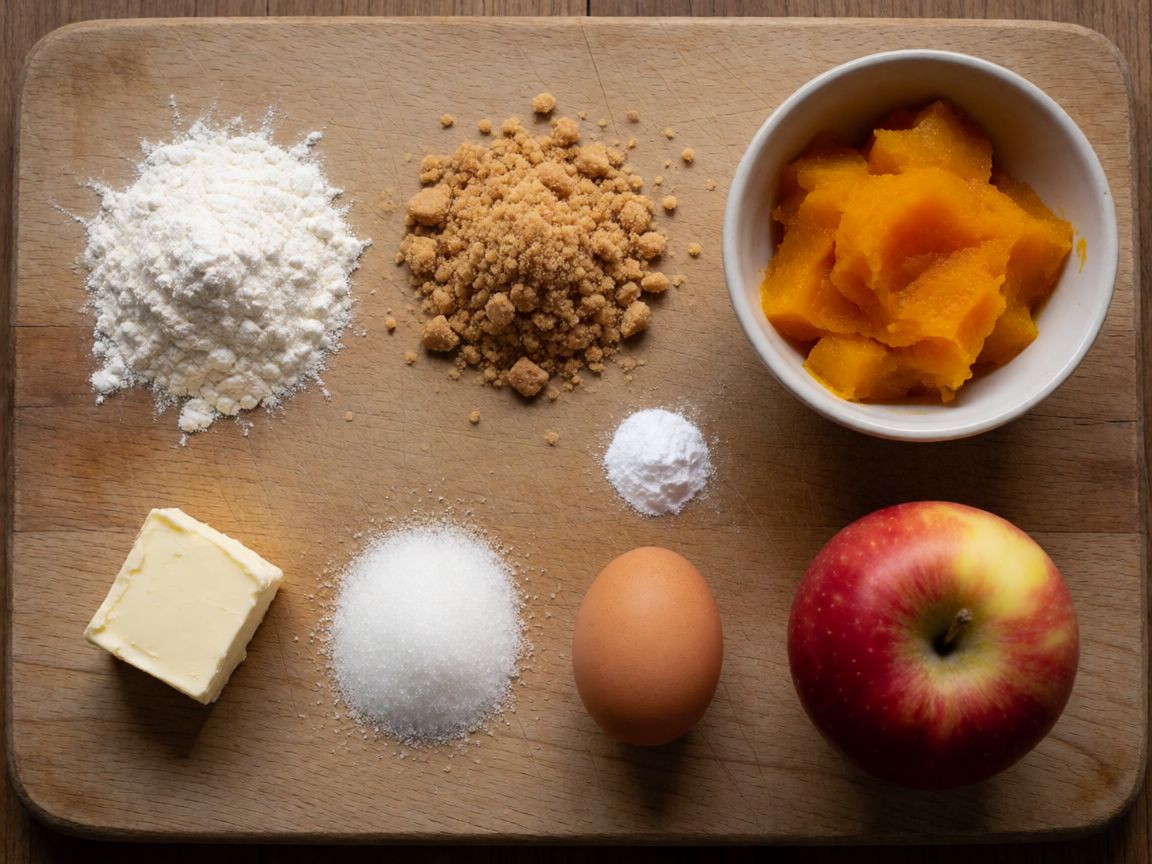
- 300 g Plain flour
- 70 g Amaretti biscuits
- 100 g Butter
- 70 g Caster sugar
- 1 pcs Egg
- 8 g Baking powder
- 200 g Pumpkin flesh
- 1 pcs Apple
- 80 g Caster sugar
- Cinnamon to taste
- Icing sugar to taste









Steps
Peel the pumpkin, weigh out 200 g of flesh, cut into cubes and put into a pan with 30 g of sugar.
Cook the pumpkin for about 10 minutes until softened, then transfer to a blender and purée.
10 minPeel the apple, cut into cubes and fry in a pan with 50 g of sugar and a little cinnamon.
Cook the apples for 5-10 minutes until softened and the sugar caramelises.
8 minMix the flour with the roughly crushed amaretti biscuits, add the remaining sugar (70 g), baking powder, egg and butter.
Rub the ingredients together by hand until you get a crumbly texture.
Press 2/3 of the crumb into a 22 cm baking tin lined with parchment, forming a base.
Spread the pumpkin purée over the base, then layer the cooked apples on top.
Cover with the remaining crumb and bake in a preheated fan oven at 170°C for 30-35 minutes.
33 minRemove the crumble from the tin, let it cool completely, then dust with icing sugar before serving.
A crumble is really a trick with ratios, not a mystery. You're building three distinct layers — a shortbread-like base, a wet fruit filling, a loose shortbread lid — and the whole dish succeeds or fails on keeping those three things from merging into one soggy mass. That's the actual job of the recipe: structure, not flavour, decides whether it's good.
The pumpkin-apple pairing isn't whimsy. Pumpkin on its own, cooked down, is sweet but flat — it has almost no acid and very little scent of its own. Apple brings the sharpness pumpkin lacks, and its juices caramelise in the pan rather than just steaming, which gives the filling a top note the pumpkin alone can't. Some say pumpkin is "just for pie" and doesn't belong in a crumble — no, because the crumble doesn't ask the filling to hold its shape, only to taste of something. Puréed, pumpkin becomes pure base note under the apple's edge.
The amaretti in the crumb isn't decoration either — it's doing the job that oats or ground almonds usually do in a British crumble: breaking up the flour so the fat can't bind it into a dough. Biscuit crumbs plus flour plus cold butter, rubbed by hand, gives you irregular lumps of different sizes. That irregularity is what bakes into "crumble" texture instead of a solid biscuit lid. If you overwork it with warm hands or a food processor run too long, you get a paste — and a paste bakes into a crust, not a crumble. The temperature of your hands matters here more than any oven setting.
The sequence of cooking the filling separately before it ever meets the crumb is the real safeguard here, and it's worth understanding why. Pumpkin cubes simmered in sugar release water as they soften — that's just osmosis, sugar pulling moisture out of cell walls. If you put raw pumpkin straight under a crumb topping, that water has nowhere to go but up into your base, and you get a gluey bottom layer no amount of baking time fixes afterwards. Cooking it down first, then blending, means you control how much liquid is actually going into the tin. Same logic with the apple: frying it in sugar until the sugar catches and goes from white to amber is the only reliable doneness cue worth trusting — not a clock. "5-10 minutes" is a floor, not a target; watch the colour of the sugar in the pan, not the timer.
On the crumb mix: butter needs to go in cold, cubed, and be rubbed in with fingertips lifting and rubbing rather than squeezing — you want friction breaking fat into flour, not heat melting it. Any butter with a clean, mild dairy taste works; a strongly cultured or salted butter will fight the amaretti's almond-and-bitter-orange note rather than support it. If you've no amaretti to hand, crushed digestives or a shortbread biscuit will give you the crumb-within-crumb structure, though you lose that faint almond bitterness that makes this particular crumble rather than any crumble.
The egg in the crumb mix is doing something specific — it's not there for richness, it's there to give just enough binding that the 2/3 base presses into a tin and holds a shape, rather than scattering like streusel. Too much egg and you're back to the paste problem; one egg against 300g flour is a careful ratio, not a rough guess, so don't be tempted to add a second "for luck."
Baking powder at 8g against 300g flour is a gentle lift — enough to keep the base from baking dense and biscuit-hard, not enough to make it rise like a cake. This is a crumble base, not a sponge; it should give slightly to a fork, not spring back.
On the oven: 170°C fan is a moderate heat precisely because you're not trying to cook anything raw inside — pumpkin and apple are already done — you're only trying to dry and lightly colour the crumb on top and let the base firm up enough to hold a cut slice. A domestic fan oven runs more evenly than a conventional one, which is exactly why this recipe assumes fan heat; if your oven has no fan, add a few minutes and rely on colour — pale gold going to amber across the top crumb — rather than trusting the clock blindly.
Letting it cool completely before turning it out isn't optional patience for its own sake, though patience is itself an ingredient you can't skip here. The pumpkin purée layer is essentially a thick custard-less filling held together by starch and sugar — warm, it's still semi-liquid in structure even if it looks set. Cut into it hot and the layers slide. Give it the time to cool and the sugars set properly, and the slice holds its shape when you lift it — that's the whole point of waiting, not fussiness for its own sake.
Icing sugar at the end is cosmetic, nothing more — dust it just before serving, because left any longer it dissolves into the surface moisture and vanishes, which rather defeats dusting it at all.