
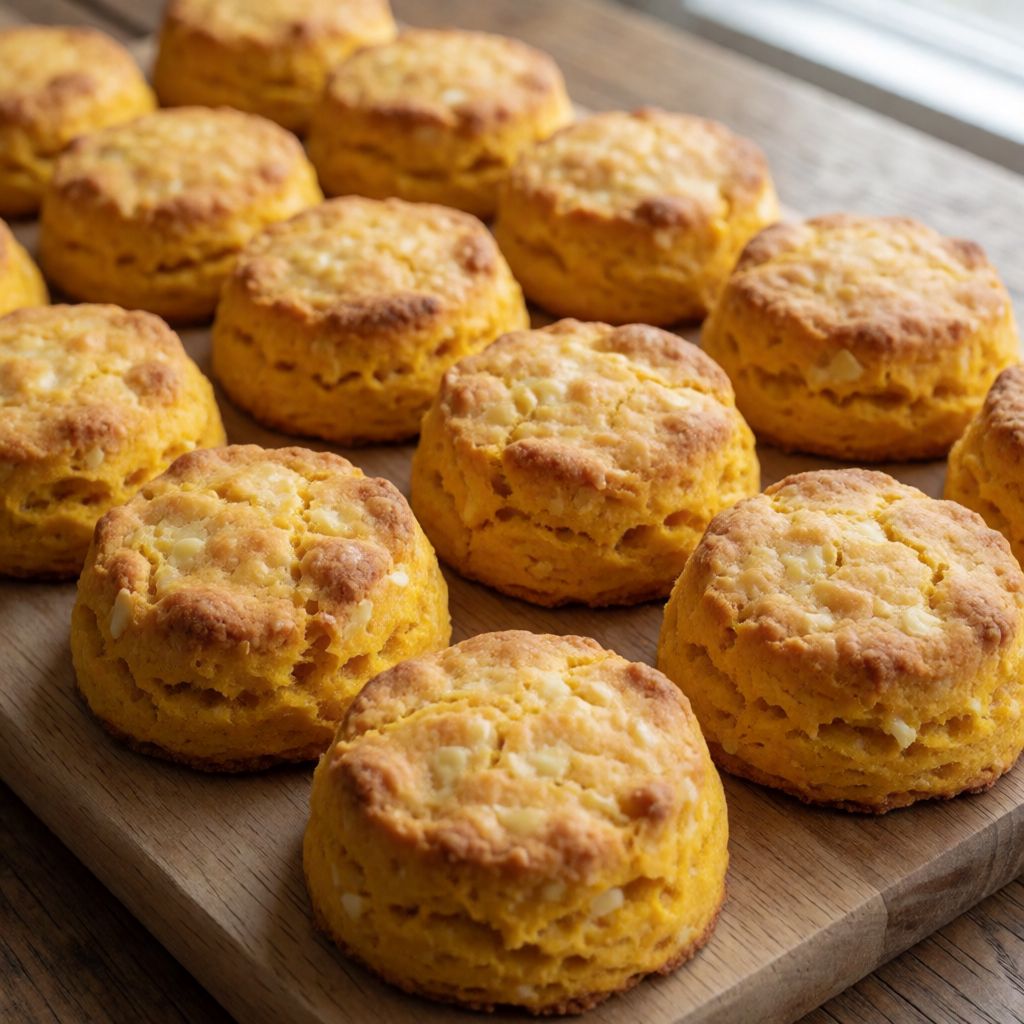
 AI photo
Savoury Pumpkin and Cheese Biscuits
Savoury pumpkin and Parmesan biscuits with a hint of sage, a cosy bake for any time of day.
Labels are worked out automatically from the ingredients and can be wrong. Check the packaging if it matters to you.
Ingredients
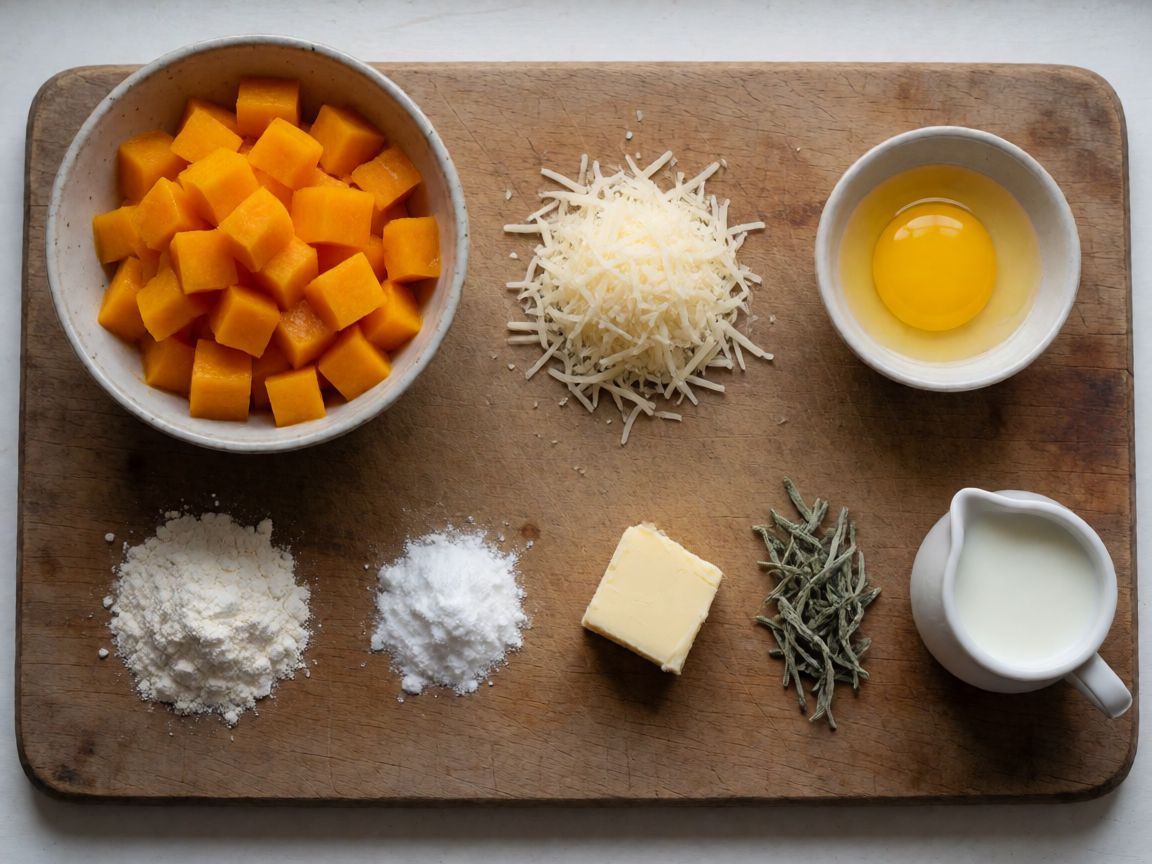
- 130 g Pumpkin
- 30 g Parmesan
- 1 pcs Egg yolk
- 170 g Plain flour
- 25 g Cornflour
- 60 g Salted butter
- Milk to taste
- Dried sage to taste
- Vegetable oil for rolling, to taste









Steps
Peel the pumpkin with a sharp knife, remove the seeds and fibres, cut the flesh into pieces and roast in the oven at 180°C.
Weigh out 130 g of roasted pumpkin, mash with a fork until smooth and leave to cool to room temperature.
Whisk the egg yolk vigorously with the Parmesan.
Add the cooled pumpkin purée to the egg yolk and Parmesan mixture, gradually folding in the sifted plain flour and cornflour.
Stir with a spoon until you have a smooth, lump-free dough, then add the diced salted butter.
Leave the dough out of the fridge for at least 30 minutes to reach the right consistency.
30 minTransfer the dough to a work surface and knead by hand until soft and even.
Wrap the dough in cling film and leave to rest in the fridge for half an hour.
30 minRoll out the dough on the work surface, sprinkling with a little oil if needed to stop it sticking.
Cut out biscuits using a round cutter.
Place the biscuits on a baking tray lined with baking paper, brush with milk and sprinkle with dried sage.
Bake the biscuits in an oven preheated to 180°C.
20 min
This is a shortcrust, really — a savoury one, built the way you'd build a cheese pastry for a quiche base, except pumpkin stands in for most of the fat's job and all of the moisture. No liquid is added at the mixing stage beyond what's in the egg yolk and the purée. That's the whole trick: the pumpkin is both flavour and binder, so its water content has to be low and consistent, which is why it's roasted rather than boiled or steamed.
Roasting drives off water through dry heat, concentrating sugars and leaving the flesh firm enough to mash without turning to soup. Boil it instead and you'll fight a wet dough that needs extra flour to compensate — and extra flour means a tougher, less short biscuit. Some say pumpkin and pastry don't mix because pumpkin is "too wet" for baking. No — it's wet if you cook it wet. Dry-roasted and weighed out exactly, 130 g, it behaves like a thick paste, not a liquid.
What decides whether this works is temperature of the butter and the fat going in cold and diced, not softened. Cold butter stays in distinct pieces as you fold the dough together, and those pieces melt during baking, leaving small pockets of steam and fat that give you a short, flaky crumb instead of a dense biscuit. If the butter's soft when you add it, it blends into the flour too evenly, and you get something closer to a scone than a shortbread-style biscuit.
Pumpkin — any dense, orange squash will do; the test isn't the name on the label but how it roasts. You want flesh that holds shape and mashes dry, not fibrous and watery varieties that collapse into liquid. If pumpkin's out of season or you can't be bothered peeling one, a tin of plain pumpkin purée (drained if wet, patted on paper towels) gets you closer than you'd think — just skip the roasting step and weigh out 130 g as is. Don't use pre-spiced "pumpkin pie" tins; that's a different dish entirely.
Parmesan here isn't a garnish, it's doing savoury work that the egg yolk alone can't — salt, umami, and a little extra protein that firms the dough as it bakes. Any hard, dry, well-aged cheese with a strong flavour and low moisture works to the same end: a mature Cheddar grated fine, or Grana Padano, or pecorino if you want more bite. Don't reach for a soft or young cheese — the extra moisture undoes the balance you just fixed by roasting the pumpkin.
The egg yolk binds and enriches without adding the wateriness a whole egg would bring — the white is mostly water, and water here is exactly what you've spent step one getting rid of. Use the white for something else; don't tip it in "to not waste it," because that's precisely the mistake that makes the dough slack.
Flour and cornflour together: plain flour gives structure, cornflour (that's cornstarch, if the packet says otherwise) breaks up the gluten network so the biscuit snaps rather than chews. Leave the cornflour out and you'll get something closer to a dense cracker — doable, but not this biscuit. If you're out of cornflour, a tablespoon of rice flour does a similar job of "diluting" the gluten.
Salted butter matters more than it sounds like it should — it's seasoning the dough in the same pass as it's tenderising it, saving you from having to judge salt separately against the Parmesan's own salt. If all you've got is unsalted, add a small pinch with the flour, tasting in your head against how salty your cheese already is — a strong Cheddar needs less added salt than a mild one.
Milk for brushing and sage for scattering are finishing touches, not structural ones — the milk gives you colour and a bit of shine as the sugars in it brown, the sage gives you the first smell before the first bite. Swap sage for thyme or rosemary if that's what's in the cupboard; the mechanism — dried herb, dry heat, releasing oil as it toasts on top — doesn't care which herb you use, only that it's dry, not fresh, so it doesn't steam limp before it crisps.
For doneness, forget the clock as your first signal: 180°C and twenty minutes is a floor, not a verdict. Watch the edges — they go from pale to pale gold, and the sage on top starts to smell toasted rather than just fragrant. Pull them when the colour's turned, check again if it hasn't. This makes about a dozen small biscuits depending on your cutter, enough for four with tea — proper builder's tea with milk, if you're doing this the way a Sunday roast kitchen would, since that's the register these biscuits sit in: savoury, short, meant for a plate on the table rather than a fussy presentation.