
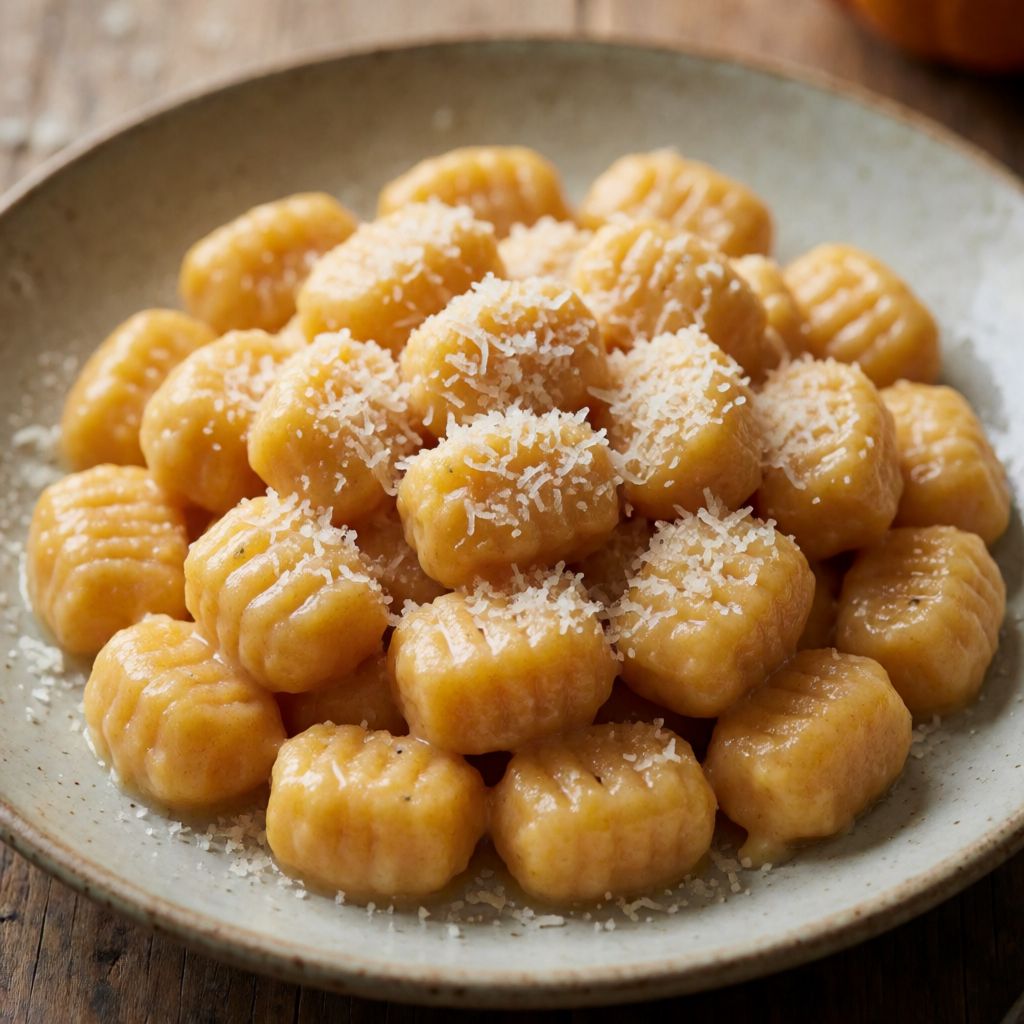
 AI photo
Flourless Pumpkin Gnocchi
Soft gnocchi made from roasted pumpkin and potato, with no flour needed.
Labels are worked out automatically from the ingredients and can be wrong. Check the packaging if it matters to you.
Ingredients
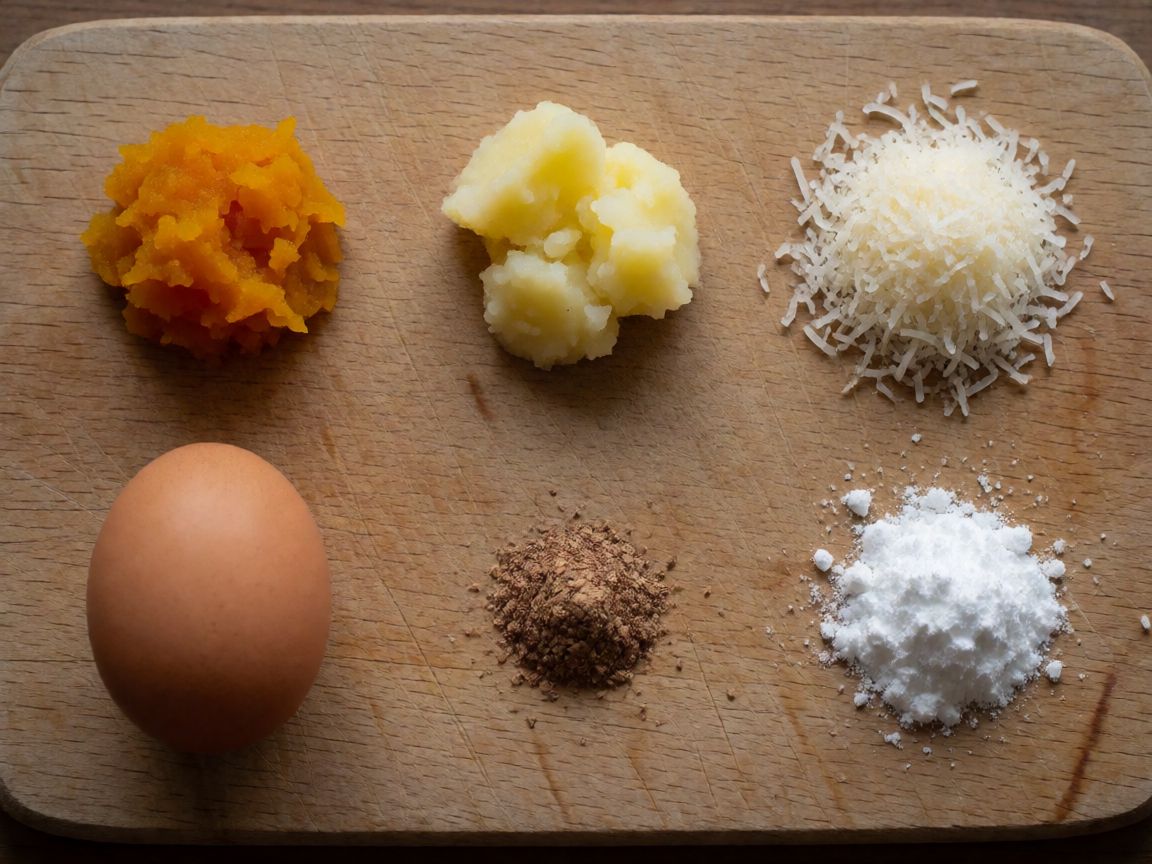
- 1 kg Pumpkin should yield about 500 g cooked flesh
- 150 g Potato
- 80 g Parmesan grated
- 1 pcs Egg
- Salt to taste
- Black pepper to taste
- Nutmeg to taste
- Potato starch for dusting






Steps
Preheat the oven to 180°C.
Wash the pumpkin, remove the seeds and fibres, and cut into slices 1–2 cm thick.
Place the slices on a baking tray lined with parchment and roast the pumpkin until soft.
40 minPeel off the skin with a knife and blend the flesh until smooth.
Boil the potato until tender.
Combine the boiled potato with the pumpkin purée in a blender and blend together until smooth.
Transfer the purée to a work surface and add the Parmesan, salt, pepper and nutmeg.
Beat in the egg and knead the dough until soft and even.
Dust the board with starch, shape thin ropes about 1 cm in diameter, and cut into gnocchi pieces.
Place the gnocchi on a tray dusted with starch or lined with parchment.
Bring a large pot of salted water to the boil and carefully drop in the gnocchi in small batches.
Cook for a few minutes and remove the gnocchi as soon as they float to the surface; drain in a colander.
Gnocchi without flour is really a question about water. Flour exists in the classic recipe mostly as a sponge — it soaks up whatever moisture the potato is carrying so the dough holds a shape instead of running back into a puddle. Pumpkin is wetter than potato, so take flour out and you've removed the one thing that was managing that moisture. The whole dish now has to solve the same problem by other means: roasting instead of boiling, egg and cheese as a binder, starch as a dusting rather than a structural ingredient.
That's why the pumpkin goes into the oven rather than a pot. Boiling pumpkin — or steaming it — adds water to something that's already 90% water; you'd end up with soup, not dough. Dry heat does the opposite: it drives moisture out as steam while the sugars in the flesh start to caramelise a little at the edges, which is also where the flavour comes from. The potato, by contrast, gets boiled, because potato has starch that wants water to swell and gelatinise properly — that's what gives the dough its grip. So pumpkin is dried, potato is hydrated, and they meet in the middle.
What decides whether this works is almost entirely how wet your purée still is before you add egg and cheese. Too wet, and no amount of starch dusting on the board will save you — the gnocchi will dissolve the second they hit boiling water. Too dry, and they'll be dense, more dumpling than gnocchi. You're aiming for a dough that holds a rope shape under your palms without sticking to them, and that's a feel, not a number on a clock.
On the pumpkin itself: 1 kg raw to get roughly 500 g of cooked flesh is not a throwaway detail, it's the whole water budget of the dish. Different pumpkins lose different amounts of water in the oven — a dense, orange-fleshed variety like a butternut or a proper culinary pumpkin will roast down drier than a watery decorative one. If your pumpkin comes out closer to 600 g of flesh than 500 g, don't panic and don't add more starch blindly — tip the purée into a sieve or a clean tea towel and let the excess water drip out for ten minutes before you go near the Parmesan and egg. That's a cheaper fix than compensating with flour, which would just dilute the flavour you spent 40 minutes roasting in.
Slicing the pumpkin 1–2 cm thick matters for the same reason oven temperature matters: thinner, and you get dry, slightly leathery edges before the centre has softened; thicker, and the centre stays raw while the outside scorches. The slices should go from resisting a knife to yielding to it with almost no pressure — that's your doneness cue, not the 40-minute mark, which is only there because ovens vary by 10–15°C in real life even when the dial says 180.
The potato is there for starch, full stop — it is the cheap, reliable way of getting a gelatinised starch structure into the dough without the raw, grainy taste that potato starch powder alone would give if added uncooked in quantity. Use a floury, starchy variety (Maris Piper or King Edward do the job well here) rather than a waxy salad potato — waxy potatoes hold their shape because they resist breaking down, which is exactly what you don't want when you need the starch to release and bind. Boil it whole or in large pieces in its skin if you can be bothered to peel it after — boiling peeled potato lets water leach into the flesh and work against everything the roasting did to the pumpkin.
Parmesan is seasoning and a small amount of structure, not an optional garnish — if you're out, a hard, aged, dry grating cheese (a mature Pecorino, or at a push a strong cheddar grated very fine) will do, because what you need from it is saltiness and a low moisture content, not specifically "Parmesan flavour." The egg is the binder that sets when it hits heat — don't substitute it with more starch thinking it does the same job; starch thickens, egg actually coagulates into a solid network, and gnocchi without it tend to fall apart in the pot rather than hold.
Potato starch for dusting, not flour, is consistent with the whole logic of the dish: flour would start absorbing moisture off the gnocchi surface and build a sticky paste as you roll them; starch sits on the surface, dry and inert, until it hits boiling water, where it gelatinises instantly into a thin skin that helps the gnocchi hold together as they cook. If you've only got cornflour in the cupboard, it'll do the same inert job.
On the pot: a large volume of well-salted water matters because gnocchi are delicate and low-density — crowd the pot and they clump, cool the water too much, and sit soggy rather than cook. In a normal domestic pan rather than a proper deep pasta pot, that means smaller batches than you'd think, dropped in gently rather than tipped. The rising to the surface is the actual doneness signal — it means the inside has turned to steam and expanded enough to make the whole piece buoyant, which only happens once the centre is properly cooked through. Fish them out within moments of that, because they go from just-set to waterlogged quickly, and a slotted spoon straight into a warm bowl — not a colander left standing — saves you a tray of gnocchi sitting in their own puddle of starch-water by the time the last batch is done.
Patience here isn't poetic, it's practical: rushing the roast gives you wet pumpkin, wet pumpkin gives you a dough that needs rescuing with extra starch, and extra starch gives you gnocchi that taste of nothing but themselves. The 40 minutes in the oven is the one step actually doing you a favour — let it finish its job before you start the next.