
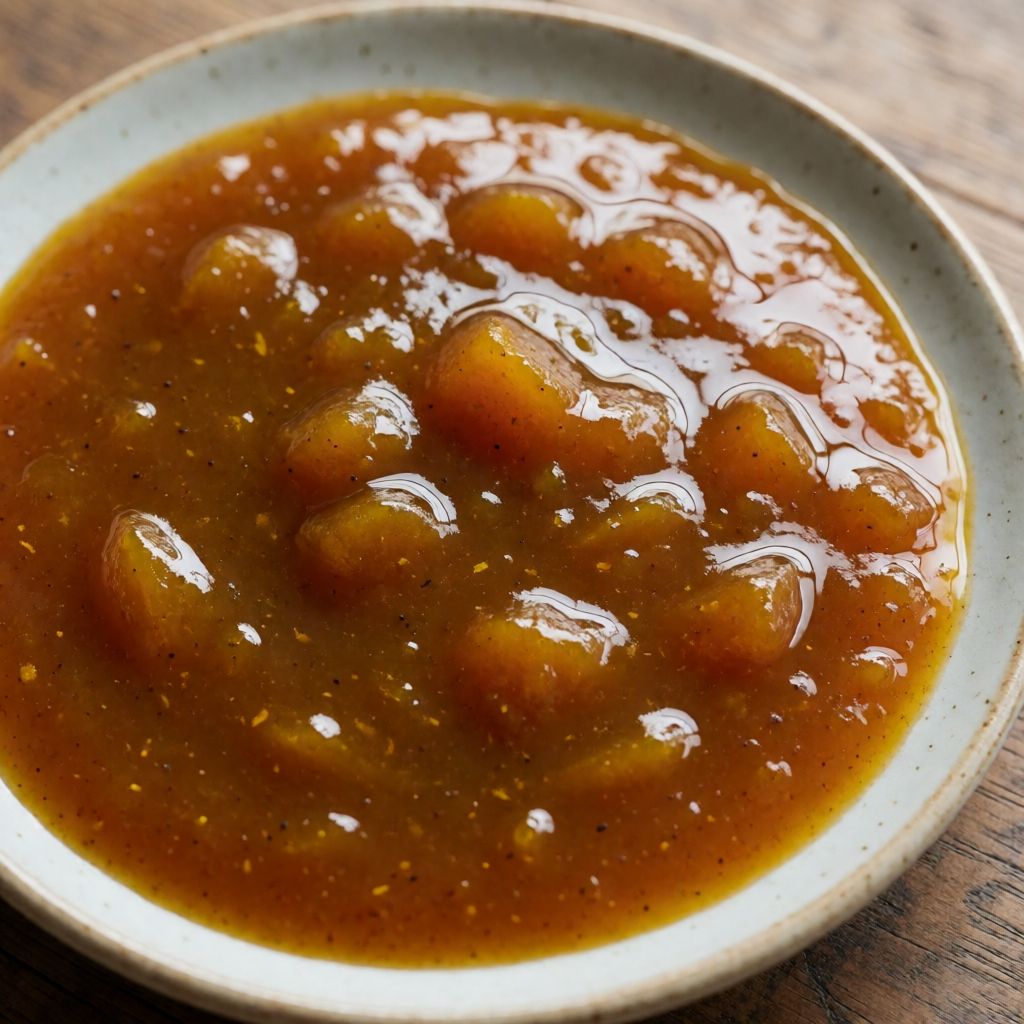
 AI photo
Pumpkin Jam
A simple pumpkin jam flavoured with vanilla, lemon zest and brandy.
Labels are worked out automatically from the ingredients and can be wrong. Check the packaging if it matters to you.
Ingredients
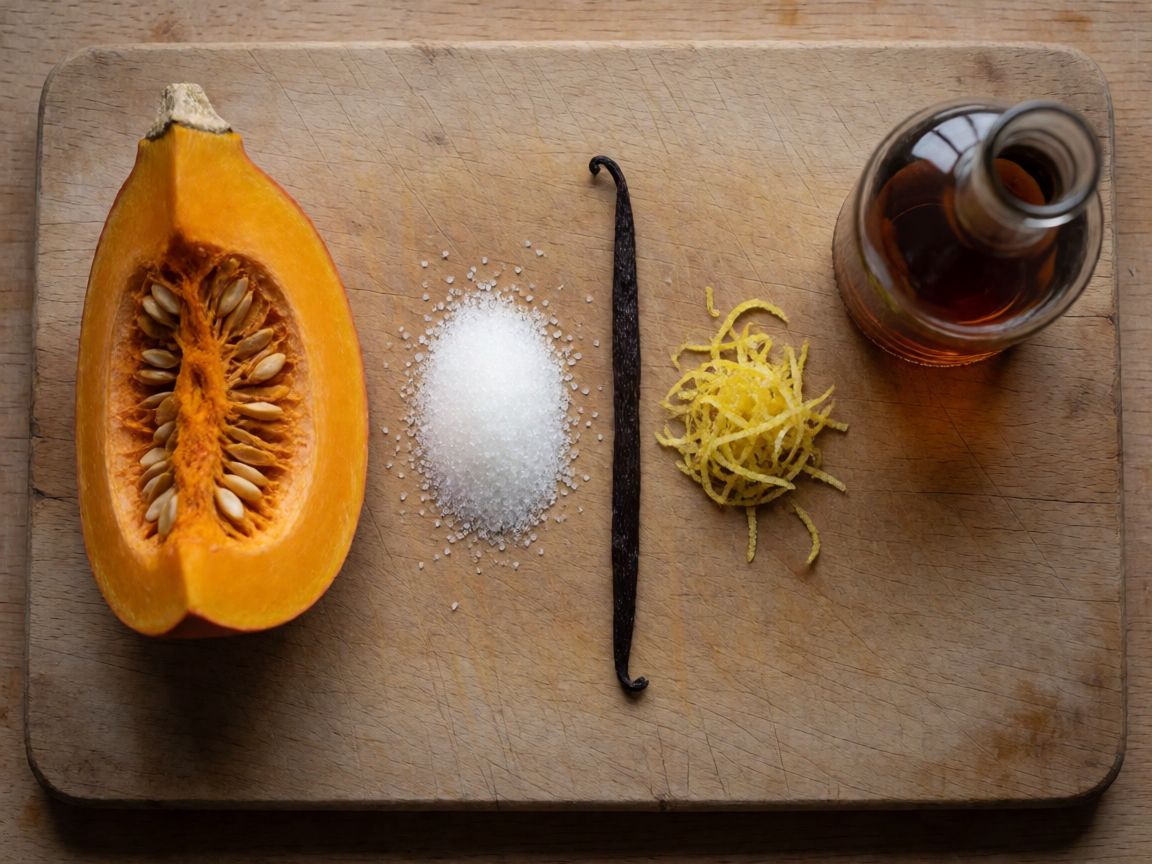
- 1 kg Pumpkin
- 500 g Sugar
- 1 pcs Vanilla pod
- Lemon zest to taste
- 250 ml Brandy





Steps
Peel the pumpkin, cut into pieces and steam for 10–15 minutes.
15 minDrain well and weigh the pumpkin.
Put the sugar in a pan, add water, add the vanilla pod and bring to the boil.
Add the cooked pumpkin pieces to the sugar syrup and stir in the grated lemon zest.
Cook over low heat for about 30 minutes, stirring frequently.
30 minRemove the vanilla pod and add the brandy.
Fill sterilised jars with the jam and leave to cool.
This isn't jam in the strawberry sense — nothing here breaks down into a sauce. Pumpkin holds its shape, turns from pale orange to amber, and goes slightly translucent at the edges, like candied peel. What you're making is closer to a Mediterranean confit than a British jam, and that changes how you judge it: not "has it thickened" but "has the syrup gone all the way through the piece".
The whole method turns on one decision made before the sugar even goes in: you steam the pumpkin first, on its own, with no sugar near it. Raw pumpkin dropped straight into syrup would weep water as it cooks — pumpkin is mostly water held in a loose cell structure — and that water dilutes your syrup and makes the cooking time unpredictable, piece to piece. Steam it separately, drain it, and you control exactly how much moisture is left before sugar ever touches it. That's also why you weigh it after steaming, not before: the sugar ratio has to match the pumpkin as it actually is going into the pan, not as it was in the shop.
Some say pumpkin jam needs a long, hard boil to set properly, the way you'd reduce a fruit jam. No — because this isn't pectin doing the work, it's sugar syrup slowly replacing the water inside already-soft pumpkin flesh by osmosis. A hard boil just breaks the pieces up and scorches the sugar on the bottom of a thin domestic pan. Low heat, patient stirring, thirty minutes as a floor not a ceiling — you're waiting for the pumpkin to go glassy at the edge and heavy with syrup, not for the liquid to vanish.
Pick a pumpkin by density, not by size — the big ribbed ones sold for carving are bred for shape and are mostly water and stringy flesh. You want the dense, dry-fleshed kind: a butternut squash does this job very well and is sold everywhere in the UK, or any small, firm, deep-orange squash. Cut a piece and look at the flesh — if it looks like it would make watery soup, it will make watery jam.
Sugar here isn't just sweetness, it's the preserving agent — the same logic as salting meat, just with sugar instead. This recipe is older than fridges: a glut of pumpkin in autumn, no way to keep it fresh through winter, and sugar was the technology that bought time. Half a kilo to a kilo of pumpkin is a working ratio, not a decoration, and cutting it back by much will shorten how long the jar keeps.
A vanilla pod is there to flavour the syrup while it's still just sugar and water, before the pumpkin goes in — that's why it's added at the boiling stage and fished out at the end, its job done. No pod in the cupboard, a teaspoon of real vanilla extract stirred in near the end does almost the same thing, though you lose the little black flecks.
Lemon zest earns its place because pumpkin on its own is flat — sweet with nothing underneath. Zest, not juice: you want the oil in the peel, the aromatic hit, not more liquid and acid that would change your sugar balance. Any citrus with a thin, fragrant skin works the same way — orange zest gives a rounder, less sharp result.
Brandy is a criterion, not a brand: any spirit without a loud flavour of its own that can carry a little warmth and support the preserve. Dark rum does the job, even a general-purpose brandy from the corner shop — you're not drinking it, it's doing chemistry in the jar.
On sterilising jars: this is a low-acid preserve, pumpkin brings almost none, so a clean dry jar matters more here than it would for a batch of blackcurrant jam that's naturally acidic and hostile to most moulds on its own. Run jars through a hot dishwasher cycle or scald them and dry them in a low oven — either way, dry completely before filling, because a drop of water left in the jar is exactly where mould starts. And give the finished jam time once it's in the jar: a day or two for the syrup to settle fully into the pumpkin changes it from decent to properly good. Patience here is not optional, it's the last ingredient on the list even though nobody writes it down.