
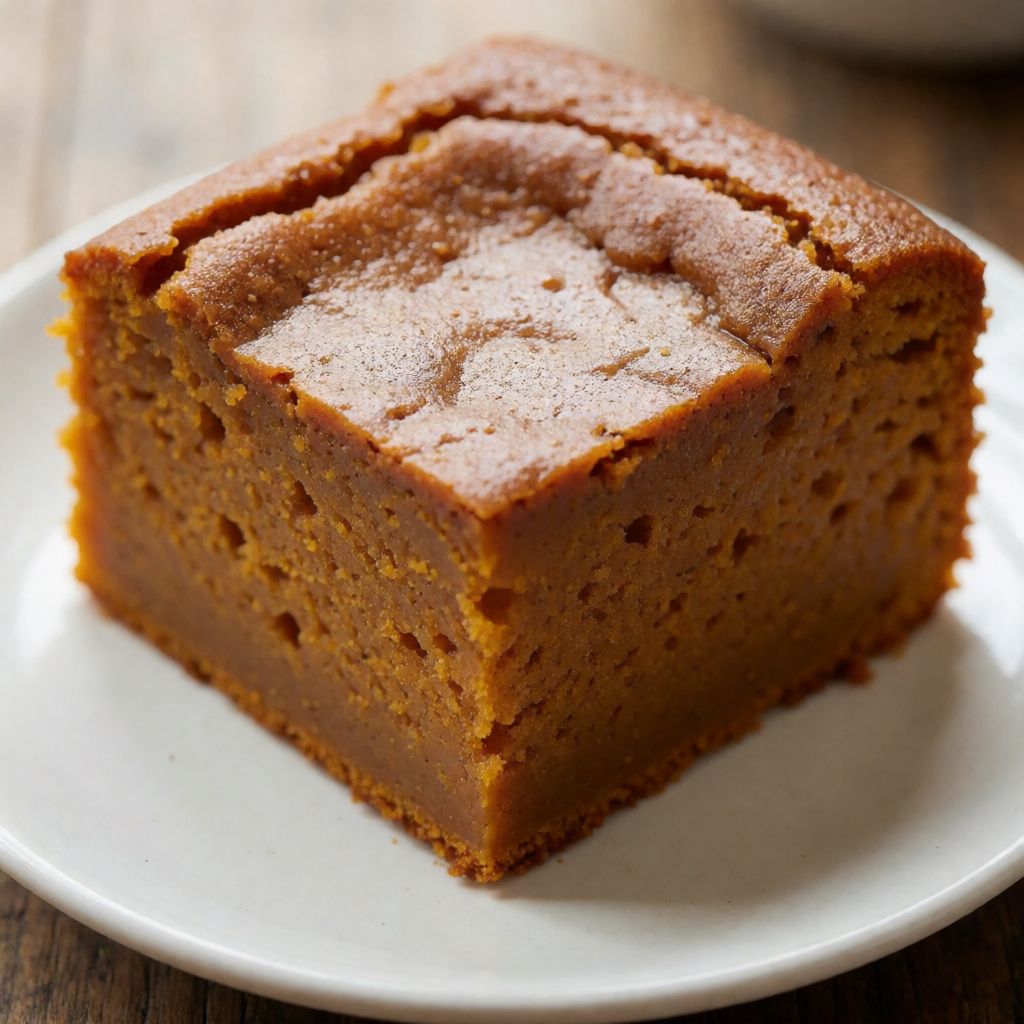
 AI photo
Melt-in-the-mouth flourless pumpkin cake
A buttery, flourless pumpkin cake that melts in the mouth, lightly spiced with cinnamon.
Labels are worked out automatically from the ingredients and can be wrong. Check the packaging if it matters to you.
Ingredients
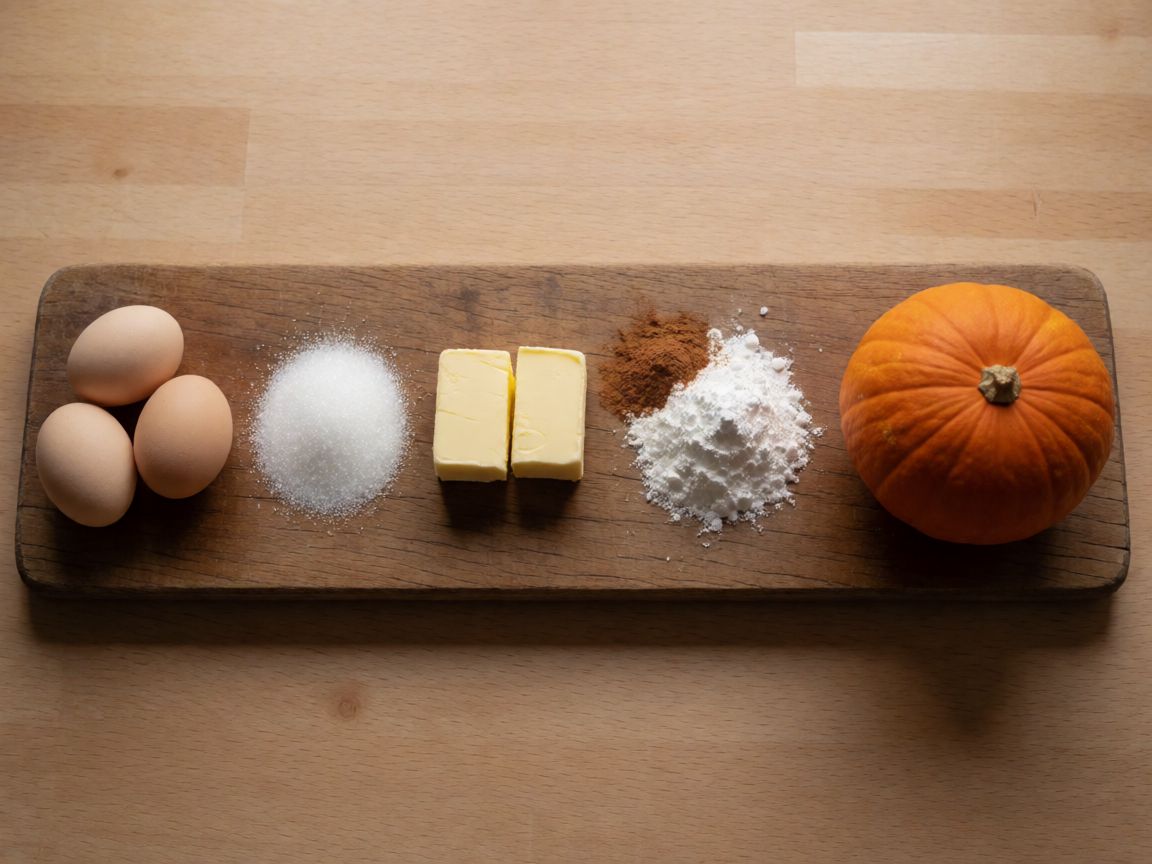





Steps
Cut the pumpkin into two or four pieces and scoop out the seeds and fibres with a spoon.
Bake the pumpkin in the oven for about 25–30 minutes, until the flesh is very soft.
27 minLet the pumpkin cool slightly, separate the flesh from the skin and mash it through a potato ricer or with a fork until smooth; set aside 250 g of purée.
Separate the eggs into yolks and whites. Beat the yolks with the sugar using a mixer until pale and fluffy.
Add the melted butter and continue mixing.
Stir in the cinnamon, sift in the potato starch and fold into the batter.
Add the reserved pumpkin purée and mix well until smooth.
Whisk the egg whites to a stiff foam and gently fold them into the batter with a spatula.
Pour the batter into a 22 cm tin, greased with butter and dusted with starch.
Bake in a preheated oven at 160°C fan (or 170°C conventional) for about 45 minutes, or 50–55 minutes without a fan.
50 min
This is not a cake in the usual sense — it is set custard dressed as a cake. No flour, so nothing here holds together by gluten. What holds it together is egg protein tightening in the heat, and potato starch backing it up, with butter keeping the whole thing from going dry and chalky. That is where "melt-in-the-mouth" comes from: fat coating a protein net, not magic.
What decides whether it works has nothing to do with how fancy your oven is and everything to do with two things: how dry your pumpkin purée is, and how gently you treat the whipped whites. Pumpkin is roughly nine-tenths water. Baking it, rather than boiling it, drives a good share of that water off and turns the remaining sugars toward caramel — that's the whole reason step two exists, and why you measure out exactly 250 g of purée rather than "however much you got." Too wet a purée and the batter never sets properly in a home oven; it stays pudding at the centre no matter how long you leave it in.
The whites are your only rise. There's no baking powder in this recipe, no soda — the lift is air you beat in by hand and then try not to lose. Fold them in like you're trying not to wake someone up. Over-mix and you've beaten the air straight back out, and the cake sits flat and dense instead of opening up the way it should.
Eggs do two separate jobs here, which is why they're split. The yolks, beaten with the sugar till pale, are about richness and emulsion — they carry the fat and bind the fruit purée into something smooth rather than streaky. The whites are structural: this cake's only leavening. Beat them stiff but not dry — dry, grainy peaks have already lost the elasticity that lets them fold through a batter without collapsing. Cold eggs separate more cleanly; room-temperature whites whip to a bigger, more stable foam. Both matter here.
Sugar at 130 g isn't just sweetness — dissolved into the yolks it's part of what makes them pale and fluffy rather than just yellow and runny; sugar molecules get between the proteins and slow them setting too fast, which is why you beat it in rather than adding it later.
Butter, melted or very soft, is fat doing fat's one job: getting between protein strands so they can't bond too tightly and squeeze out moisture as they cook. That's the actual mechanism behind "melt-in-the-mouth" — not a figure of speech, a texture you can explain. Use any fat with a clean, mild flavour of its own that won't fight the pumpkin; a flavourless vegetable oil works at a push, though you lose some of the richness butter brings when it's not just melted but creamed with the yolks.
Potato starch, not flour, is the quiet decision that makes this cake what it is. Flour brings gluten, and gluten wants structure of its own — chewy, bready, exactly what you don't want next to something this soft. Starch has no gluten; it just thickens when it meets heat and moisture, firming the custard without toughening it. Any starch that gelatinises the same way will do — cornflour (cornstarch) is the obvious stand-in, though it can leave the faintest raw taste if underbaked, where potato starch doesn't. The rule of substitution here: anything that is pure starch and carries no protein net of its own.
Cinnamon is a tsp, not a cupboard raid. Some say pumpkin needs the whole spice drawer — nutmeg, ginger, clove, the lot — no, because the flavour here is meant to come from the pumpkin itself, concentrated by baking, not papered over. One warm note is enough; more and you're tasting spice cake, not pumpkin.
Pumpkin at 1.5 kg raw sounds like a lot until you remember how much of it is water and skin. Choose a dense-fleshed variety — onion squash, Crown Prince, kabocha, butternut in a pinch — over the big wet-fleshed carving pumpkins sold around Halloween, which are bred for looks, not eating, and will leave you short on purée and long on disappointment. Once baked soft, push it through a ricer or a fine sieve rather than just forking it — a fork leaves stringy bits that turn into grit in the finished slice; a ricer or sieve is what's actually preventing that defect, not just tradition for its own sake.
On the oven: in a UK kitchen the dial often reads "fan" by default, which is exactly why the recipe gives you both numbers — 160°C fan or 170°C without, because fan ovens move heat around more efficiently and run effectively hotter for the same dial setting. If your oven is the one you use every Sunday for a roast, you already know whether it runs hot or sulky; trust that knowledge over the number on the page, and trust the wobble of the cake over the timer. And give the pumpkin its 25–30 minutes to actually soften before you touch it — rushing a half-baked pumpkin through the ricer is how lumps get into a batter that's supposed to have none.