
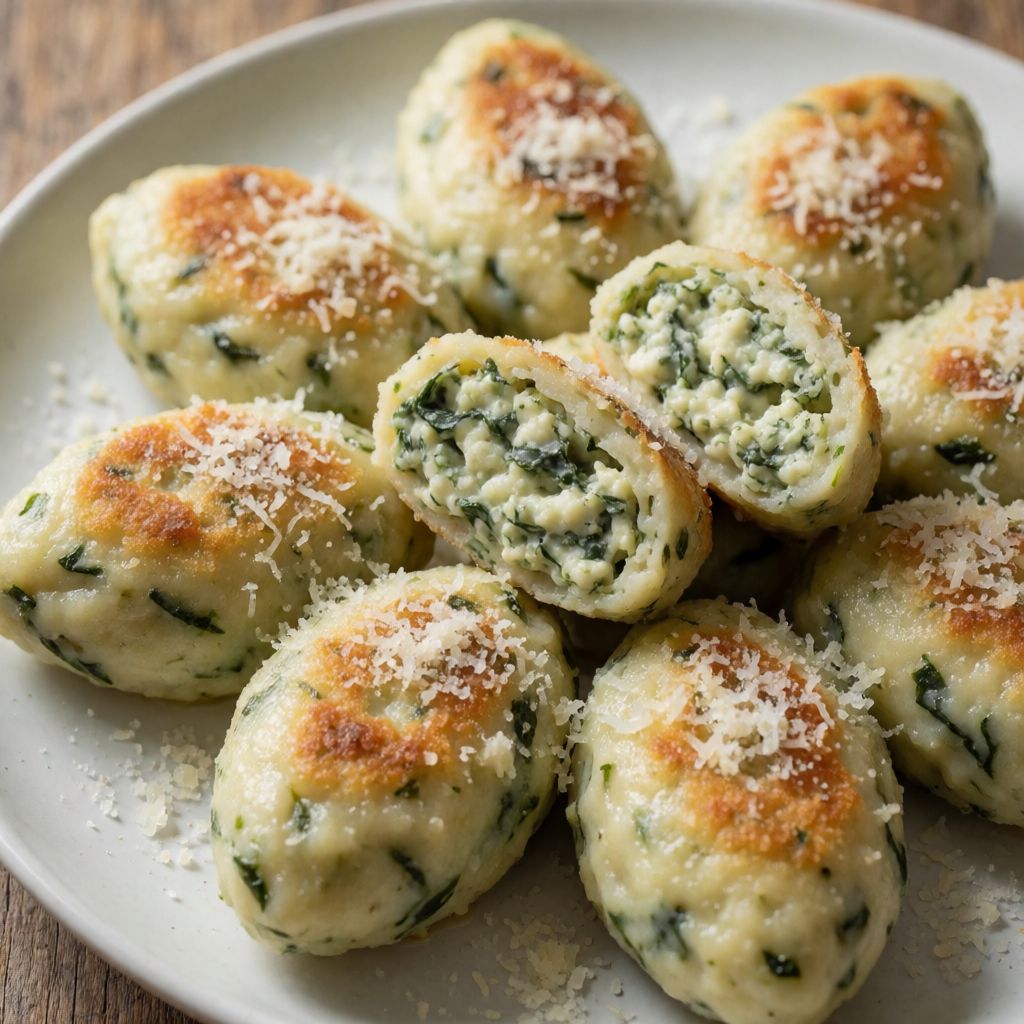
 AI photo
Rabaton all'Alessandrina
A simple dish of chard and ricotta dumplings, baked with butter, sage and parmesan.
Labels are worked out automatically from the ingredients and can be wrong. Check the packaging if it matters to you.
Ingredients











Steps
Blanch the chard in plenty of salted boiling water. After a few minutes, lift it out with a slotted spoon.
5 minFinely chop the garlic clove and parsley leaves, add the chard and chop everything together.
5 minIn a bowl, combine the breadcrumbs, flour and parmesan, and season with salt and nutmeg.
3 minAdd the ricotta, chopped chard and eggs. Mix, gradually adding breadcrumbs, until you get a smooth dough.
5 minOn a floured board, shape elongated cylindrical dumplings about 7 cm long and roll them in flour.
7 minDrop the dumplings into boiling water and cook until they float to the surface, then lift them out.
6 minPlace the dumplings in a buttered baking dish, sprinkle with parmesan, and add butter and sage.
Bake in a preheated oven at 180°C for about 10-12 minutes.
11 minServe the dumplings hot, straight from the oven.
Rabaton all'Alessandrina is Piedmont's answer to the question "what do I do with ricotta and a glut of chard": green dumplings, bound rather than stuffed, poached like gnocchi, then finished in the oven under butter and parmesan. Think of it as a cousin of malfatti - the name itself comes from "rabaton", a cylinder rolled by hand, no pasta sheet involved. This is not ravioli with the wrapper forgotten. It's a dish built on the idea that the filling can hold its own shape if you get the ratio of wet to dry right.
What decides whether it works is water, not flavour. Chard holds an enormous amount of it, and if you don't drive that water out before it meets the ricotta, egg and flour, you get a mixture that won't roll - it smears, it won't hold a cylinder, it falls apart the second it hits the pot. So the chopping in step 2 isn't just for texture: fine chopping exposes more surface, and working it against the board with the knife presses liquid out. If your chard still weeps once chopped, squeeze it in your hands over the sink like you'd wring a cloth. Some say you can skip blanching and just wilt it in a pan with oil - no, because wilting concentrates flavour but doesn't remove the bulk water the way a quick boil in a lot of water does, drawing liquid out into the pot rather than trapping it in the leaf.
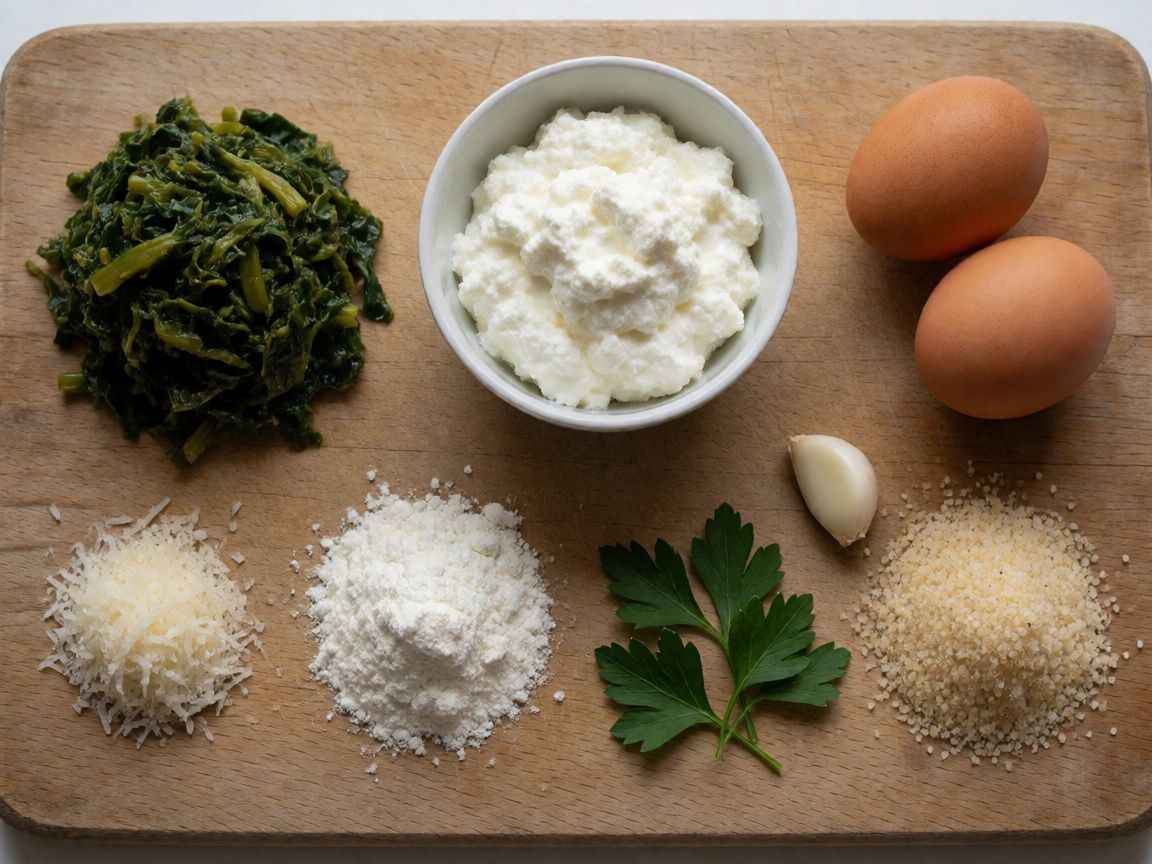
Chard is the backbone and it should be genuinely fresh - stalks firm, no sliminess at the cut end, leaves not yellowing. You're using 500 g raw to end up with maybe a third of that in cooked, squeezed volume, so don't substitute a small bag and expect the same body. Spinach works in a pinch - it's the usual swap across Italy for this family of dumplings - but spinach holds less structure and more water still, so expect to need slightly more breadcrumb to compensate. Either way, taste the raw leaf first: bitterness in old chard doesn't cook out, it just gets diluted, and blanching in plenty of water helps leach some of it away, which is one more reason not to skip that step for a quick sauté.
Ricotta should be the firm, drained kind sold for cooking, not a wet spreadable tub - check it by tipping the tub, if liquid runs off immediately it will fight you in the dough. If all you can find is watery ricotta, drain it in a sieve over a bowl for twenty minutes before you start; that's patience spent early so you don't lose the dumplings later. Any soft, mild curd cheese with low moisture can stand in - well-drained cottage cheese blended smooth is the honest domestic fallback, though it won't have ricotta's slight sweetness.
Parmesan does two jobs here: salt and dry bulk in the dough, and a savoury crust once it's under the oven's heat with butter at the end. A hard, aged grana is what gives you both - a soft or young cheese melts to a puddle instead of catching colour. If you're out of parmesan, pecorino works but is saltier, so go easy on added salt elsewhere in the mix.
Eggs are the glue - without them the dumpling has nothing to set around the heat of the pot, and you'd end up with crumbs in water rather than a shape. Use them at room temperature if you can; cold egg straight from the fridge makes the dough stiffen unevenly as you mix.
Flour and breadcrumbs are both drying agents but they're not the same tool. Flour coats and seals the outside of the rolled dumpling, which is why you roll them in it rather than mix more of it in - too much flour inside the dough makes a dense, pasty centre instead of a soft one. Breadcrumbs go inside, because their job is absorption, not sealing; dried ones are specified for a reason - fresh breadcrumbs still carry moisture and would undercut the whole point of the step. If you only have fresh bread, toast it dry and crumb it yourself before using.
Garlic and parsley are there for a lift against all that cheese and egg - one clove, finely minced so it disappears into the green rather than announcing itself raw in a bite. Nutmeg is the traditional partner to ricotta and chard right across northern Italian cooking, not decoration - a little warmth that keeps the dish from tasting flat and dairy-heavy. Sage and butter at the finish are doing what they do with any gnocchi: butter carries the sage's oil into something you can taste, and sage itself holds up to heat without turning bitter the way a softer herb would in that pan. On a UK hob, "buttered baking dish" plus a short blast under 180°C isn't about building a crust so much as warming the dumplings through evenly and melting everything together - a grill for the last minute or two will colour the top if your oven runs gentle, but watch it, since butter catches fast once the water's cooked out of it.