
 AI photo
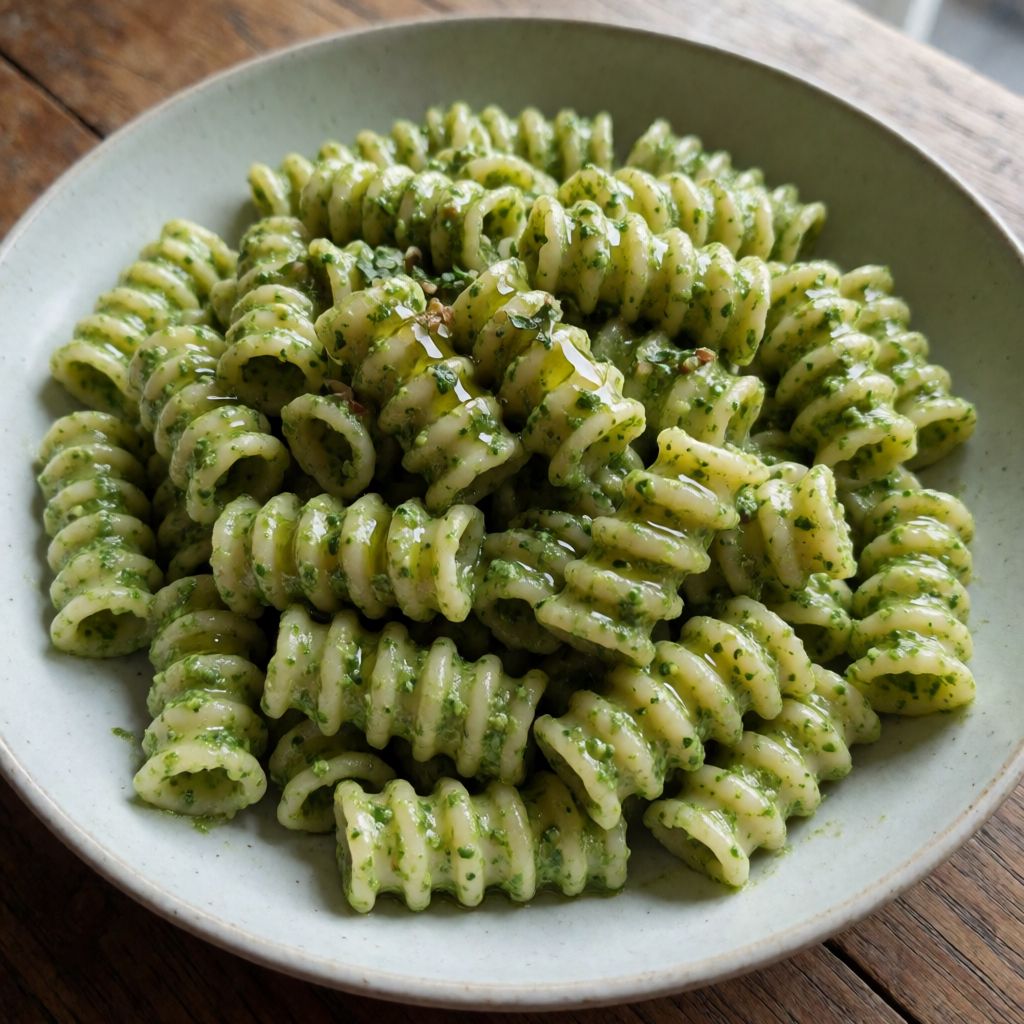
Radiatori with Mint and Basil Pesto
A simple pasta dish tossed in a fragrant mint and basil pesto with walnuts and pecorino.
Labels are worked out automatically from the ingredients and can be wrong. Check the packaging if it matters to you.
Ingredients









Steps
In a blender, combine the mint and basil leaves with a pinch of salt and blitz until finely chopped.
Add the walnuts, garlic, pecorino and olive oil to taste.
Blend everything until smooth and pourable.
Drain the radiatori pasta in a colander.
Toss with the pesto, adding a spoonful of the pasta cooking water if needed, and season with black pepper.
Serve sprinkled with extra pecorino.
Radiatori with mint and basil pesto is just blitzed herbs, nuts, cheese and oil, tossed warm with pasta — nothing in the sauce itself is cooked. That's the whole point, and the whole risk: nothing here gets to hide behind heat. If the basil goes dark and bruised at the edges, the sauce tastes of it, straight into the bowl, no second chance.
What actually decides whether this works isn't the order of the steps but two things: how much oil you give the blade to move in (too little and it tears the leaves instead of slicing them, too much and the pesto turns to green soup), and whether you keep back some pasta water to loosen the sauce before it sits and glues itself into clumps.
Radiatori is chosen on purpose — those ridges and folds, like a little radiator, are there to catch a thin, oily sauce that would slide straight off anything smooth. If your cupboard only has penne or fusilli, that's fine, this dish isn't sacred about shape — just pick something with grooves or holes, not spaghetti, which pesto will mostly slide past.
Some say real pesto has to be ground in a mortar, otherwise it's not pesto. No — the mortar's only virtue is that stone and wood don't generate heat, and heat is what turns raw basil bitter and khaki. A blender does the same job as long as you don't let the blade spin long enough to warm the leaves — short bursts, scrape down, repeat.
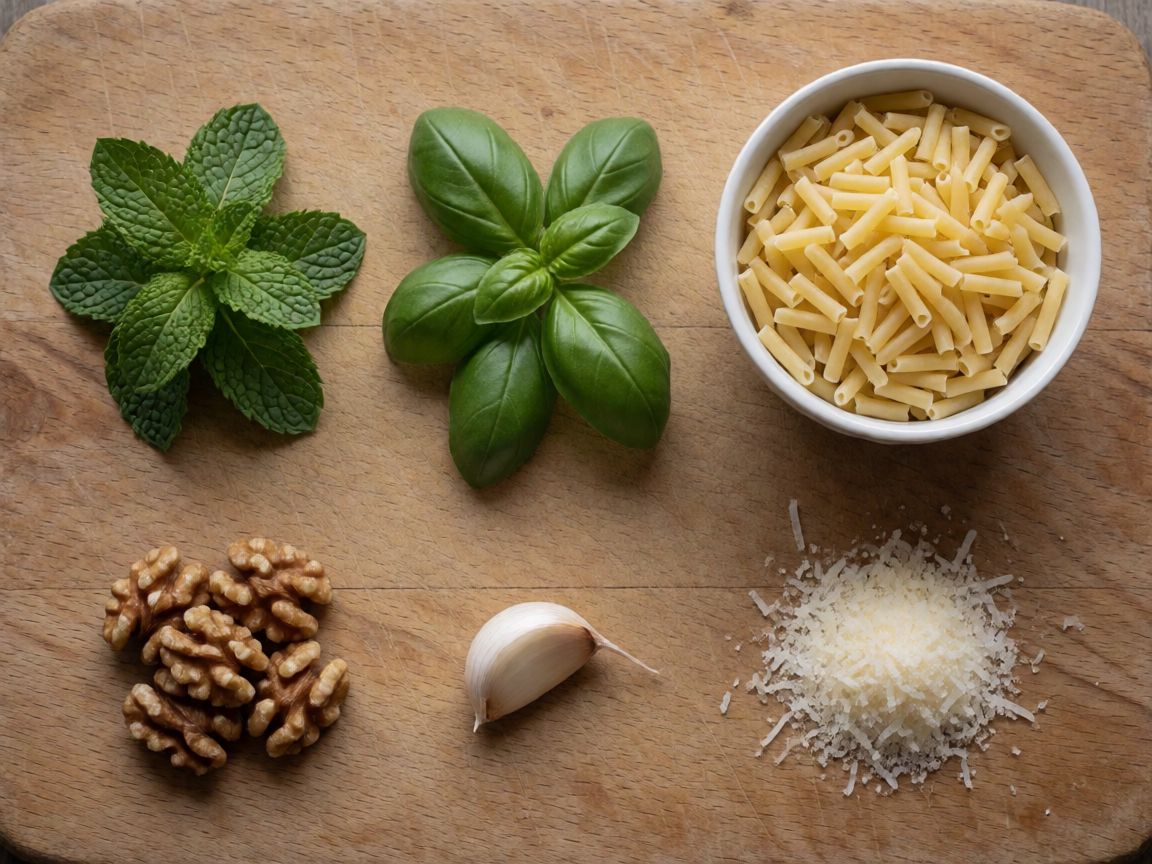
Mint and basil split the work between them: basil is the body of the sauce, mint is the sharp edge cutting through it. Use them fresh — dried herbs have already lost the aromatic oils that make a pesto smell of anything at all, so there's no honest substitute here, just less mint if you find it too assertive raw.
Walnuts stand in for pine nuts, and that's economics, not compromise — pine nuts are picked by hand from cones that take years to mature, walnuts grow on trees that fruit every season, so they cost a fraction of the price. The criterion for the nut, whatever you use, is fat content: it needs to be oily enough to turn creamy under the blade rather than gritty. Cashews work on the same logic; so, in smaller amounts, do sunflower seeds.
One clove of garlic is deliberately modest, because raw garlic is a different creature from cooked garlic — cooking mellows it into sweetness, but here it stays sharp and uncooked all the way to your fork, so a little goes a long way.
Olive oil "to taste" is really solving a mechanical problem as much as a flavour one: enough oil lets the blade move the paste freely, too much and you've made a dressing rather than a sauce. The criterion for which oil: pick one you'd be happy to eat a spoonful of raw, because that's exactly what you're doing. Extra virgin olive oil earns its place by flavour, not tradition; a good cold-pressed rapeseed oil, which sits on most British shelves anyway, is a fair stand-in if olive oil isn't to hand.
Pecorino Romano is sheep's milk cheese, salted hard and aged until it grates to a fine powder rather than strings — that dryness is what lets it dissolve smoothly into the paste instead of clumping. Parmesan is the obvious substitute: any hard, aged grating cheese does the job, a soft or melting cheese does not.
The pasta water you save before draining is not a garnish, it's glue — the starch suspended in it is what lets an oily sauce bind to the pasta's surface instead of pooling at the bottom of the bowl. This is the one step that's easy to skip by habit, tipping the whole pot straight into the colander, and it's the usual reason a pesto pasta turns dry and claggy rather than glossy. Save more than you think you'll need; you can always leave it unused.
And patience belongs on the ingredients list here as much as the garlic does — not patience with time, there's little of that to spend, but patience with the blender. Short pulses, a scrape of the sides, another pulse. Rushing it for the sake of finishing in one long buzz is exactly what heats the blade and turns good basil bitter.