
 AI photo
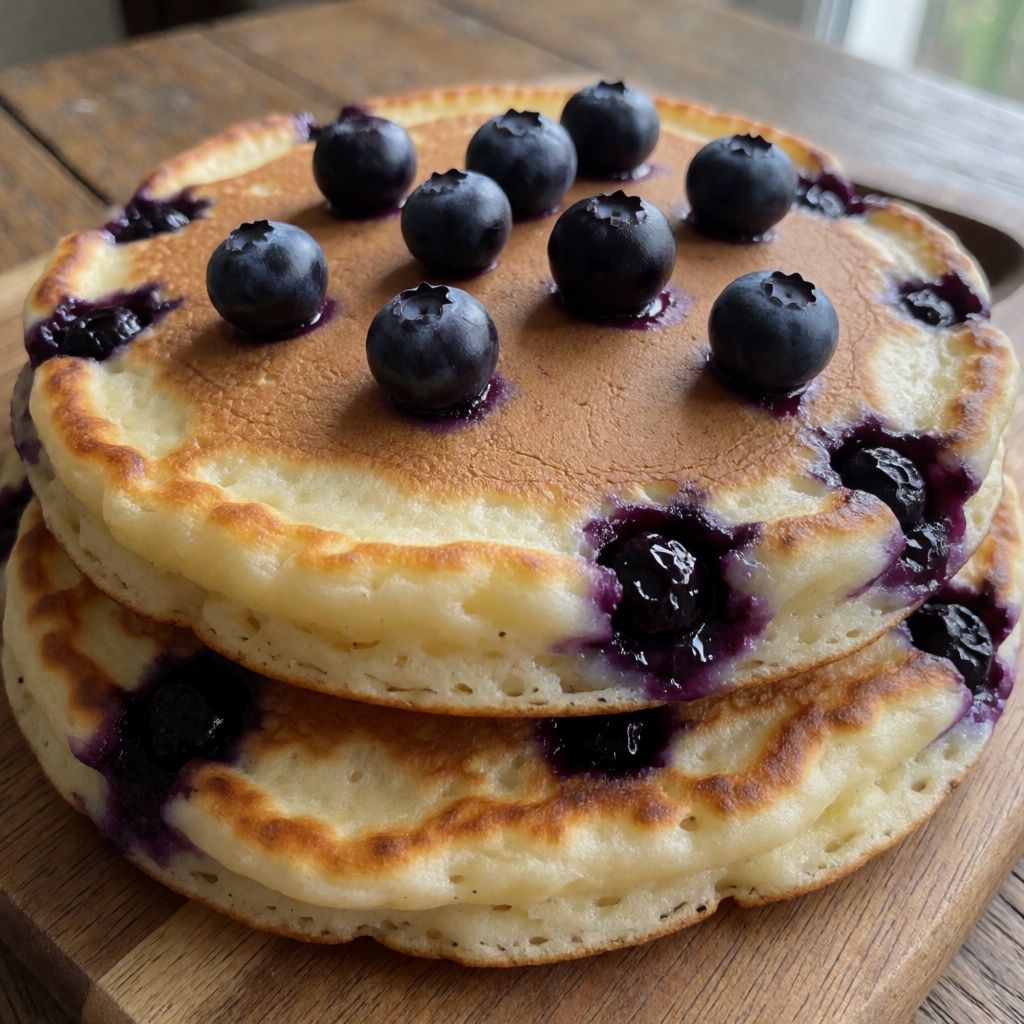
Ricotta Pancakes with Blueberries
Fluffy ricotta pancakes with blueberries, lemon zest and a dusting of icing sugar.
Labels are worked out automatically from the ingredients and can be wrong. Check the packaging if it matters to you.
Ingredients
- 200 g Plain flour
- 1 tsp Baking powder
- 1 tbsp Sugar
- 0.5 tsp Vanilla powder
- 0.5 tsp Salt
- 1 pcs Lemon zest, grated
- 250 g Ricotta
- 2 pcs Eggs
- 200 ml Buttermilk or ordinary milk
- 2 tbsp Butter for frying
- 100 g Blueberries
- 1 pcs Lemon cut into wedges
- 30 g Icing sugar







Steps
Mix the plain flour, baking powder, sugar, vanilla powder, lemon zest and salt in a bowl.
Separate the egg yolks from the whites into two bowls.
Beat the egg whites to stiff peaks in a clean bowl and set aside for a minute.
Beat the ricotta with the yolks on low speed in another bowl until completely smooth, then pour in the buttermilk.
Sift the dry ingredients into the bowl with the ricotta mixture and stir the batter.
Gently fold the egg whites into the batter: first add a few spoonfuls of the beaten whites and mix, then fold in the rest.
Heat a frying pan over medium heat and melt the butter in it.
Spoon the batter into the pan and fry the pancakes for 2–3 minutes on each side.
3 minPlace the hot pancakes on plates or a platter.
Dust with icing sugar and scatter the blueberries over the top.
Serve with the lemon wedges for squeezing over the pancakes.
A ricotta pancake is not a pancake with ricotta stirred in — it's a batter built around two separate structures that meet at the last second. One is heavy and wet: ricotta, yolks, buttermilk, flour. The other is light and dry: whipped egg whites, pure air held in by protein. Fold them together and you get something a plain milk-and-flour batter can never be — a pancake with weight on the tongue but no density in the mouth, because half its volume is bubbles that survived the mixing bowl.
What decides whether it works is almost entirely in how you fold, not how you fry. Whisked whites are a foam, and foam collapses the moment you stir it like batter. That's why you fold in a few spoonfuls first — to let the thick ricotta mixture soften and loosen so it stops fighting the whites — then fold in the rest gently, lifting rather than beating. Some say egg whites are just there to "help it rise." No — baking powder does the rising. The whites are there so the crumb stays soft instead of turning rubbery, because ricotta brings protein and moisture with almost no starch to soften it, and whipped air is what stands in for the lightness flour alone would normally give.
Flour, baking powder, sugar, vanilla, salt, lemon zest — this dry mix is doing the ordinary pancake jobs: structure, lift, seasoning, and in the zest's case, a sharpness that cuts through the richness of ricotta and butter so the whole thing doesn't just taste of fat and sweetness. Plain flour is right here because you don't want gluten development — this isn't bread, you're not kneading it, so there's no case for anything stronger. Any plain, low-protein flour will do the same job.
Ricotta is the one ingredient you shouldn't improvise around, because its lack of structure is exactly the point — it's whey-based curd with a loose, almost grainy set, nothing like the dense, elastic curd of cottage cheese or the sourness of soft cream cheese. If you only have cottage cheese, push it through a sieve first or you'll get lumps and pockets of sourness the batter can't hide. Cream cheese will work in a pinch but it's denser and tangier — cut it with a splash more buttermilk so it loosens to the same consistency.
Buttermilk's job is acid plus thinness. Ordinary milk is named as the substitute in the recipe itself for good reason — it's the obvious domestic swap, since few people in a UK flat keep buttermilk on hand outside baking season. If you use milk, a small squeeze of lemon juice stirred in and left for a minute will sour it just enough to mimic buttermilk's reaction with the baking powder — not identical, but close enough that nobody at the table will complain.
Eggs are split for a reason that's really about physics, not tradition: whole eggs beaten into batter give you flavour and some lift, but separated and whipped, the whites trap far more air than they ever could dissolved in liquid fat and starch. That's the entire argument for the extra washing-up of two bowls instead of one. Skip it, and you get a denser, flatter pancake — still edible, just not what this recipe is for.
Butter for frying rather than oil is about flavour, not function — oil would brown less and taste of nothing, which is fine for a plain pancake but wastes the point here, since butter's milk solids caramelise slightly and add exactly the toasted-dairy note that plays well with ricotta. If you want a neutral option because butter catches too easily on your pan, use a flavourless oil and accept you've traded a bit of taste for a bit of safety margin against burning.
Blueberries, icing sugar and lemon wedges at the end are not decoration so much as balance — sweet, sharp, and a burst of acid-and-juice against all that soft richness. Any berry with a thin skin that bursts rather than needing to be chewed will do the same job; raspberries or blackberries sliced small are the obvious swap if blueberries aren't in season or are the sad, hard, flavourless ones sold out of season in most British supermarkets.
Sixteen servings here really means sixteen small pancakes, not sixteen plates of breakfast — this is a batch built for a brunch table, not a solo Sunday fry-up, and it scales down easily by halving everything except your patience: fold gently regardless of batch size, because rushing the whites is the one shortcut this dish won't forgive.