
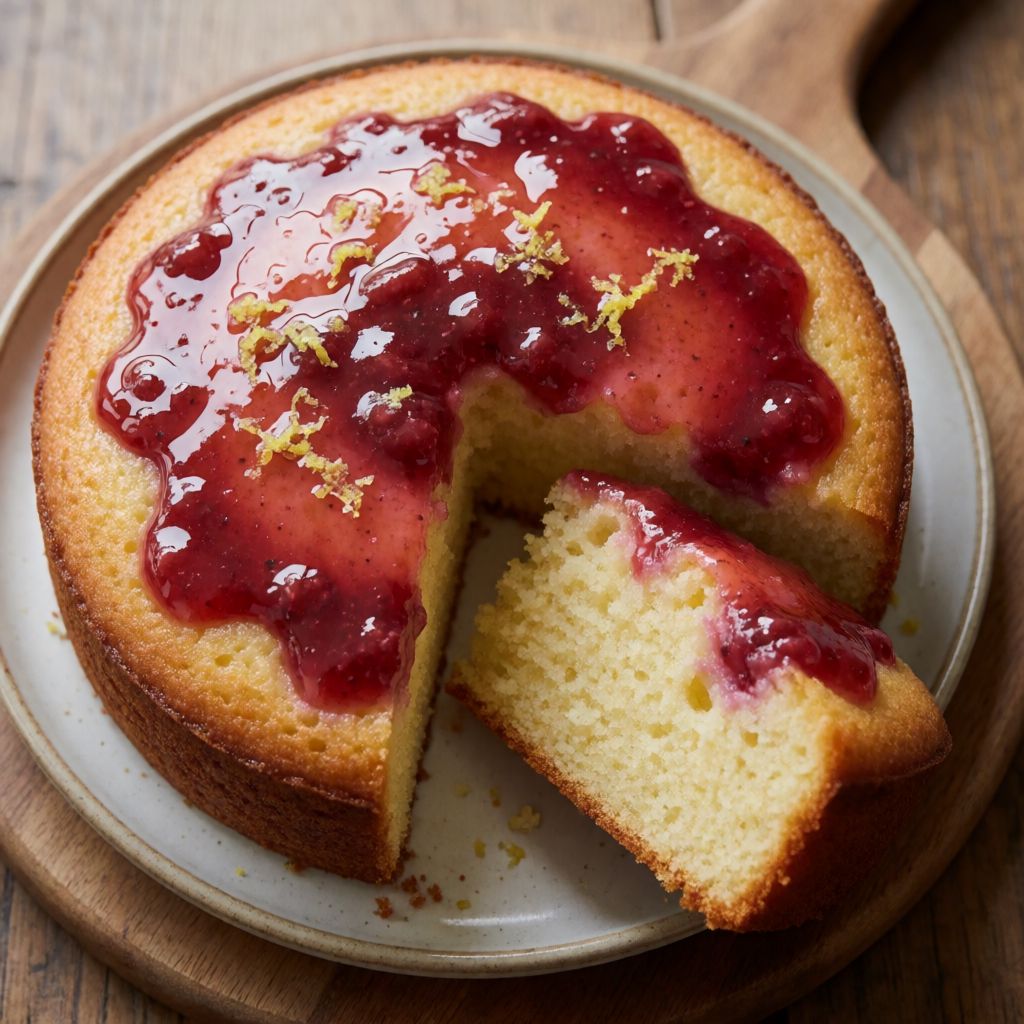
 AI photo
Ricotta Cake with Strawberry Jam
A soft ricotta cake topped with strawberry jam and a dusting of icing sugar.
Labels are worked out automatically from the ingredients and can be wrong. Check the packaging if it matters to you.
Ingredients
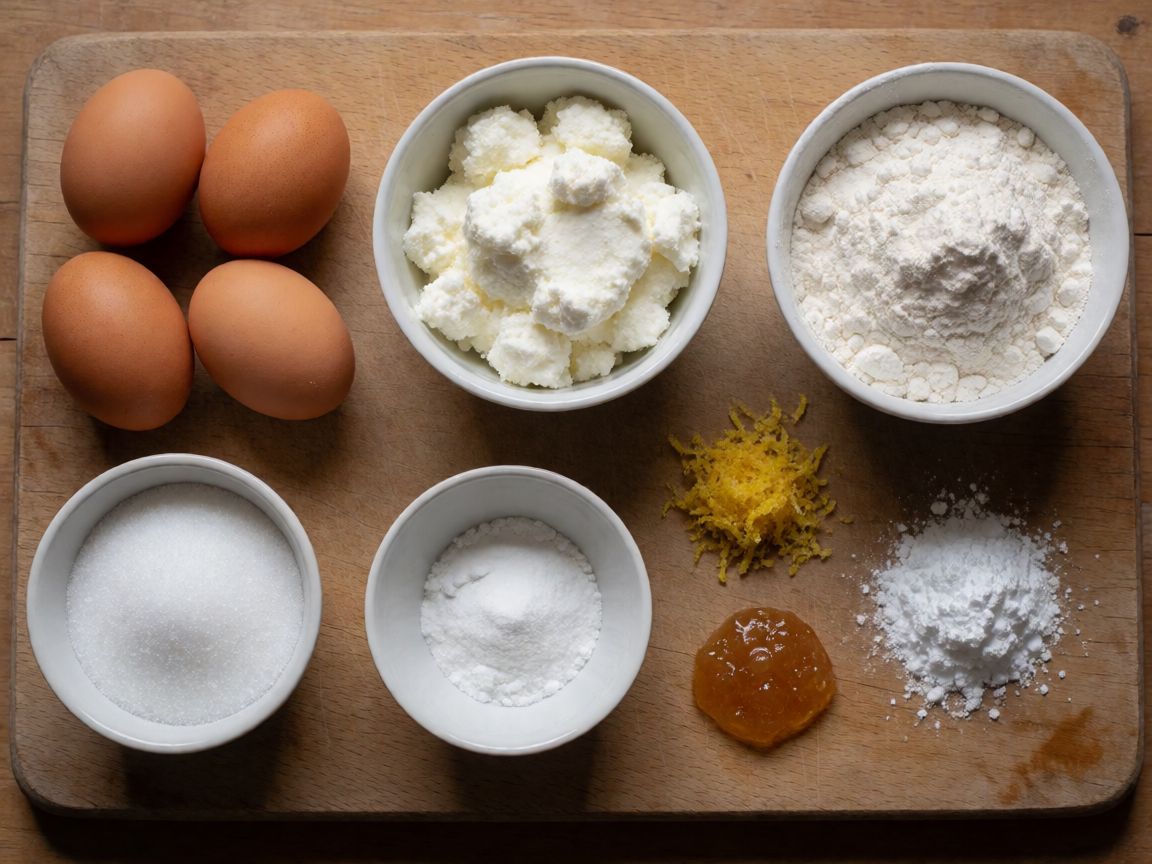
- 4 pcs Eggs
- 300 g Ricotta
- 300 g Plain flour
- 150 g Caster sugar
- Lemon zest to taste
- 1 pcs Baking powder 1 sachet (about 10 g)
- Strawberry jam to taste
- Icing sugar for dusting








Steps
In a bowl, whisk the ricotta with the sugar until smooth and lump-free.
Add the eggs and keep whisking, then stir in the lemon zest and gradually fold in the sifted flour and baking powder.
Grease a baking tin and dust it with flour, then pour in the batter.
Spread the strawberry jam over the batter, smoothing it with a spoon or spatula.
Bake at 170°C for 35 minutes.
35 minTake the cake out of the oven, let it cool completely, then remove it from the tin.
Dust with icing sugar before serving.
This is a ricotta cake in the old farmhouse sense — not a cheesecake, not a sponge, something between. Ricotta was always the leftover: the whey strained off when making proper cheese, too valuable to throw away, light enough to turn sweet. So people beat it with sugar and eggs, added flour to give it a frame that cheesecake never has, and spread whatever jam was in the pantry on top before it went in the oven. That's the whole economic story of this cake — it's a way of not wasting the by-product.
What decides whether it works is mostly upstream of the oven. First: how smooth you get the ricotta and sugar before anything else joins them. Ricotta comes out of the tub in loose curds, and if you don't work those out now, they don't disappear in the batter — they sit in the baked crumb as little grainy pockets, and people blame the cheese when really it's the whisking that was skipped. Second: how gently you fold in the flour. This isn't bread, you're not building gluten, you're just binding — overwork it and the tender, slightly damp crumb that makes this cake worth eating turns elastic and chewy instead. Third, and most ignored: patience after the oven. The centre of this cake finishes setting as it cools, the way a baked custard does. Pull it out of the tin while it's still warm and it will tear or sink in the middle — not because the recipe failed, but because you asked a half-set structure to hold its own weight.
Ricotta: buy it firm, from a tub, not swimming in liquid. UK supermarket ricotta is usually dry enough to use straight away; if yours looks watery when you tip it out, sit it in a sieve over a bowl for half an hour first — that excess water has nowhere to go in the oven except into steam that can leave the middle dense and wet. Don't reach for cottage cheese as a substitute: different curd, different protein, it stays grainy no matter how long you beat it. Mascarpone will work in a pinch but it's richer and sweeter — you'll want to ease back the sugar.
Caster sugar earns its place here because it's fine enough to dissolve into the ricotta while you're still whisking it smooth — that's two jobs done at once. Granulated sugar works too, it just needs longer at the whisk, or you'll taste sand at the edges of each bite.
Plain flour, not strong or bread flour, and this matters more than people think. The job of the flour here is structure without elasticity — you want the cake to hold together when you cut it, not to spring back like a loaf. Bread flour has more gluten-forming protein; fold that in and you build chew where you wanted tenderness.
Baking powder: the sachet amount is the ceiling, not a suggestion to improve on. Ricotta batter is heavy and wet, it needs lift, but overdo the baking powder and the cake rises fast, collapses as it cools, and carries a faint bitter, soapy note — that's the powder itself you're tasting, not a flaw in the ricotta. If your sachets at home are the smaller UK 7g ones rather than 10g, roughly two level teaspoons gets you there.
Lemon zest: scrape only the coloured skin, not the white underneath — that's where the bitterness lives, not the flavour. The zest's actual job is to cut through the richness of egg and ricotta so the cake doesn't sit heavy on the tongue. No lemon in the house, a little vanilla will do something, though not the same bright thing.
Strawberry jam: it needs to be set, not runny, because it sits as a layer on top of raw batter and has to stay there rather than sink and streak through. A loose homemade jam will need a few minutes on the stove, reduced down, before you trust it on top. And don't dust the icing sugar on until the cake is fully cool and ready to serve — dust it early and the moisture coming off the jam will melt it straight into a wet patch. On the tin: the recipe doesn't name a size, and a domestic oven dial is rarely as honest as it looks, so judge the cake by what you see — risen, the jam on top gone from glossy-wet to set and slightly darker at the edges, a skewer coming out without raw batter clinging to it. A springform tin is worth using if you have one; this cake is soft enough that knocking it out of a solid tin is asking for a broken edge.