
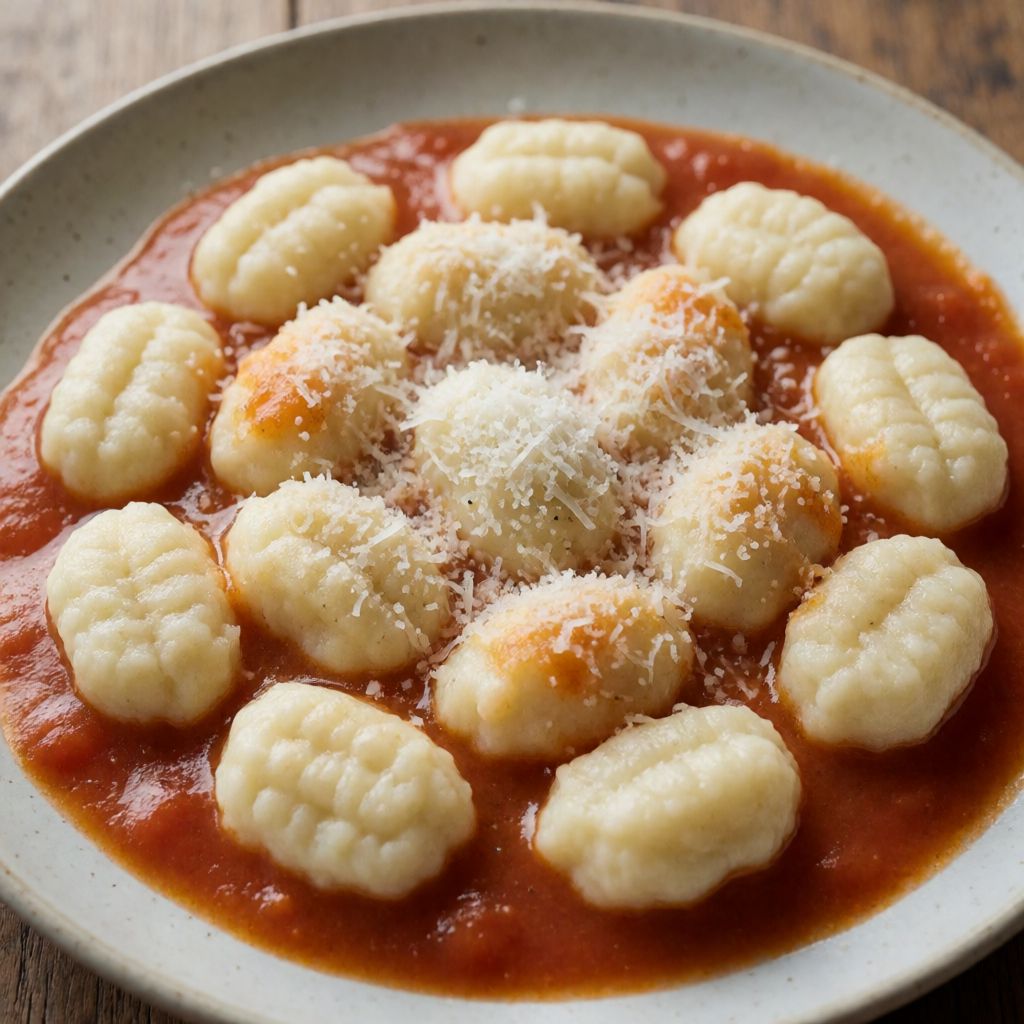
 AI photo
Gnocchi with Ricotta in Tomato Sauce
Soft ricotta gnocchi in a simple tomato sauce, finished with Parmesan and fresh basil.
Labels are worked out automatically from the ingredients and can be wrong. Check the packaging if it matters to you.
Ingredients
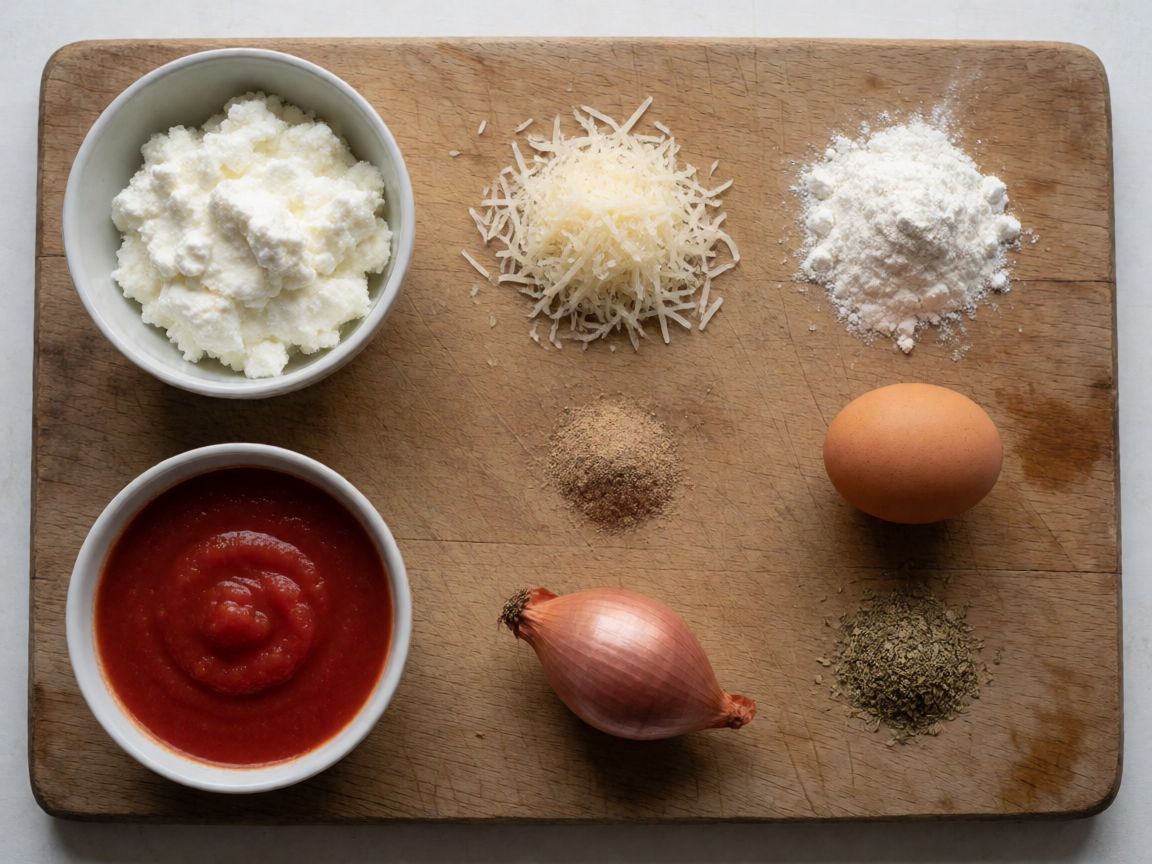
- 250 g Ricotta
- 70 g Parmesan
- 170 g Plain flour
- 1 pcs Egg
- Nutmeg to taste
- Salt to taste
- 500 g Tomato passata
- Olive oil to taste
- 1/2 pcs Shallot
- Oregano to taste
- Basil to taste






for serving
- Parmesan to taste
Steps
In a bowl, mix the ricotta, then add the Parmesan and egg. Season with nutmeg and salt.
Add the flour and mix all the ingredients thoroughly.
Knead the mixture by hand, first in the bowl, then transfer it to a lightly floured work surface.
Shape a small block of dough, roll out thin ropes about 1 cm thick and cut into smaller pieces.
Dust the work surface and the gnocchi with flour so they don't stick together.
Fry the finely chopped shallot in olive oil, add the tomato passata, and season with salt and oregano.
Simmer the sauce.
12 minBring a pot of water to the boil, salt it, and cook the gnocchi.
When the gnocchi float to the surface, drain them and transfer to the finished sauce.
Stir, then sprinkle with grated Parmesan and fresh basil leaves.
Plate up and serve.
These aren't potato gnocchi. No potato in sight — the body here is ricotta, bound by egg and Parmesan, held together by just enough flour to stop it being soup. That's the whole mechanism: ricotta gnocchi are a cheese dumpling wearing a pasta costume, and the dough's only job is to survive the pot without falling apart while staying lighter than anything you'd get from mash.
What decides whether this works is moisture, not skill. Ricotta varies wildly — a watery supermarket tub and a firm one from a good deli are not the same ingredient. Too wet, and you'll keep adding flour to compensate, and flour is the enemy here: every extra spoonful makes the gnocchi denser and more like a rubber eraser. The fix isn't more flour, it's less water to begin with — tip your ricotta into a sieve or a clean tea towel for ten minutes before you start, and let gravity take out what you don't want fighting you later.
Some say gnocchi dough needs long kneading, like bread. No — bread needs gluten development, this needs the opposite. Overwork this dough and you build structure you don't want; the Parmesan and egg are already doing the binding. Mix it until it just holds, shape it, stop touching it.
The float is the test, not the clock. When a gnocco rises to the surface of the boiling water, it means the inside has set enough to trap steam and lift the whole thing up — that's doneness you can see, not a number you guess. Time given here is a floor, not a verdict.
Ricotta is the entire dish, so don't buy the cheapest tub. You want one firm enough to hold a shape on a spoon, not one that pools liquid the second you open the container. If all you can get is a wet one — common with UK supermarket ricotta — drain it properly first; this one step prevents the most common failure, which is dough that needs rescuing with flour and ends up tasting of flour instead of cheese.
Parmesan here does two jobs across the recipe: inside the dough it adds salt, savour and a little extra protein that helps the mixture set when it hits hot water; on top it's just finishing seasoning, so use a better piece for the dough — a real aged Parmigiano, not the pre-grated dust — because that's the one doing structural work, not garnish.
The egg is glue, nothing more poetic than that. It's what lets you use so little flour and still get a dough that holds its shape when cut and dropped into boiling water. If you're out of egg, you're out of this dish — there's no clean substitute that does the same binding without changing the texture entirely.
Flour should be thought of as a dial, not a fixed amount. 170 g is a starting point for a reasonably dry ricotta; add it gradually on the board rather than all at once in the bowl, and stop the moment the dough stops sticking to your palm. Plain flour is right because you want no extra gluten strength fighting the softness of the cheese — nothing fancy needed, any ordinary plain flour in your cupboard works.
For the sauce, passata exists so you don't have to peel, deseed and cook down fresh tomatoes every time you want a quick sauce — it's already reduced, strained, ready. Shallot rather than onion gives a gentler, slightly sweeter base that won't shout over the ricotta; if you only have a mild onion, use half as much as you'd normally reach for and give it longer over gentle heat until it turns translucent rather than coloured — colour here means bitterness starting, which is what you're avoiding.
Olive oil should be one with actual flavour for this dish, since it's not hiding under much — a fruity, not overly bitter one is better than your everyday cooking oil; if you only keep a neutral oil at home, a small knob of butter stirred in at the end will do similar work, rounding off the acidity of the tomato.
A wide pan does the sauce simmer better than a deep saucepan — more surface, faster gentle reduction, less chance of it turning watery and thin, which is the usual complaint with jarred-style sauces. And patience matters more than any single ingredient here: handle the dough gently, let the ricotta drain properly, let the sauce reduce without rushing it. Hurry any one of those and you get something edible but not this.