
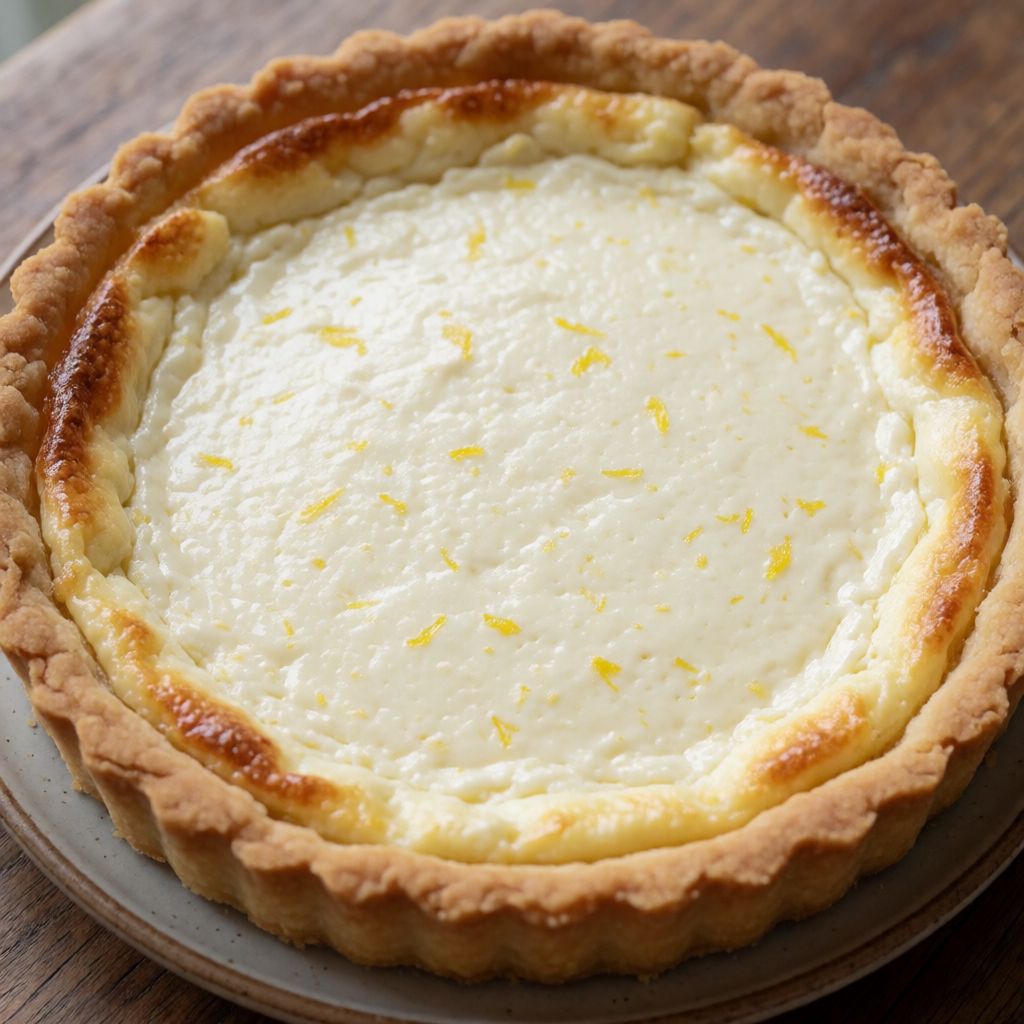
 AI photo
Ricotta and Lemon Crostata
A classic Italian ricotta and lemon crostata with a crisp pastry base and a smooth, citrus-scented filling.
Labels are worked out automatically from the ingredients and can be wrong. Check the packaging if it matters to you.
Ingredients
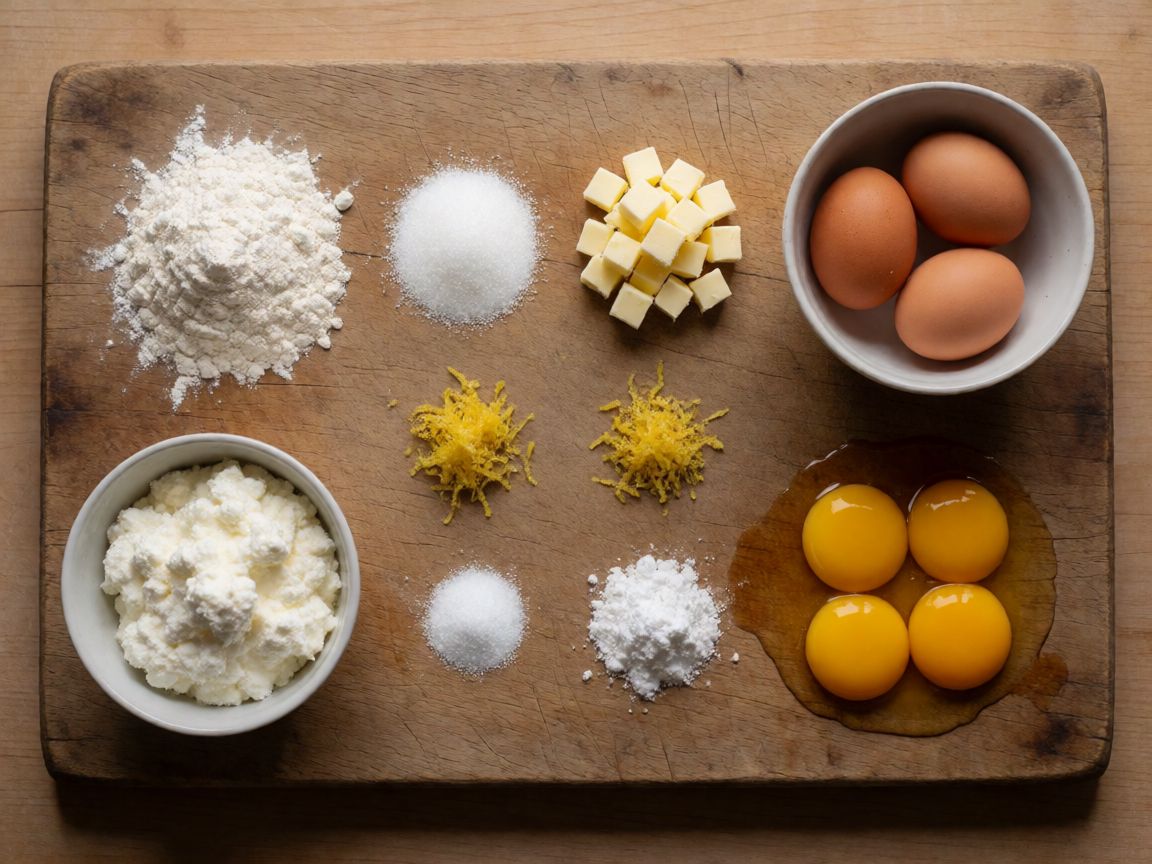
- 400 g Plain flour
- 160 g Caster sugar
- 160 g Butter cubed
- 140 g Eggs
- 1 pcs Lemon zest
- 1 pinch Salt
- 1 tsp Baking powder
- 500 g Ricotta
- 4 pcs Egg yolks
- 170 g Icing sugar
- 2 pcs Lemon zest







Steps
Tip the flour onto a work surface in a mound, make a well in the centre and add the sugar, eggs, salt, baking powder, lemon zest and cubed butter.
Knead by hand until smooth, then shape into a soft ball of dough.
Wrap the dough in cling film and chill in the fridge.
30 minMake the filling: combine the ricotta, icing sugar, egg yolks and lemon zest in a large bowl.
Whisk the filling with a mixer until smooth and even.
Roll out the dough on a lightly floured surface.
Line a tart tin with the dough, press it firmly into the edges and trim off the excess.
Prick the base with a fork.
Spread the ricotta and lemon filling evenly, leaving the edges clear.
Cut thin strips from the leftover dough and lay them in a lattice over the top of the crostata.
Bake at 180°C until lightly golden.
40 minRemove and let cool completely before serving.
This is pasta frolla — Italian shortcrust — wrapped around a ricotta-lemon custard that's really a baked cheesecake in disguise, finished with a lattice so the filling can breathe. The crostata lives or dies on two things: whether your pastry stays short (meaning it crumbles, not stretches) and whether you stop the oven before the ricotta turns rubbery.
Shortcrust gets its name from what fat does to flour. Butter coats the flour particles and blocks them from linking into long gluten strands — that's the "short" in shortcrust, short gluten chains, not a comment on how quickly you make it. Knead it like bread dough and you've built the very structure you were trying to avoid: a tough, biscuit-hard shell instead of one that shatters under a fork. So knead it only until it comes together — smooth, not elastic — then into the fridge it goes, because cold butter holds its shape when rolled and a cold dough won't slump down the sides of the tin as it bakes.
Some say you must blind-bake any tart base first, or it goes soggy. Not here — the filling is wet but not runny, it sets as it bakes, and the forking of the base lets any trapped steam escape rather than puffing the pastry up into a dome. That's the whole job of the fork holes: not decoration, a pressure valve.
180°C is the temperature at which butter in the crust melts and releases steam fast enough to lift the structure into flakiness, while the egg-and-cheese filling firms up through coagulation without curdling into something grainy. Push it hotter and the outside of the filling sets before the centre does, so you get a tart that looks done and wobbles like jelly when you cut it an hour later. Your test isn't the 40 minutes — that's the floor, not the finish line. Watch the lattice: pale gold at the edges, firm filling that no longer shivers if you nudge the tin, that's when it's actually done. In a British oven, which often runs hotter or cooler than the dial claims, trust your eyes before the clock.
On the flour: plain flour, not strong bread flour — you want low protein, because protein is exactly what builds gluten, and gluten is what you're trying to avoid here. If what's in your cupboard is self-raising, that's fine too, just drop the baking powder, since self-raising already carries its own lift.
Butter should be cold and cubed, straight from the fridge, because the whole point is that it stays as distinct pieces coating flour, not an emulsified paste. If your kitchen is warm — and a British kitchen with the Sunday roast already in the oven absolutely counts — work fast, or put the cubed butter back in the fridge for ten minutes mid-way. Margarine will technically work but brings its own flavour and a softer melt, so you lose some of the shatter.
Ricotta is the filling's whole personality: it's a fresh, unaged, mild cheese, drained rather than pressed, which means it holds moisture that bakes out into a soft set rather than a firm one. If your ricotta looks watery in the tub, tip it into a sieve for twenty minutes first — excess water here is what turns a firm filling into a soggy crust from underneath, which has nothing to do with your blind-baking and everything to do with what you poured on top. Cottage cheese pushed through a sieve is the honest substitute if ricotta isn't on the shelf; it won't be quite as silky, but it behaves the same way under heat.
Lemon zest, not juice — you want the oil from the peel, which carries the fragrance, without the acid, which would start curdling the egg yolks before they ever see the oven. Use a fine grater and stop at the yellow; the white pith underneath is bitter and does nothing for you.
The egg yolks in the filling are what sets it — they're the custard-maker here, the same mechanism as a crème pâtissière or a baked custard tart. Icing sugar rather than caster dissolves instantly into the ricotta with no grit, which matters because this filling never gets cooked and stirred, only whisked and baked once — there's no second chance to melt sugar that didn't dissolve.
Give the finished crostata time to cool fully before you cut it — not patience for its own sake, but because the filling is still setting as it drops in temperature, the same way a cheesecake firms on standing. Cut it warm and you get a slump on the plate instead of a clean wedge. This one feeds eight slices from a standard tart tin, and it keeps its shape far better the next day with tea than it does an hour out of the oven.