
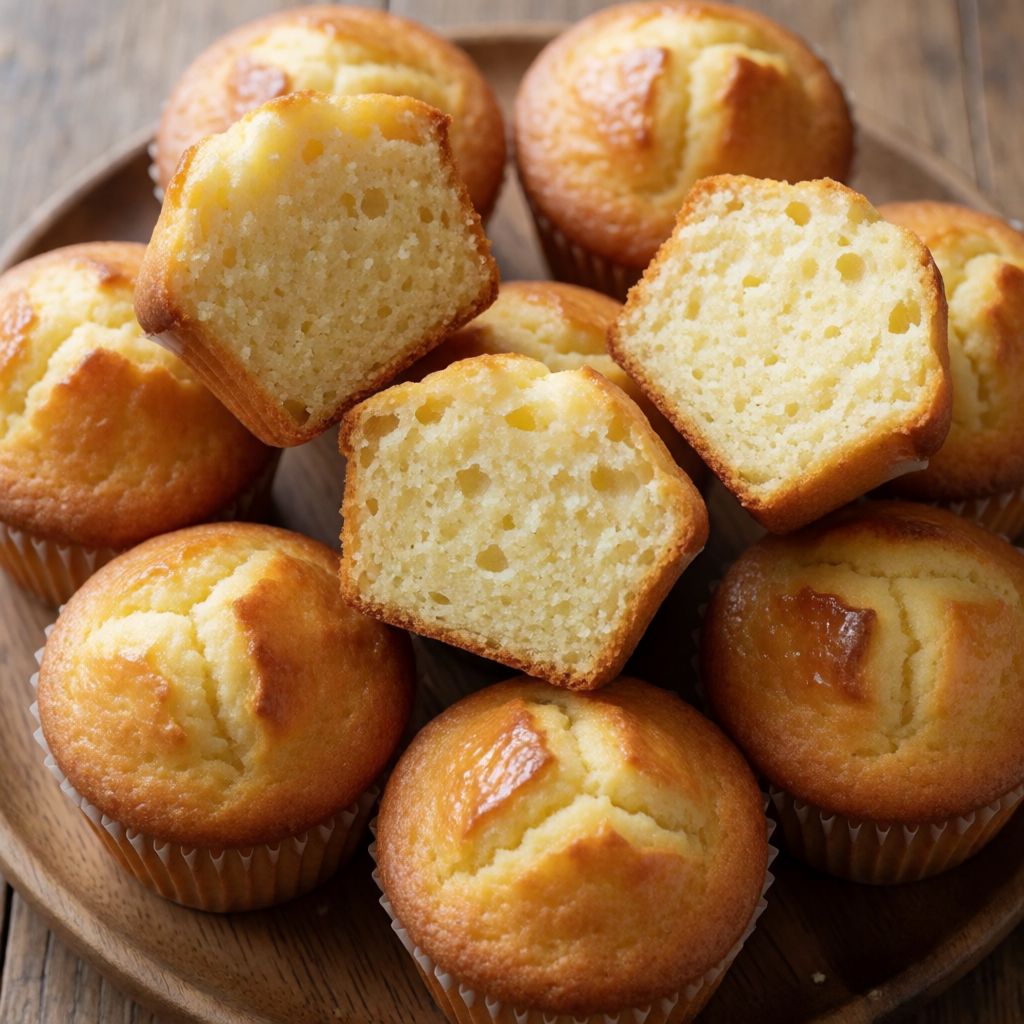
 AI photo
Ricotta Muffins
Light, soft muffins made with ricotta – a quick bake perfect for a cosy afternoon treat.
Labels are worked out automatically from the ingredients and can be wrong. Check the packaging if it matters to you.
Ingredients
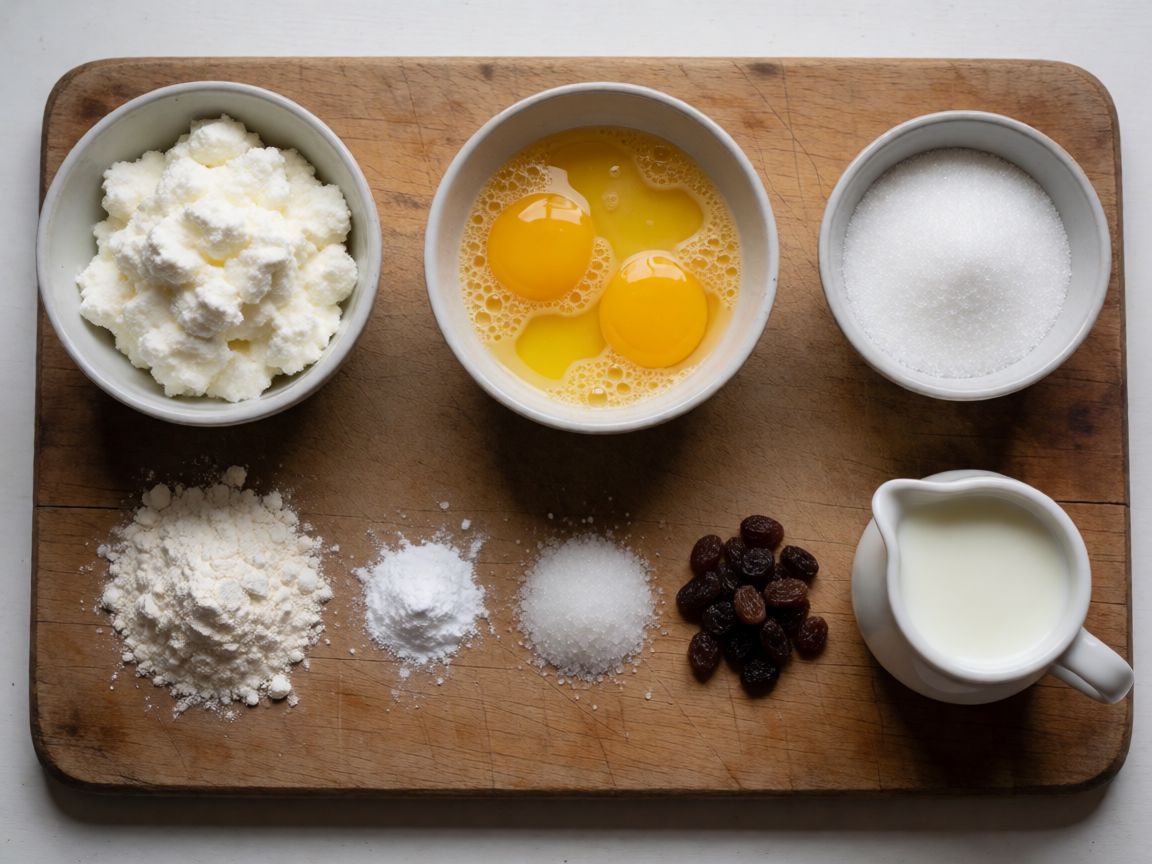
- 250 g Ricotta
- 2 pcs Eggs beaten
- 125 g Caster sugar
- 80 ml Vegetable oil
- 240 g Plain flour
- 2 tsp Baking powder
- 2 tbsp Milk
- 2 tbsp Raisins
- 1 pinch Salt
- Pearl sugar to taste










Steps
Combine the ricotta with the caster sugar, beaten eggs and vegetable oil; mix until smooth.
Sift the plain flour with the baking powder, add to the mixture with a pinch of salt, and mix until creamy.
Soak the raisins in water to soften, drain, then fold into the batter and pour in the milk in a thin stream.
Grease a muffin tin with oil and dust with flour, or use paper cases; fill the cases three-quarters full with batter.
Sprinkle the surface with pearl sugar.
Bake in a preheated oven at 180°C until golden brown.
15 minRemove the muffins from the oven and serve warm, or let them cool completely.
This isn't an American muffin dressed up with dried fruit. It's a curd cake that borrowed the muffin tin because the tin is convenient, not because the recipe needed it. Ricotta gives it weight and a close, almost cheesecake crumb; the baking powder's only job is to lift that weight enough that it doesn't sit in your hand like a brick.
What decides whether it works is restraint with the spoon. Once the flour goes in, the batter should turn "creamy", not beaten smooth. Some say more mixing makes a finer muffin — no, because flour and liquid worked together build gluten, and gluten is rubber. Push it too far and your tender curd cake turns into a chewy bread roll with raisins stuck in it. Fold until you can't see dry flour, and stop there.
The raisins get a soak in water before they go in, and that step isn't decoration. Dry raisins dropped straight into batter pull moisture out of the crumb around them and bake into little stones. A short soak plumps them so they behave like part of the batter instead of grit in it.
In the oven, treat the clock as a starting point, not a verdict. 180°C and fifteen minutes get the baking powder reacting and the crumb setting, but what actually tells you it's done is colour — gold moving toward amber on top — and a slight spring when you press the surface. Pull them too early and the centre stays wet and heavy; the clock won't warn you, your eyes will.
Start with the ricotta, because it sets the whole tone. You want it dry-ish, the kind that holds its shape on a spoon rather than slumping — wet ricotta means wet batter means a muffin that sinks in the middle once it cools. I've had watery ricotta more than once; it's not a disaster, just tip it into a sieve for ten minutes first and fix the problem before it starts. No ricotta to be had — curd cheese or well-drained cottage cheese pushed through a sieve does the same job: mild curds, little free water.
The caster sugar does two things, not one. Sweetness, obviously, but also tenderness — sugar competes with flour for the batter's water and slows gluten from forming. That's part of why this stays soft even when your stirring hand gets a little too keen.
Oil instead of butter here is practical chemistry, not a shortcut taken for laziness. Butter carries water and sets hard when cold; oil stays liquid and keeps the crumb moist longer, which matters for something you might still be eating with your tea the next day. Any oil with no smell of its own will do — sunflower, a light rapeseed. Olive oil leaves its own flavour behind; fine if that's what you want, wrong if it isn't.
Baking powder is the engine, and it's a two-stage one: part of it reacts the moment it meets liquid in the bowl, part waits for oven heat. That's why the raw batter shouldn't sit around once mixed — every minute on the counter is lift you're spending before the oven's even on. Pour the milk in last, in that thin stream the recipe asks for, so it evens the batter out without undoing the folding you've just done.
Paper cases are the sensible choice in an ordinary kitchen. Ricotta batter is sticky against bare metal, and a paper case means no fighting to turn a muffin out once it's baked, no scraping a tin clean after. This batch, scaled for six, will fill a six-hole tin generously or sit half-full in a twelve-hole tray — size the batter to the tin you actually own rather than forcing it into exactly six cups. Pearl sugar on top is crunch against soft crumb, nothing more than contrast; if you can't find it, any coarse sugar that won't melt flat works — demerara, nib sugar, even a crushed sugar cube.
Patience here is mostly about not rushing two moments: the raisin soak, and the cooling afterwards. The crumb keeps finishing its set as the muffins cool, so one cut open straight from the oven looks underdone even when it isn't. Give at least a few of them the full rest before deciding anything's gone wrong.