
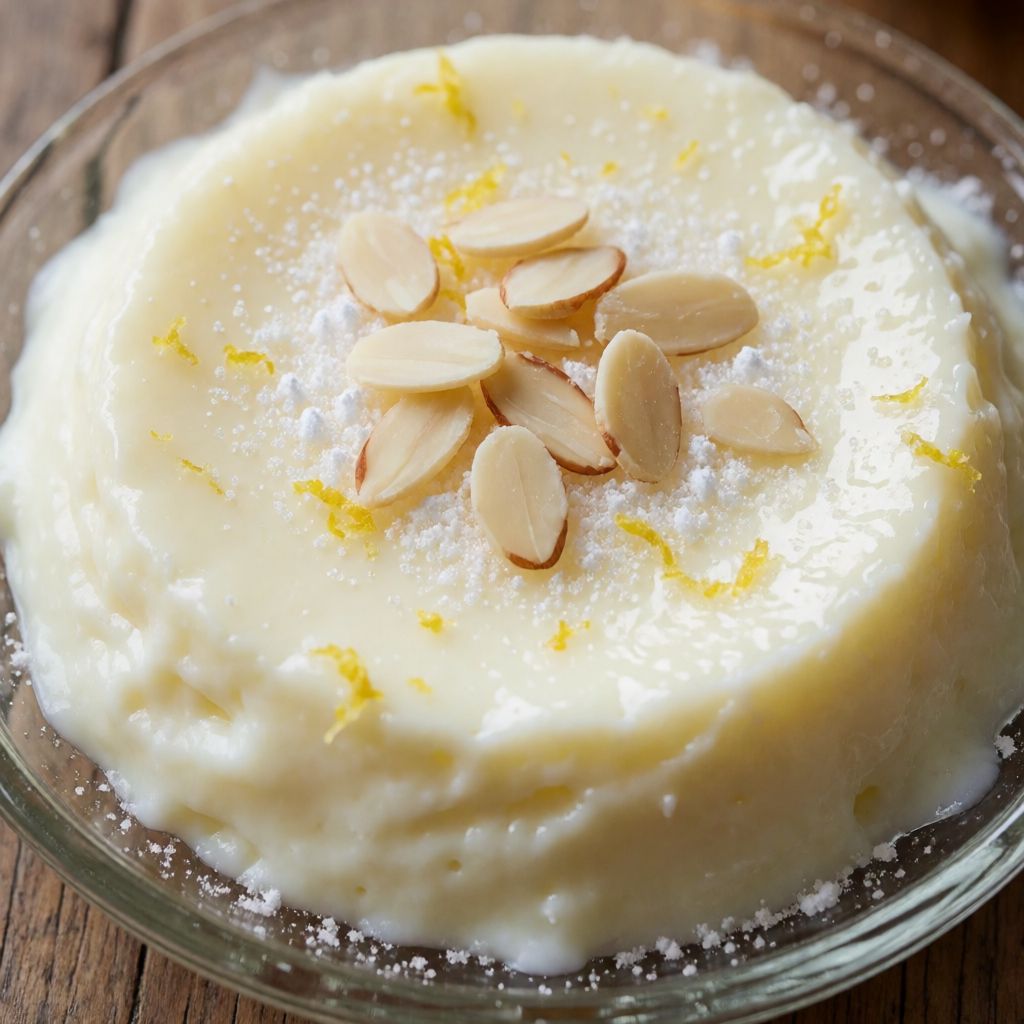
 AI photo
Ricotta Pudding
A light, creamy baked ricotta pudding with almonds and lemon zest.
Labels are worked out automatically from the ingredients and can be wrong. Check the packaging if it matters to you.
Ingredients
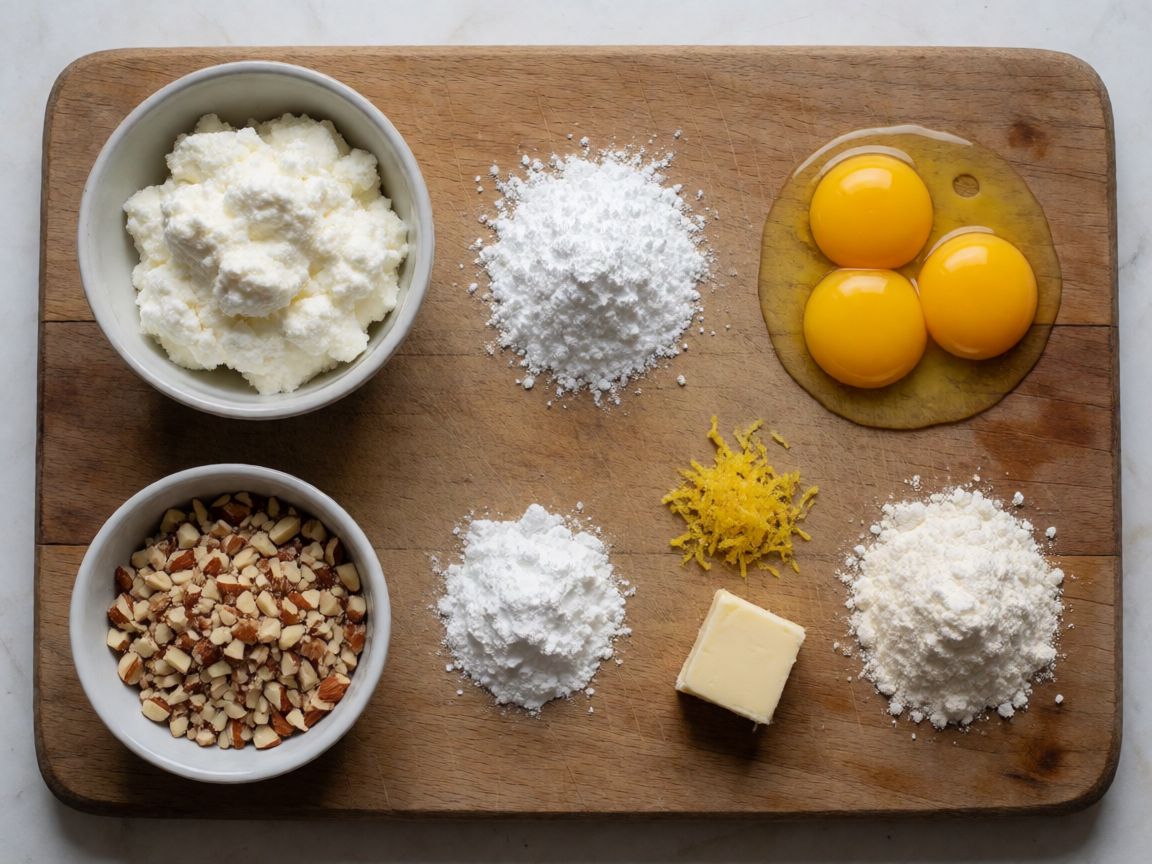
- 250 g Ricotta
- 85 g Icing sugar
- 3 pcs Egg yolk
- 70 g Almonds chopped
- 15 g Potato starch
- 0.5 pcs Lemon zest
- Butter for greasing the tin
- Plain flour for dusting the tin








Steps
Press the ricotta through a sieve to make it creamy.
In a bowl, combine the icing sugar and egg yolks, and whisk until light and fluffy.
Sift in the potato starch and mix well.
Add the lemon zest and chopped almonds, and mix until combined.
Grease and flour a 20-22 cm pudding tin, then pour in the mixture.
Bake in a preheated oven at 180°C.
35 minLeave to cool completely before turning out of the tin.
Serve dusted with icing sugar.
Forget the word pudding for a second — in Britain that means suet, a basin, and three hours over simmering water. This has nothing to do with that. It's a baked custard built from whey cheese, closer in spirit to a flan without its pastry shell, or a cheesecake that never saw a biscuit base. The oven does the setting, not the steam.
What decides whether it holds together or falls apart has nothing to do with the almonds or the zest — those are flavour, not structure. The structure comes from two things: how well you've broken down the ricotta, and how much air you've beaten into the yolks and sugar before the starch goes in. There's no raising agent here. The lift, what little there is, comes from that whisking. Skip it or rush it, and you get a dense, flat disc instead of something with a bit of life in the crumb.
The moment that actually makes or breaks this dish isn't in the oven at all — it's after. You have to let it cool completely in the tin before you try to turn it out. The eggs and starch are still finishing their job as the pudding comes down in temperature; warm, the structure is still soft and wet in the middle, and it will tear or stick the second you tip the tin. People blame the tin, or the butter, or bad luck. The real cause is impatience, not technique. Patience here is as much an ingredient as the ricotta.
Start with the ricotta itself. You want one that's been properly drained — dry-ish, not the wet, almost spreadable tub kind that behaves more like cream cheese. Ricotta is whey protein curdled out and pressed; it doesn't melt the way cream cheese does, it sets when heated with egg, which is exactly what you need here. Pressing it through a sieve isn't fussiness for its own sake — it breaks up the small curds and squeezes out pockets of whey that would otherwise show up as holes or a grainy seam in the finished pudding. If ricotta isn't to hand, sieved cottage cheese (pressed first, twice if needed) will get you something close, just sharper in flavour.
The icing sugar does a specific job beyond sweetness: it dissolves into the yolks cleanly, with no grit left to work against. Caster sugar can stand in, but it takes longer to dissolve and you risk a slightly sandy base if you rush the whisking. The yolks themselves are your only binder and your only lift — there's no flour-based batter here, no baking powder. Whisking them with the sugar until pale and thick is what traps the air that keeps this from baking into a flat slab. Treat that step properly; it's doing the work a raising agent would do elsewhere.
Potato starch thickens by swelling and setting the moisture in the mix, without forming the long gluten strands that wheat flour would. That's why the crumb stays short and tender rather than chewy or eggy-dense. Cornflour works on exactly the same principle and is the direct substitute if that's what's in your cupboard — same mechanism, same result.
The almonds, chopped rather than ground, give you something to bite against in an otherwise smooth custard — texture, not structure. Pairing whey cheese with almonds isn't an aesthetic choice either; historically both were cheap, almost by-product ingredients in households that made their own cheese and grew their own nuts, so the combination is kitchen economics as much as taste. The lemon zest is there to cut the flatness of all that dairy and egg — zest only, never the juice, because the juice adds liquid you haven't budgeted for, and that throws off the starch's job of setting the mix.
Greasing and flouring the tin is the old, reliable release method before anyone trusted non-stick coatings, and it still beats them for a batter this delicate. In a British kitchen you're unlikely to own an actual pudding mould with a loose base, so use a loose-bottomed or springform cake tin of about the right size — it turns the single most fragile moment of this recipe, the unmoulding, into a non-event. If you're at all unsure of your tin's grip, line the base with a disc of baking parchment as well; belt and braces costs you nothing.
On the oven: 180°C is enough heat to coagulate the egg proteins and let the starch granules swell and lock in the moisture — that's what firms the inside. You're not chasing colour on top, and a slightly pale top is no sign of failure. Some say a loose wobble means it's underdone; with this little liquid in the mix, that test barely applies — judge it by touch and by patience, not by eye.