
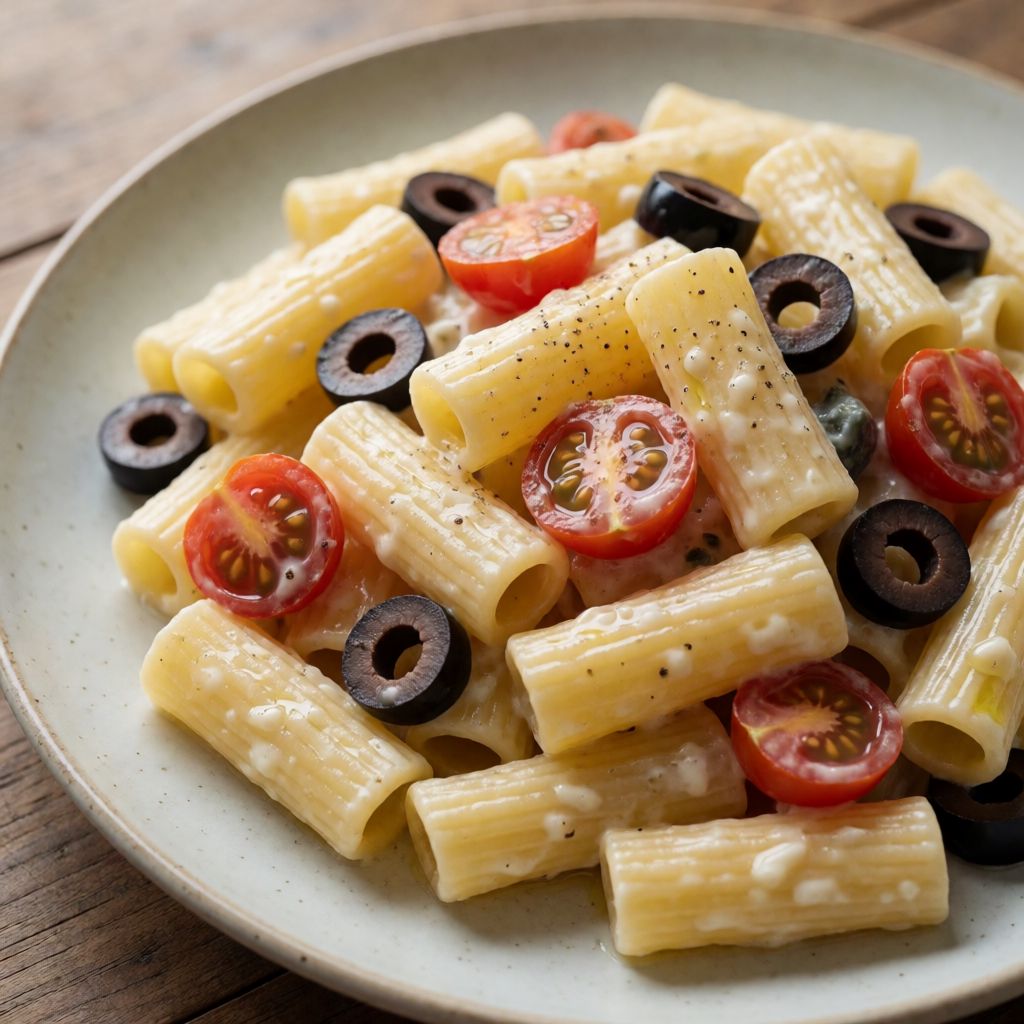
 AI photo
Mezzi Rigatoni with Cherry Tomatoes, Olives and Cream Cheese
A quick pasta dish of mezzi rigatoni tossed with cherry tomatoes, olives and cream cheese, ready in 20 minutes.
Labels are worked out automatically from the ingredients and can be wrong. Check the packaging if it matters to you.
Ingredients
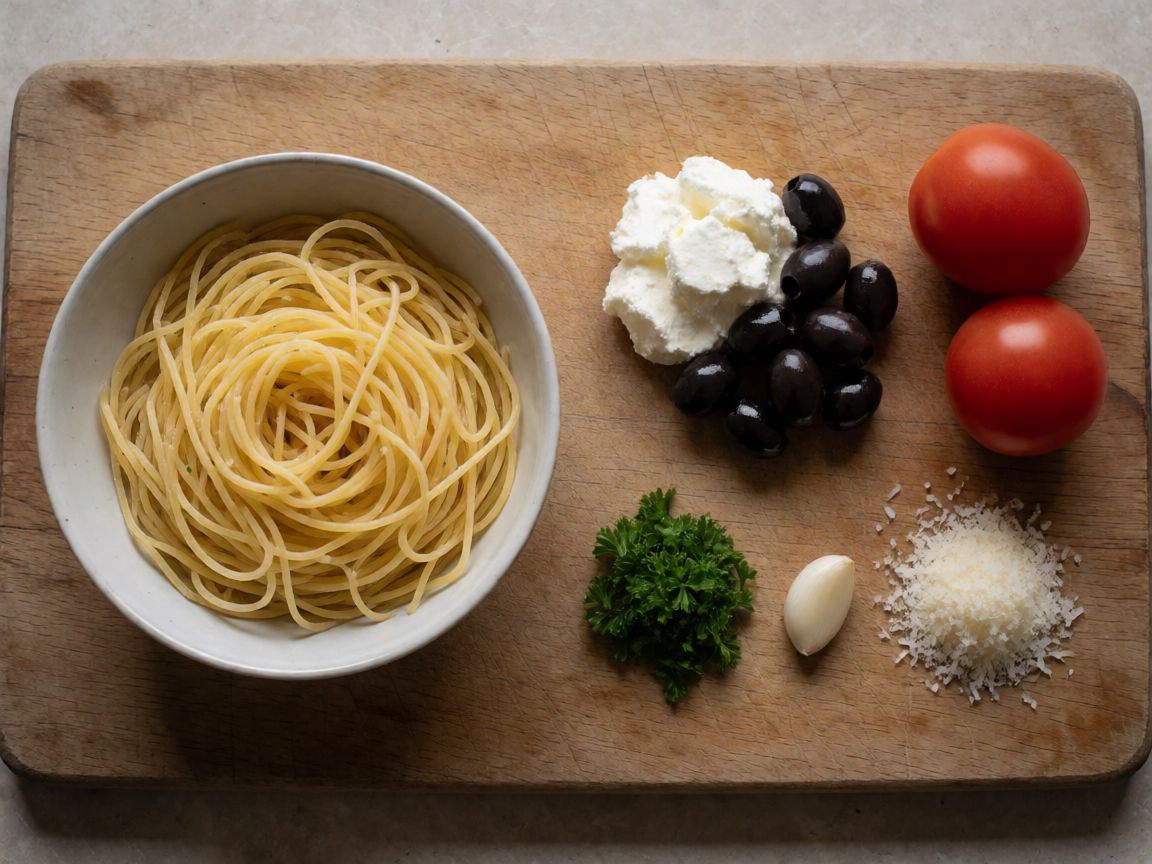
- 400 g mezzi rigatoni
- 120 g cream cheese
- 1 tbsp pitted Taggiasca olives in oil
- salt to taste
- black pepper to taste
- olive oil to taste
- 200 g cherry tomatoes
- parsley to taste
- 1 clove garlic
- Grana Padano to taste










Steps
Put a pot of water on to boil for the pasta, season with salt, and add the mezzi rigatoni.
10 minIn a pan, fry a whole garlic clove in olive oil; once golden, remove it.
2 minAdd the cherry tomatoes and Taggiasca olives to the pan and cook for a few minutes.
3 minSeason with salt to taste, then stir in the cream cheese and black pepper.
1 minAdd the pasta, cooked al dente, along with a few spoonfuls of the pasta cooking water.
2 minAdd a spoonful of Grana Padano and mix well.
1 minServe, sprinkled with chopped parsley.
This is a weekday rescue dish, not a Sunday roast - twenty minutes, one pan for the sauce, one pot for the pasta, and you're eating. The whole thing turns on three things happening in sequence and at the right pace: garlic giving up its scent without burning, small tomatoes going from firm to burst, and a block of cream cheese turning from cold and stiff into something that actually coats the pasta instead of sitting on top of it in lumps.
What decides if it works is heat control in the pan, and pasta water as the glue. Burn the garlic even slightly and the oil carries that bitterness through everything that follows it - tomatoes, cheese, pasta, all of it. There's no fixing that later, only starting again with a clean pan. Underdo the tomatoes and you get a warm salad with cheese stirred through; overdo them and you get mush with nothing left to bite against the pasta's own bite. The cream cheese needs the starchy water from the pasta pot to loosen into sauce - not cream, not milk - because that water already carries the starch the pasta shed while cooking, and it's salted exactly the way the pasta is.
Mezzi rigatoni is ordinary rigatoni cut to half length - the ridges and the hollow core aren't decoration, they trap sauce, bits of tomato skin, little olive pieces, inside and along the tube instead of letting everything slide to the bottom of the bowl while the pasta sits dry on top. Any short pasta with ridges or a hole does the same job - penne, fusilli, shells. Smooth tubular pasta won't grip the same way; you end up eating pasta and sauce as two separate things instead of one.
Cream cheese here is working as a base, not a flavour statement: full-fat, soft, the kind sold in a tub or a block, holding fat and protein together in an emulsion that's already stable before it ever meets heat. That's why it survives contact with hot tomato juice without splitting - double cream, by contrast, will curdle into oily beads the moment acid and heat hit it together, fine to eat but ugly to look at, grainy instead of glossy. Mascarpone is a direct swap, a touch richer. Ricotta works if that's what's in, but it's naturally grainier, so give it more pasta water than the recipe asks for to smooth it out.
Taggiasca olives are small, Ligurian, cured gently - they give salt and a faint bitter edge without the sharp brine-and-vinegar hit of something like a Kalamata. If a bigger brined olive is all you've got, use fewer and taste before you add the salt in step four - that's the actual reason the recipe names a specific olive, not fussiness, just that the salt arithmetic changes with a saltier olive.
Cherry tomatoes need to be small and sweet, because their whole job is to burst within a few minutes - heat reaches their centre before the skin has time to toughen, since there's so little distance to travel. A regular tomato cut into chunks won't manage this in the same window; the outside overcooks while the middle stays raw-tasting.
Garlic goes in whole and comes straight back out - it's flavouring the oil, not meant to be eaten in the finished dish. As it fries, its oils move outward into the oil around it, and you pull it the instant it turns gold, because past gold it turns bitter, and that bitterness doesn't stay put in the clove - it travels into every spoonful of oil that touches the tomatoes next.
Grana Padano instead of Parmesan isn't pickiness - it's milder and less salty, so it melts into the sauce without stacking more salt onto what the olives and the pasta water have already contributed. If Parmesan is what's on hand, use less of it and taste before you salt at all.
On a domestic hob, a wide frying pan does this job fine - you're not trying to match a kazan's even heat across a wide curved base, you just don't have the same margin for cranking the burner without scorching one side of the pan before the other side's caught up. So let the tomatoes take a little longer rather than turning the heat up to rush them, and watch what's happening in the pan rather than counting down a clock.