
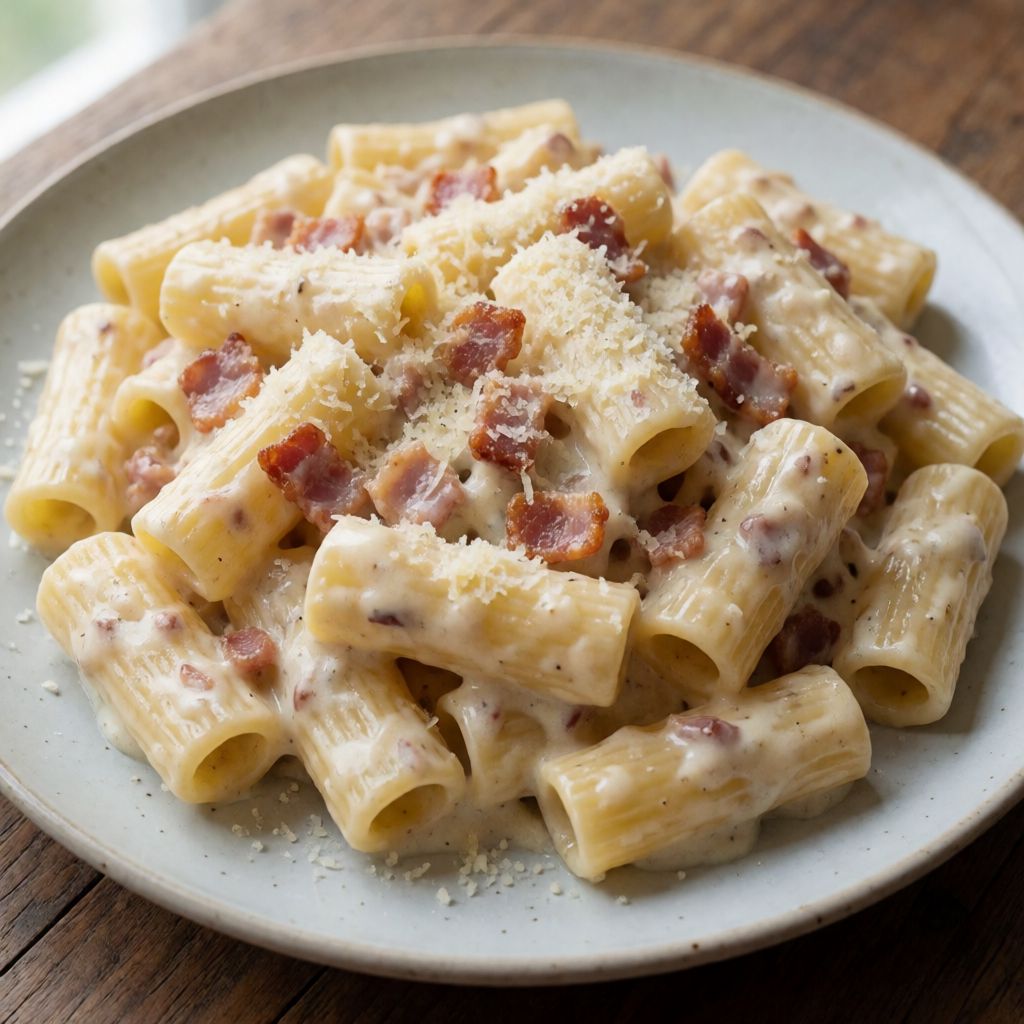
 AI photo
Rigatoni with Bacon and Provolone
A creamy pasta dish with crispy bacon, melted provolone and parmesan.
Labels are worked out automatically from the ingredients and can be wrong. Check the packaging if it matters to you.
Ingredients






Steps
Bring salted water to the boil and cook the rigatoni, while frying the bacon in a pan at the same time.
Cut the provolone into cubes, add it to the bacon and mix well.
When the cheese starts to melt, pour in the cream and cook for a further 1 minute.
1 minTransfer the cooked pasta into the pan with the sauce, stir and add the parmesan.
Garnish with parsley and serve.
This is a one-pan logic dish pretending to need two pans: the water pot is just there to cook starch, the real cooking — the thing that decides whether you eat something good or something greasy and clumped — happens in the frying pan with the bacon. Rigatoni holds a thick, cream-and-two-cheese sauce inside its ridges and its tube, which is not an aesthetic choice, it's plumbing: a smooth pasta would let the sauce slide off onto the plate and leave the noodle dry in the middle of the bite.
What decides success is the order you put things into the fat, not the heat you cook them at. "Medium heat" tells you nothing — your hob doesn't know what medium means. What you're watching for is the bacon fat going from cloudy and squeaking to clear and loose, pooling at the edges of the strips. That's rendered fat, and it's the actual base of this sauce, not the cream. The cream is there to carry it, not to be the point.
The dangerous moment is cheese meeting liquid. Provolone goes into the hot fat first, on its own, and gets a minute to soften and half-melt before any cream touches it. Do it backwards — cream first, cheese dumped into boiling liquid — and the proteins in the cheese seize up into rubber threads while the fat weeps out separately. You'll have made cheese water with lumps in it, and no amount of stirring saves that once it's happened.
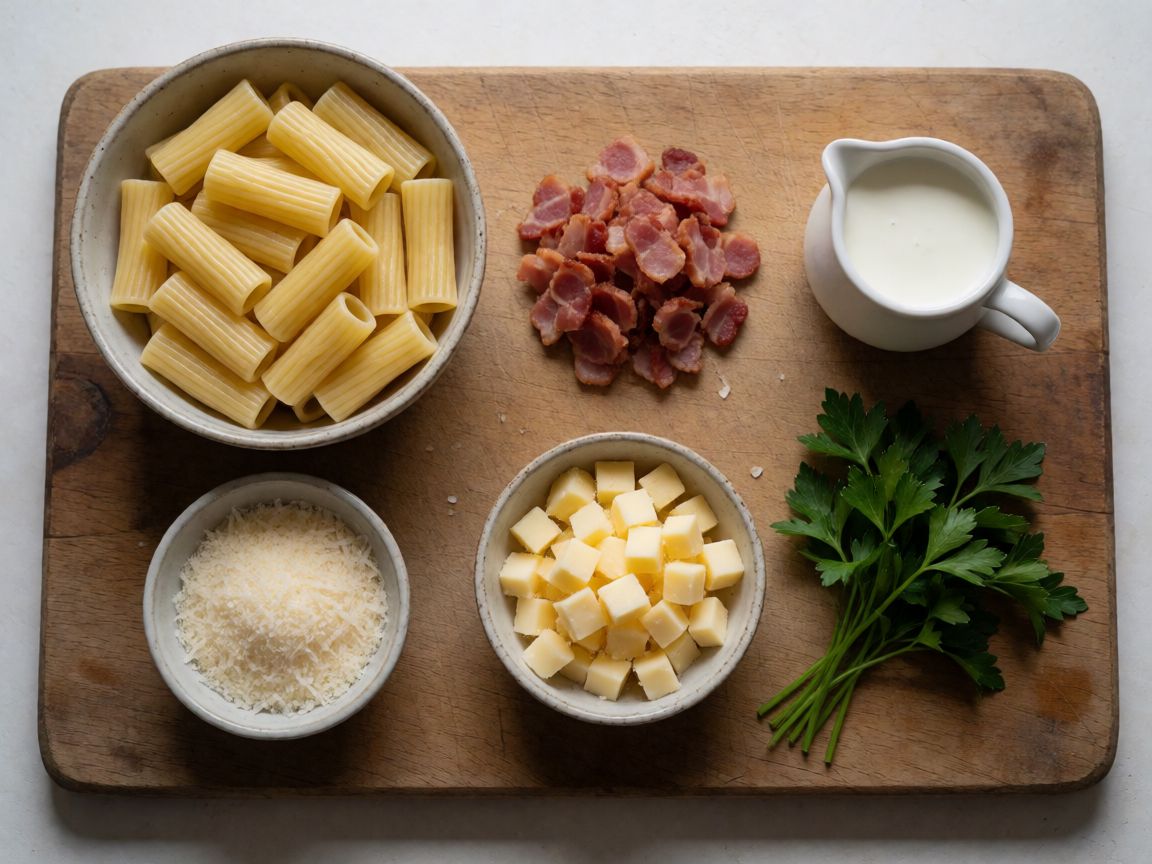
Bacon: you want streaky, with fat running through it in visible stripes, not the lean back bacon that's standard on a British breakfast plate. The mechanism only works if there's fat to render — a few spoonfuls of liquid gold that becomes the actual cooking medium for the cheese. Smoked or unsmoked is yours to choose; smoked does double duty as a seasoning, so taste before you reach for more salt later. If all you've got is lean bacon, add a knob of butter to the pan — any fat with no strong flavour of its own will do the same job, it just won't season as it melts.
Provolone: cut into small cubes so it has surface area to soften quickly rather than one big lump sitting there sweating on the outside while staying cold in the middle. You want the semi-aged kind that melts smooth rather than the very hard, aged-for-grating kind, which behaves more like parmesan and won't give you that stretch. If you can't get provolone, any semi-firm cheese with a clean melt works — young gouda, Edam, even mozzarella in a pinch, though mozzarella stays stringier and you'll be chasing strands round the pan with a fork.
Cream: double cream, because its fat content is high enough to hold together under heat without the proteins in it curdling the way a thinner cream can. This is the same reason it doesn't split when you stir it into a pot of tea gone slightly too hot — more fat, more stability. If you've only got single cream, it'll work, but keep it on the heat a little longer to let some water cook off, otherwise the sauce stays thin and runs off the pasta instead of clinging to it.
Parmesan: grate it yourself if you can, fine, not from a tub of ready-grated dust that's been sitting in a cupboard losing moisture and gaining a cardboard smell. Pre-grated parmesan often has anti-caking agents in it that stop it melting properly at all — it just sits there as grit. Fresh-grated melts into the sauce the moment it meets warm cream; that's the whole point of adding it last and off the hard boil.
Parsley: not decoration, cut. A dish this rich — bacon fat, double cream, two cheeses — needs something green and slightly bitter at the end or every mouthful tastes the same by the third forkful. Chop it at the last second; parsley left sitting chopped goes dark and loses its edge within minutes, which is a small thing but it's the difference between a garnish that tastes of something and one that's just there for the photo.
Salt: be careful with it, because bacon is salty, parmesan is salty, and provolone leans that way too. Salt your pasta water properly — the water should taste like a mild soup, not fresh — and then taste the sauce itself before reaching for more. It's much easier to under-salt and fix it at the table than to over-salt a pan of melted cheese and have no way back. And give the melting its minute. Rush the cheese into the cream before it's ready and you're not saving time, you're buying yourself a sauce you'll be straining through a sieve instead of eating.