
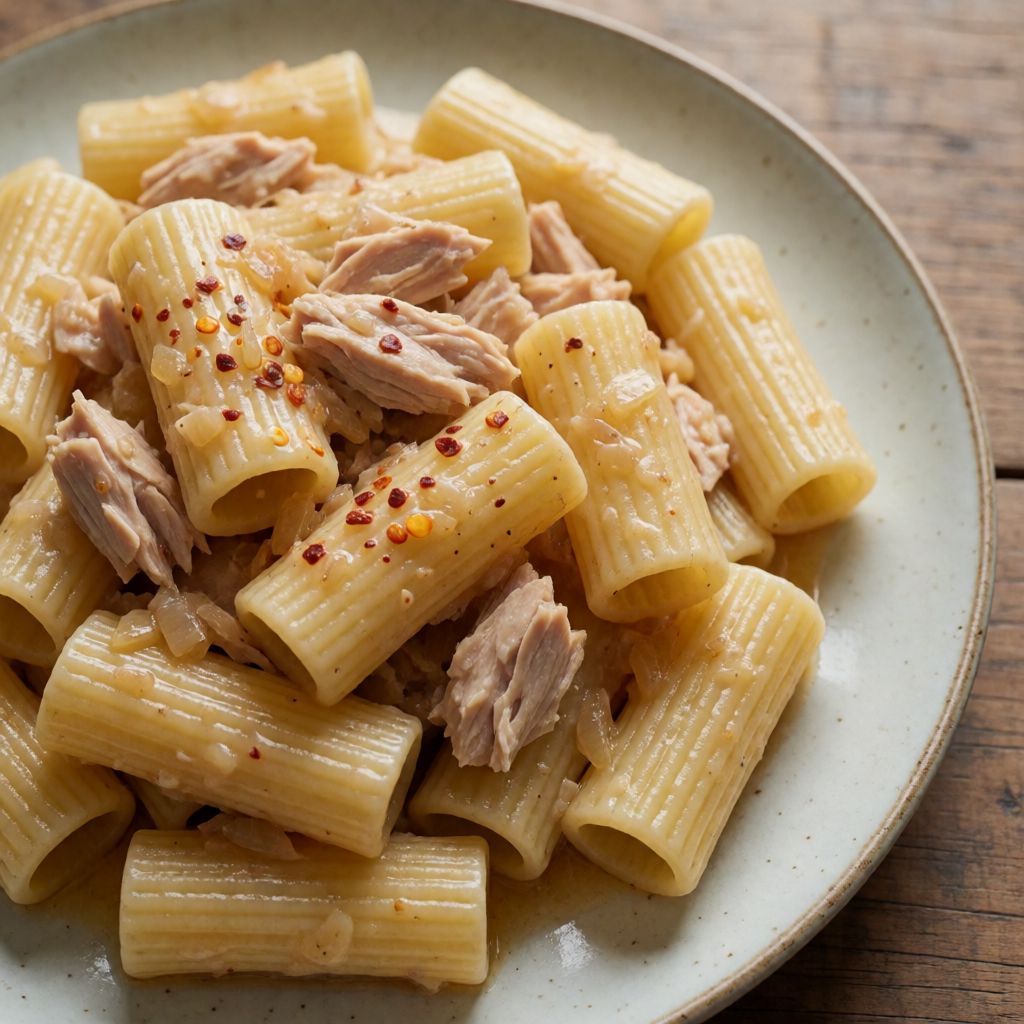
 AI photo
Rigatoni with Tuna
A quick pasta with tuna, bacon, peppers and tomatoes in a white wine sauce.
Labels are worked out automatically from the ingredients and can be wrong. Check the packaging if it matters to you.
Ingredients
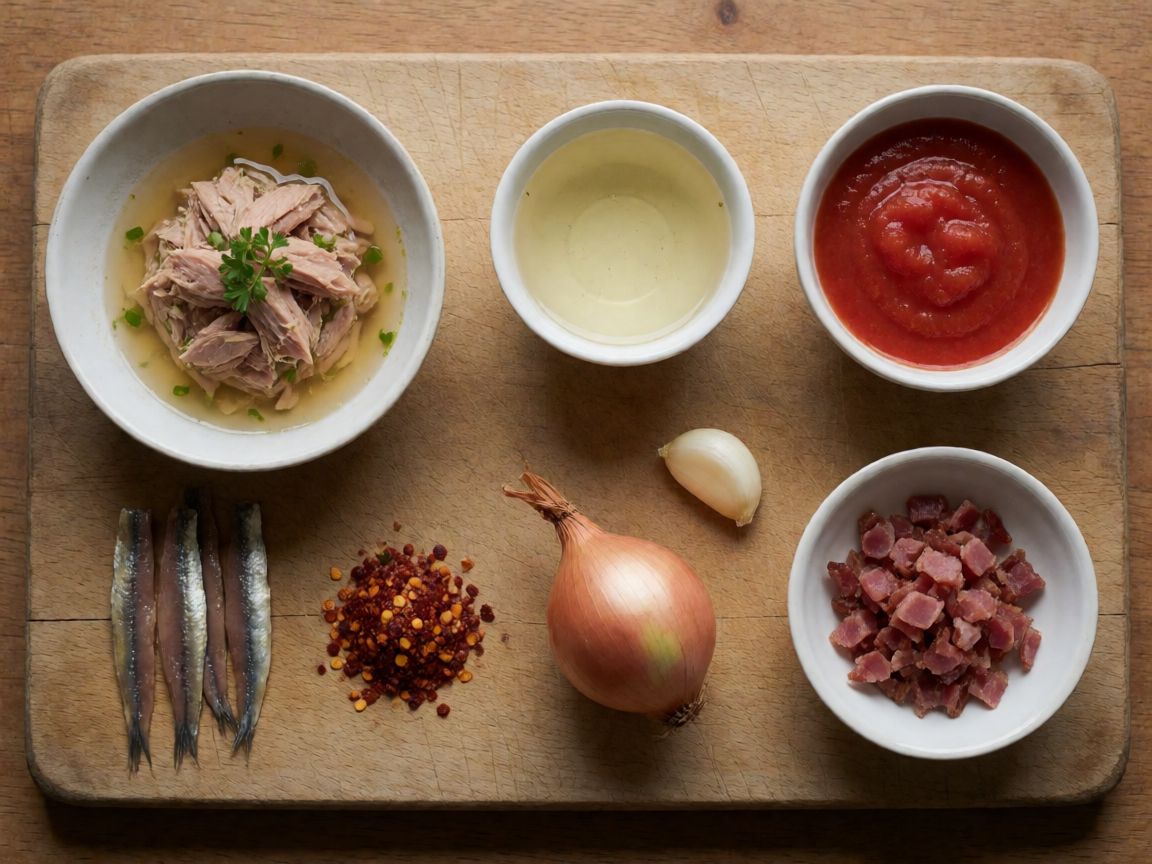
- 160 g Tuna canned, in its own juice
- 3 pcs Anchovies
- 1 pinch Chilli flakes crushed
- 1 pcs Onion
- 1 clove Garlic
- Olive oil to taste
- Salt to taste
- 125 ml White wine
- 200 g Datterini tomatoes
- 400 g Bacon
- Parsley to taste, chopped
- 1 pcs Yellow bell pepper










Steps
In a pan, fry the garlic in olive oil, and once it browns, remove and discard it.
Add the onion, then the pieces of yellow bell pepper — keep on the heat only briefly so the pepper stays a little crisp.
Add the crushed chilli flakes and the anchovies.
Add the tuna, mashed with a fork.
Pour in the white wine and let it evaporate completely.
Add the datterini tomatoes and cook on a low heat for 10 minutes.
10 minSeason with salt to taste and sprinkle generously with chopped parsley.
Boil the rigatoni in plenty of salted boiling water until al dente.
Drain and transfer into the pan with the sauce.
Mix well and heat together for a few minutes.
Serve immediately.
This is a sauce built on an old trick of poor coastal kitchens: you don't need fresh fish every day if you know what to do with a tin. Tuna in its own juice, anchovies, a bit of wine, a handful of sweet little tomatoes — that's a sauce that tastes like it's been fed by the sea, for the price of a few cupboard staples. It's quick in cook's time but not quick in skill — the whole thing hangs on what happens before the tuna even goes in.
Garlic fried and discarded is not fussiness, it's maths. Whole garlic in hot oil gives up its aroma slowly and evenly, no burnt bitterness, and once it's done its job of perfuming the oil, it's spent — leave it in and you risk it catching and turning acrid, which no amount of tomato will hide later. Some say garlic has to stay in the dish to "give flavour" — no, because by the time it browns it has already given what it had; what's left is texture and the risk of bitterness, nothing more.
The pepper gets seconds, not minutes, in the pan — that's the whole point of frying it only briefly after the onion. Veg loses its structure once the water inside it turns to steam and softens the cell walls; a short hot contact keeps that process from going all the way, so you get the sweetness of cooked pepper but it still bites back a little. This is also where a UK hob tells the truth about itself: most domestic rings don't have the raw output of a restaurant burner, so "briefly" on your stove might mean a touch longer than it would in a professional kitchen — watch the pepper's colour and give, not the clock.
Tuna in its own juice, not in oil, matters here because you're adding olive oil yourself at the start and don't want a second, often lower-quality oil fighting it in the pan. If all you have is tuna in oil, drain it properly — otherwise the sauce turns greasy rather than silky, and you'll taste tinned-oil flatness instead of fish.
Anchovies aren't there to taste "of anchovy" — three fillets melted into hot oil are a seasoning, not a flavour you should recognise outright. They bring salt and a savoury depth that plain salt can't, because they carry glutamates built up through curing, the same mechanism that makes Parmesan or soy sauce taste "more" than their ingredients suggest. If you're out of anchovies, a small spoon of fish sauce does the same structural job, though the flavour sits slightly differently on the tongue.
Datterini tomatoes are chosen for sugar and skin-to-flesh ratio — small, sweet, with enough acid to cut the oiliness of the tuna and anchovy without turning the sauce into a thick tomato stew. If your shop doesn't stock them, cherry tomatoes halved are the closest domestic substitute; a tin of good quality cherry or plum tomatoes works too, just drain some of the liquid off first or you'll be simmering longer than ten minutes to get the sauce to hold.
Chilli flakes are a pinch, not a seasoning you build the dish around — their job is to wake the palate up after the sweetness of pepper and tomato, not to announce themselves. Use any dried crushed chilli you have; the exact variety matters less than the amount, because heat here is a background hum, not a headline.
Onion and garlic together are the base nearly every Mediterranean sauce starts from, and the reason is economic as much as culinary: onions and garlic kept for months in a cellar when nothing else did, so cooks built flavour on what was always there. Any mild, sweet-leaning onion works; a very sharp one will fight the anchovy's saltiness instead of rounding it out.
Note that the bacon in your ingredient list has no step telling you what to do with it — it's listed but never cooked into the sauce in the method above. If you want it in, treat it the way you'd treat pancetta in a carbonara: render it in the pan before the garlic, so its fat becomes part of the base rather than a separate addition, and salt the rest of the dish lightly afterwards since bacon brings its own. If you leave it out, nothing in the mechanism of the sauce breaks — the tuna and anchovy already carry the savoury weight bacon would add.
Finally: don't rush the "heat together for a few minutes" at the end. This isn't boiling the pasta twice, it's letting the rigatoni's starchy surface grab the sauce and the tube's inside fill with it, so every forkful carries sauce rather than having it pooled at the bottom of the bowl. Patience here is short — a few minutes — but it's still the ingredient that turns "pasta with sauce on it" into "pasta that tastes of the sauce all the way through."