
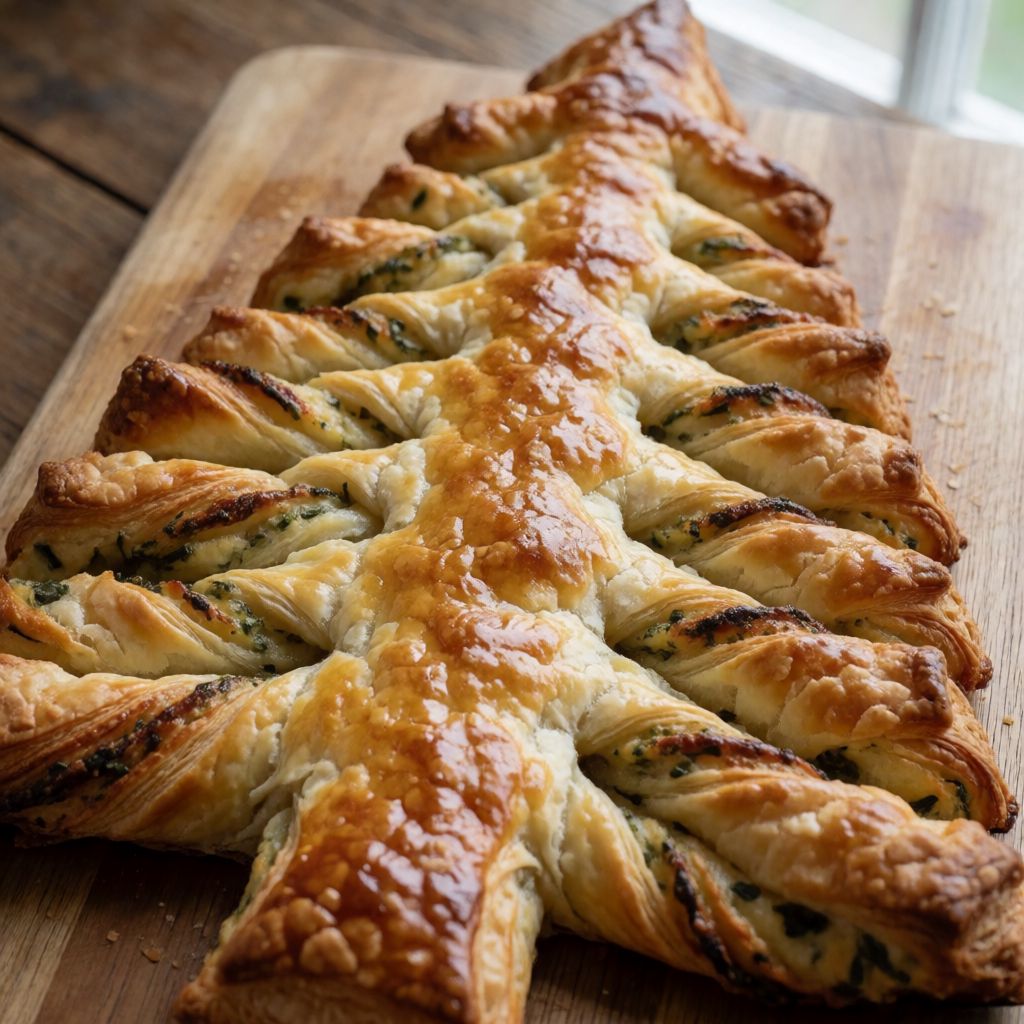
 AI photo
Christmas Tree Puff Pastry Twist
A festive puff pastry Christmas tree filled with a creamy tuna and ricotta mixture, perfect for holiday baking.
Labels are worked out automatically from the ingredients and can be wrong. Check the packaging if it matters to you.
Ingredients
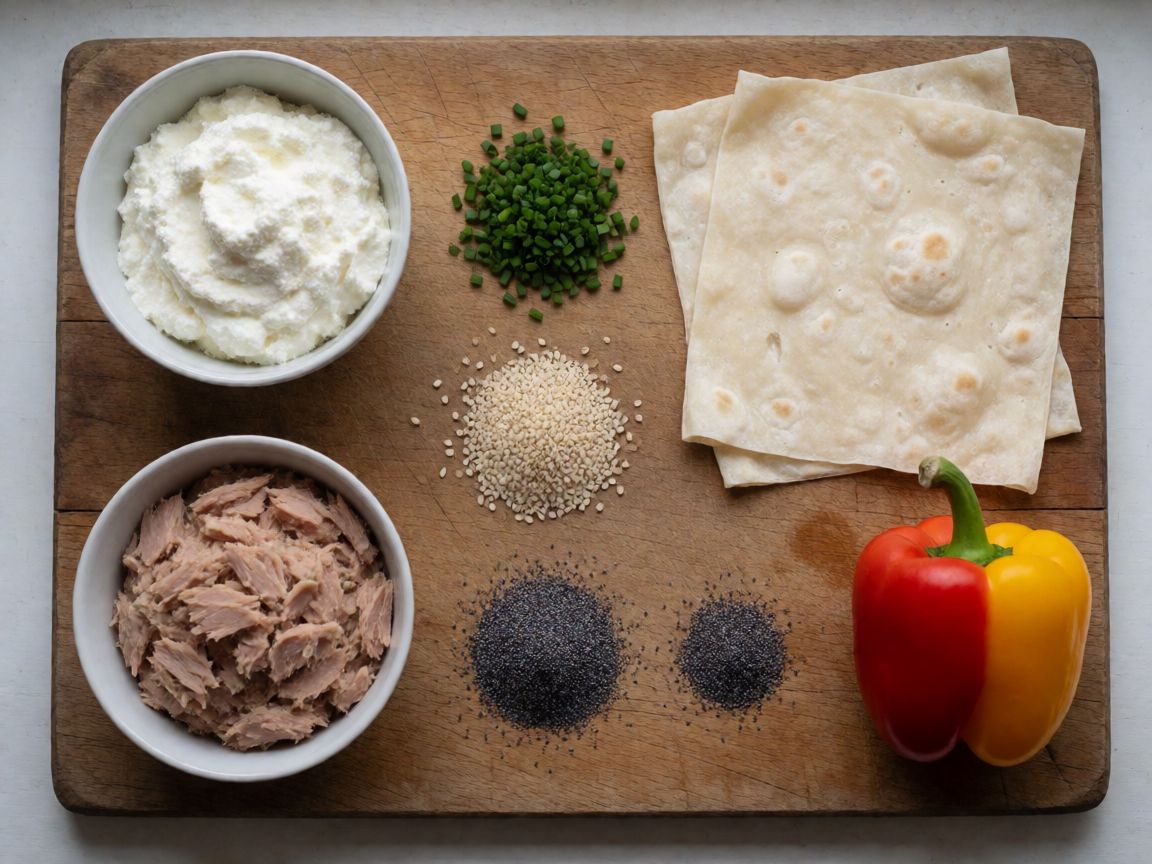
- 200 g Ricotta
- 150 g Tuna
- Chives to taste
- Salt to taste
- Black pepper to taste
- Olive oil to taste
- 2 pcs Puff pastry
- Sesame seeds to taste
- Poppy seeds to taste
- 1 pcs Bell pepper










Steps
In a blender, combine the tuna and ricotta, add the finely chopped chives, olive oil, salt and pepper, and blend until smooth and creamy.
Unroll one sheet of puff pastry onto a baking tray and spread the creamy filling evenly over it.
Cover the filling with the second sheet of puff pastry and press down firmly.
Cut the dough into the shape of a stylised Christmas tree, then cut strips about 1.5-2 cm wide on each side and twist them into spirals.
Brush the whole surface with egg yolk and, if liked, sprinkle with sesame seeds and poppy seeds.
Bake in a preheated fan oven at 180°C until golden brown.
15 min
This isn't a tart and it isn't a pie — it's a flat sandwich of puff pastry with a soft filling pressed between two sheets, then cut into the silhouette of a tree and the side strips twisted into spirals so the whole thing reads as branches on the tray. Feeds four as a starter or a nibble on the Christmas table, nothing more, because for all its shape it's thin and light — one layer of filling, not a deep one.
What decides whether it works isn't the filling, it's the seal and the twist. Press the two sheets together firmly before you cut, because puff pastry is built to come apart into layers under heat — that's the entire mechanism of puff pastry, trapped fat turning to steam and pushing sheets apart — and a filling sitting between two sheets that aren't properly pressed will find the gap and leak out through every cut edge instead of staying put while the pastry puffs around it.
Some say you can't put a wet filling between two raw sheets of puff pastry, that it stops the pastry rising — no, because the butter inside the dough rises regardless of what's between the sheets, as long as the oven is hot enough to set the outside into a crust before any steam, yours from the ricotta or the dough's own, gets the chance to force its way sideways instead of up.
Ricotta and tuna are doing two different jobs, not one. Tuna blended on its own turns stringy and dry; ricotta is there to loosen it into something spreadable without drowning it in oil. The criterion for the cheese is mild, soft, well-drained — not runny. If your ricotta is wet straight from the tub, tip it into a sieve for ten minutes first; skip that and the filling weeps moisture under the top sheet while it bakes, soaking the pastry from the inside rather than letting it crisp. Any curd cheese with that same character does the job — cottage cheese pushed through a sieve, quark, even cream cheese loosened with a spoon of milk.
For the tuna, oil-packed holds together and carries flavour; brine-packed is leaner and blends drier, so give it back a little of the olive oil the recipe already calls for. The real criterion is a fish that flakes rather than shreds into fibres — mackerel or pilchards work the same way, and smoked trout flaked in gives you a different, smokier filling with no change to how the pastry behaves.
Chives are there because they're mild and dry enough not to sweat. Some reach for finely chopped onion instead — no, because raw onion in a cold-blended filling stays wet and sharp, and that wetness ends up in the pastry the same way under-drained ricotta does. Any soft green with a faint onion note substitutes cleanly — spring onion tops, or dill if you want the filling to lean toward a fish-pie flavour instead.
Two ready sheets of puff pastry are the whole economics of this dish. No domestic oven or hob is set up to laminate butter into dough from scratch in fifteen minutes — this recipe borrows the half-day of lamination a factory already did and spends it on shaping instead. Buy all-butter block if the shop has it; it browns with a short, nutty smell and a deeper colour. The vegetable-fat sheets rise just as tall but brown paler and flatter-tasting, so if that's what you've got, don't trust colour alone for doneness — press the centre gently and look for firmness rather than give.
Egg yolk, not whole egg, for the glaze — yolk is fat and protein with none of the white's habit of bubbling and blistering under heat, so it sets to an even shine rather than patchy pale spots. Sesame and poppy seeds need that stickiness to grip; thin egg white alone often lets them slide off before the glaze sets. No seeds in the cupboard, a scatter of flaky sea salt does the same cosmetic-plus-flavour job.
The bell pepper isn't placed anywhere in the steps, which usually means it's decoration — cut into small shapes and pressed onto the glaze as baubles, or diced small into the filling for colour and a bit of sweet crunch against the oily fish. Either way it's not structural; leave it out and nothing about how the pastry rises or seals changes. And if your kitchen's warm, give the shaped tree a few minutes in the fridge before it goes in the oven — that's the one bit of patience this recipe quietly asks for, and it's what keeps the layers distinct instead of softening into a dense, close-grained biscuit before the oven's even had a chance to set them.