
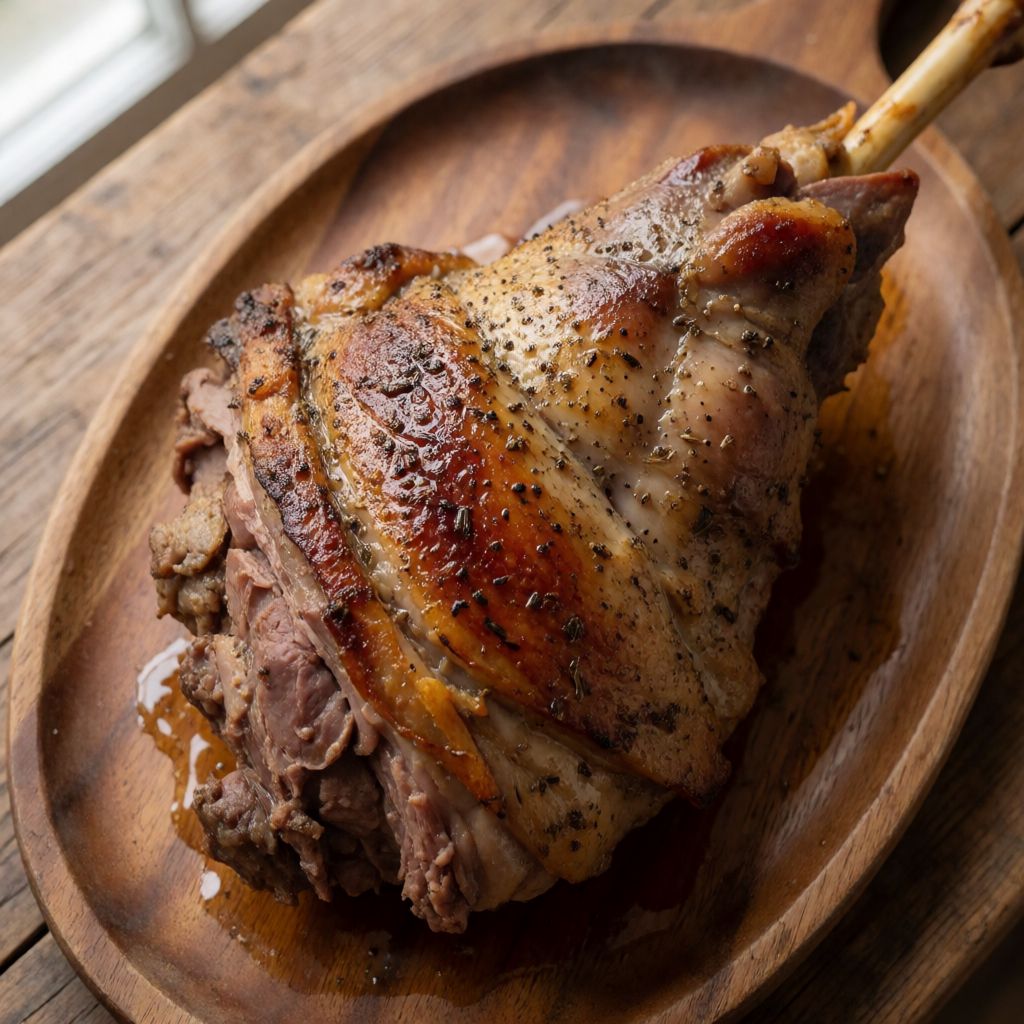
 AI photo
Roast Lamb
A simple roasted leg of lamb, seasoned with rosemary, thyme and black pepper.
Ingredients
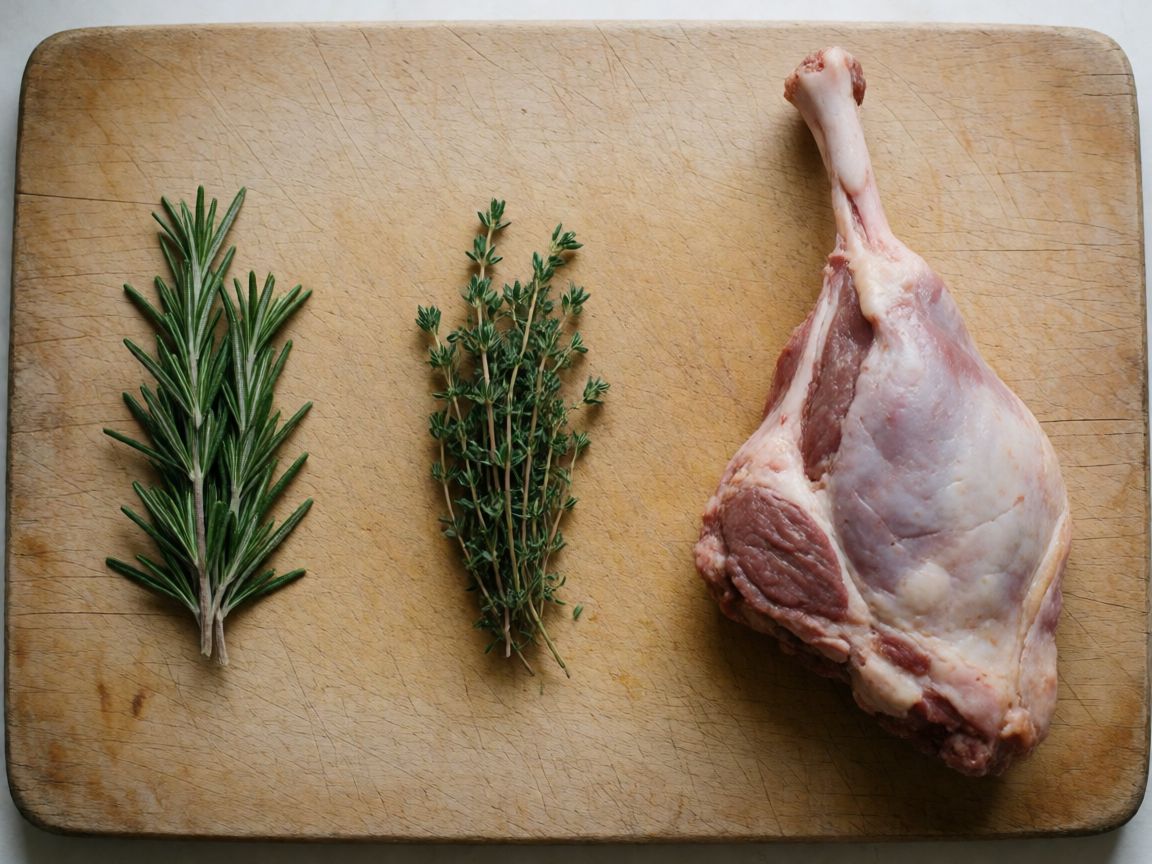
- 1.5 kg Lamb Leg
- Salt to taste
- Black Pepper to taste
- Rosemary to taste
- Thyme to taste
- Olive Oil to taste



Steps
Take a baking dish large enough to hold the lamb leg and line the bottom with baking paper.
Sprinkle the meat with black pepper and thyme, lay a few rosemary sprigs on top, and place it in the dish.
Preheat the oven to 200°C.
Cover the dish with foil and roast the leg for 45 minutes.
45 minRemove the meat from the oven, take off the foil and turn the leg over.
Roast for a further 45–50 minutes.
48 minCheck for doneness: if the meat is not yet ready, continue roasting for another 30–40 minutes. Doneness: 63°C at the centre (medium).
Cut the cooked lamb into portions and sprinkle with salt to taste.
Let the meat rest for about 10 minutes before serving.
10 min
This is the plain Sunday leg of lamb — bone in, roasted whole, nothing hiding the meat. Salt, pepper, two hardy herbs, oil, and about two hours in the oven. What decides whether it works isn't the minutes written down, it's whether you trust the probe over the clock, and whether you let the meat sit still before you cut it.
The foil-then-uncover trick is the whole mechanism of this method. A bone-in leg is thick — heat from a 200°C oven reaches the surface fast and the centre slowly. Roast it bare from the start and the outside is leather before the inside is even warm. The foil works like a makeshift lid: it traps steam, keeps the surface humid, and lets the heat creep to the centre gently instead of attacking it. Only once the inside has caught up do you take the foil off and let dry, direct heat do its real job — colour, crust, the Maillard reaction that steam prevents. Turning the leg at that point matters too, because a domestic oven heats unevenly — one element, one fan, one hot corner — and the side facing it gets more than its share.
On the lamb itself: 1.5 kg bone-in leg feeds four generously, because a leg this size is mostly bone and fat at the shank end, and that's not a flaw, it's a cushion — bone is a poor conductor next to muscle, so it slows cooking right where the leg is thickest and buys you margin against overcooking. Some say you should bone and butterfly a leg for even cooking — no, that's the right move for a quick hot grill, not for a slow roast, where the bone is doing you a favour. If your butcher only has it boned and rolled, it'll cook faster and more evenly on its own, which just means watch the probe sooner, not later.
Salt: use something coarse — flaked or crystal sea salt rather than fine table salt — because coarse salt sits on the surface and seasons by contact rather than dissolving instantly and over-salting one spot. Pepper should be cracked fresh, not from a tin of pre-ground dust that lost its oils months ago on a shelf; coarse grind also survives nearly two hours of heat better than fine, which scorches and turns bitter well before the meat is done.
Rosemary and thyme are chosen because they're tough — woody stems, resinous leaves, built to survive heat without collapsing into black flecks the way parsley or basil would. Lay the sprigs on top rather than pressing them into direct contact with the hot metal or the rendering fat, or the leaves nearest the heat burn and turn acrid while the rest does nothing useful. No fresh herbs in the house — dried will do, but use less: drying concentrates what's left of the oil, and a tablespoon of dried thyme is not a gentle seasoning.
Olive oil here isn't for frying, it's for carrying the herbs' aroma into the fat as it melts and for helping the surface brown rather than just dry out. The actual criterion is any oil with no smell of its own that competes with rosemary and thyme — a light olive oil works, so does rapeseed oil, which is the everyday neutral oil in most British kitchens anyway and considerably cheaper for the quantity a big roast needs.
The foil and the baking paper are both stand-ins for things a proper roasting setup would have built in — a heavy lid, a pan that doesn't scorch. Baking paper under the leg isn't about flavour, it's about not having the rendered fat and juice catch and burn onto thin domestic baking-tray metal, which would smoke out your kitchen and leave you scrubbing instead of carving. None of this needs special equipment: foil is the cheapest, most honest lid substitute there is.
The ten minutes of rest at the end is doing real, physical work, not ceremony — muscle fibres that tightened under heat relax once it's off the heat, and the juice that got pushed toward the centre has time to move back out through the whole cut. Carve straight off the oven and that juice ends up on the board instead of on the plate; it also means the centre keeps gently climbing a couple of degrees even after it's out, which is worth knowing if you pull it right at 63°C rather than slightly under.