
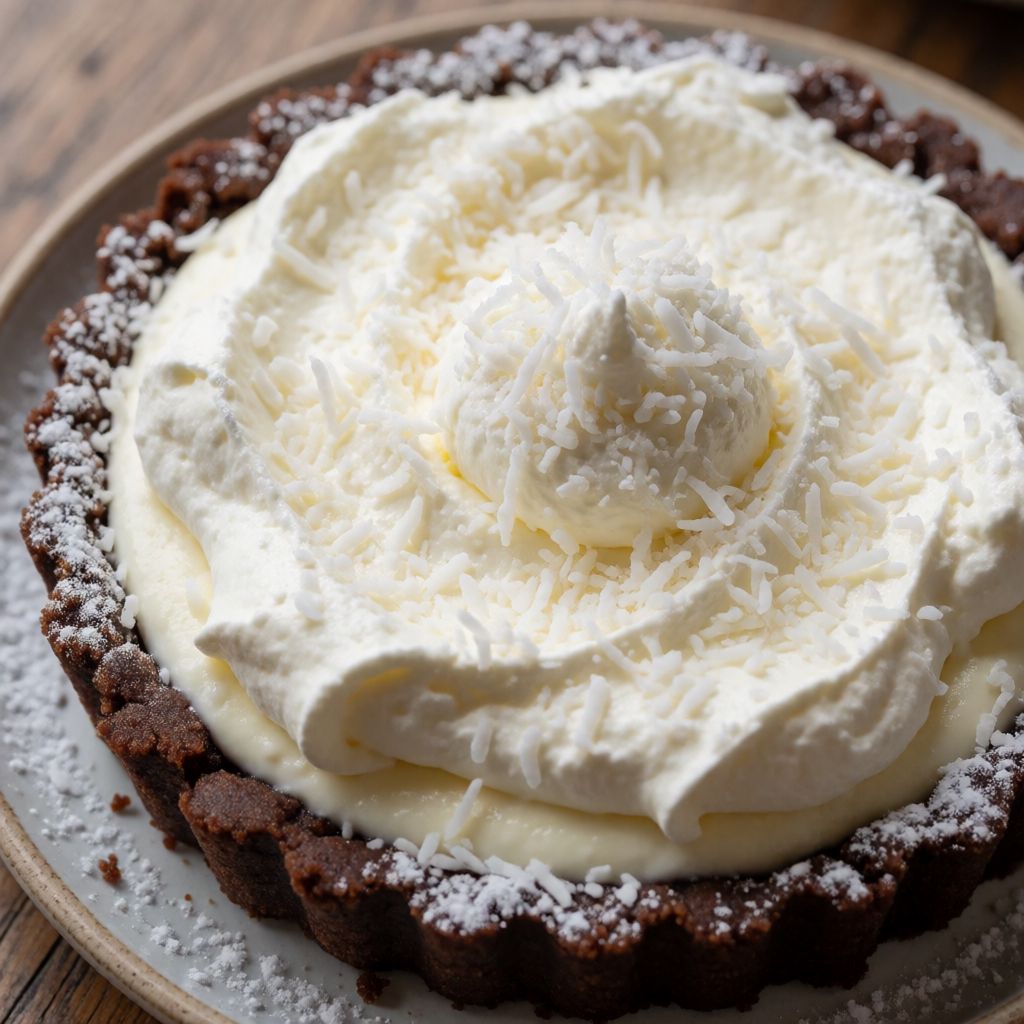
 AI photo
Crumbly Cocoa and Coconut Cream Tart
A no-bake dessert with a crumbly cocoa biscuit base and a light coconut cream filling.
Labels are worked out automatically from the ingredients and can be wrong. Check the packaging if it matters to you.
Ingredients
- 380 g Chocolate digestive biscuits
- 150 g Butter melted
- 250 g Cream cheese
- 120 g Desiccated coconut
- 200 g Whipping cream
- 80 g Icing sugar




Steps
Crush the chocolate digestive biscuits and mix with the melted butter until the mixture resembles fine crumbs.
Press two-thirds of the crumb mixture into a 22 cm tin lined with parchment, shaping a base and sides.
Chill in the fridge for 30 minutes so the base sets firmly.
30 minMix the cream cheese with the desiccated coconut until smooth.
In a separate bowl, whip the cream with the icing sugar until it is thick and holds its shape.
Gradually fold the whipped cream into the cream cheese and coconut mixture, stirring gently.
Spread the cream over the biscuit base, leaving about a centimetre free around the edge.
Scatter the remaining crumbs evenly over the top.
Chill the dessert in the fridge until it is well set and cold.
Serve chilled.
What was changed
We used Chocolate digestive biscuits instead of plain cocoa biscuits, since they aren't commonly sold in UK shops.
Forget the oven. Nothing here gets baked — the only heat in this whole dessert is what melts the butter, and even that you want gentle, just liquid, not sizzling, because scorched butter will taste bitter under all that coconut. Everything else is cold work: this is a tart built by temperature, not by fire. The label says "cook 40 min" but there is no cooking in the sense that word usually carries — that 40 minutes is fridge time, patience with the door closed.
The whole structure stands on one simple trick: fat that is liquid at room temperature goes solid again in the fridge. Melted butter soaks into the crushed biscuit, and when it cools it glues crumb to crumb — that's your base and your sides. No egg, no baking, no binder but butter itself. This is why pressing the crumb firmly into the tin matters more than people think: loose crumb with gaps in it will crack along those gaps once the butter sets, because it has nothing to hold the pieces together across the gap. Press it like you mean it, right into the corners.
Start with the biscuit. Chocolate digestives are a British thing specifically — a semi-sweet, slightly sandy biscuit that crushes into fine rubble rather than clumping into paste. That texture is the point: you want crumb, not dough. If you can't get digestives, look for any plain, dry, not-too-sweet biscuit that crushes the same way — a shortbread biscuit or a simple tea biscuit works, though you'll lose the cocoa note and may want to add a spoon of cocoa powder to the crumb to bring it back.
Butter is the glue, nothing more poetic than that. Melt it fully, let it cool a little before you mix it through the crumb — hot butter will turn the crumb oily and clumped instead of evenly coated, and an unevenly coated crumb sets unevenly too, soft in patches. Unsalted is the safer choice simply because you control the salt yourself; if all you have is salted, use it, just don't add more salt anywhere else, there's nowhere else that needs it.
Cream cheese has to be the firm, blocky kind sold for cheesecakes, not the softer spreadable tub meant for toast. The spreadable kind carries more water, and water is exactly what you don't want here — it will keep the filling from setting properly no matter how long it sits in the fridge. Desiccated coconut is doing double work: flavour, obviously, but also texture, giving the smooth cream something to bite against. Use the dry, fine, unsweetened shred — sweetened flaked coconut is wetter and will throw off how much the filling can set.
Whipping cream needs to be full-fat and genuinely cold from the fridge, because cold fat whips into stable air pockets far more easily than cream that's sat on the counter — this is simple physics, not a kitchen superstition, cold fat holds shape, warm fat collapses. Icing sugar rather than caster is deliberate: icing sugar dissolves into the cream as you whip, caster sugar can still feel faintly grainy in something this smooth and cold, where every texture is noticed.
Two-thirds of the crumb for the base and sides, one-third saved for scattering on top — that split exists so the top stays genuinely crumbly, loose and separate, rather than packed down like a second base. It's a small detail but it's the one that earns the dessert its name. And when you chill it at the end, give it the time it actually needs rather than rushing it into the freezer to speed things along — a freezer will set the fat too hard, too fast, and you'll get a crust that cracks like glass under the knife instead of giving a little, the way a properly fridge-set crumb base should.