
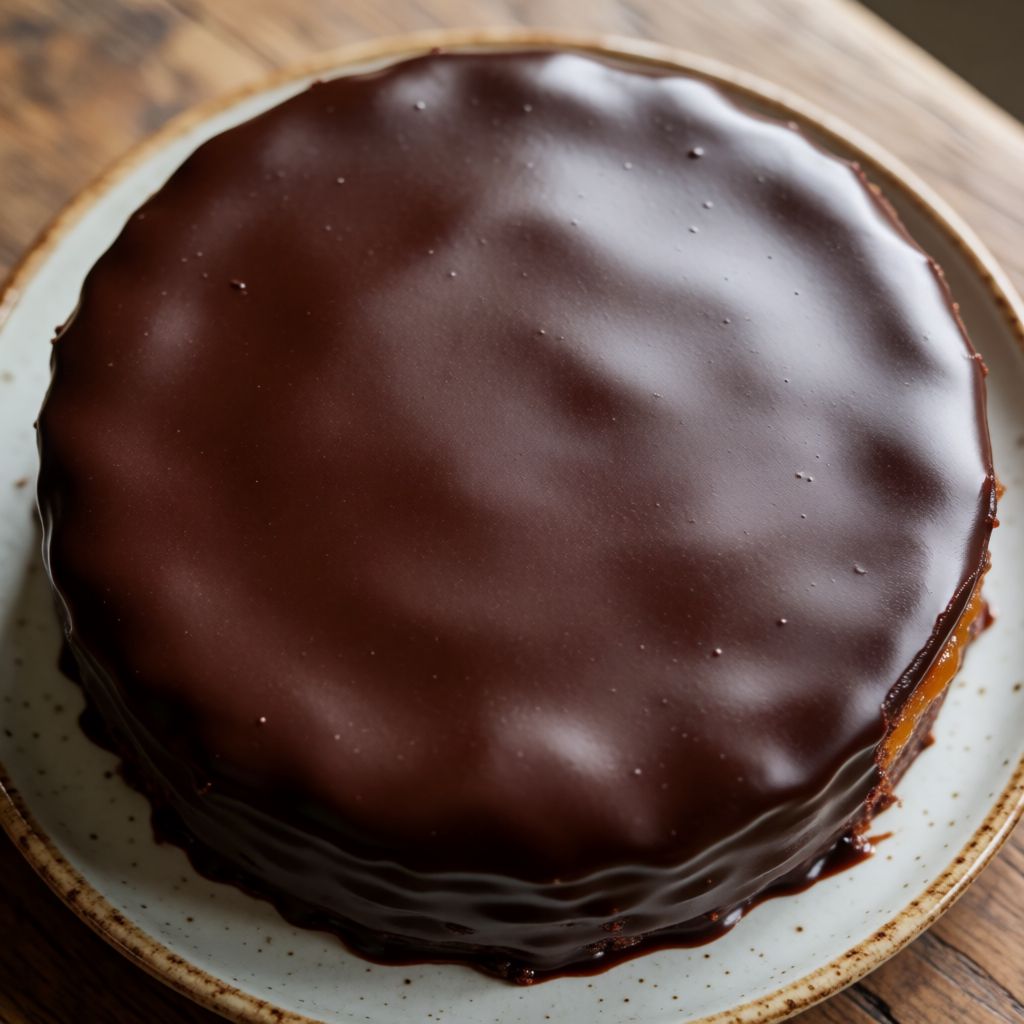
 AI photo
Sacher Torte
A classic chocolate cake with apricot jam and a glossy chocolate ganache coating.
Labels are worked out automatically from the ingredients and can be wrong. Check the packaging if it matters to you.
Ingredients
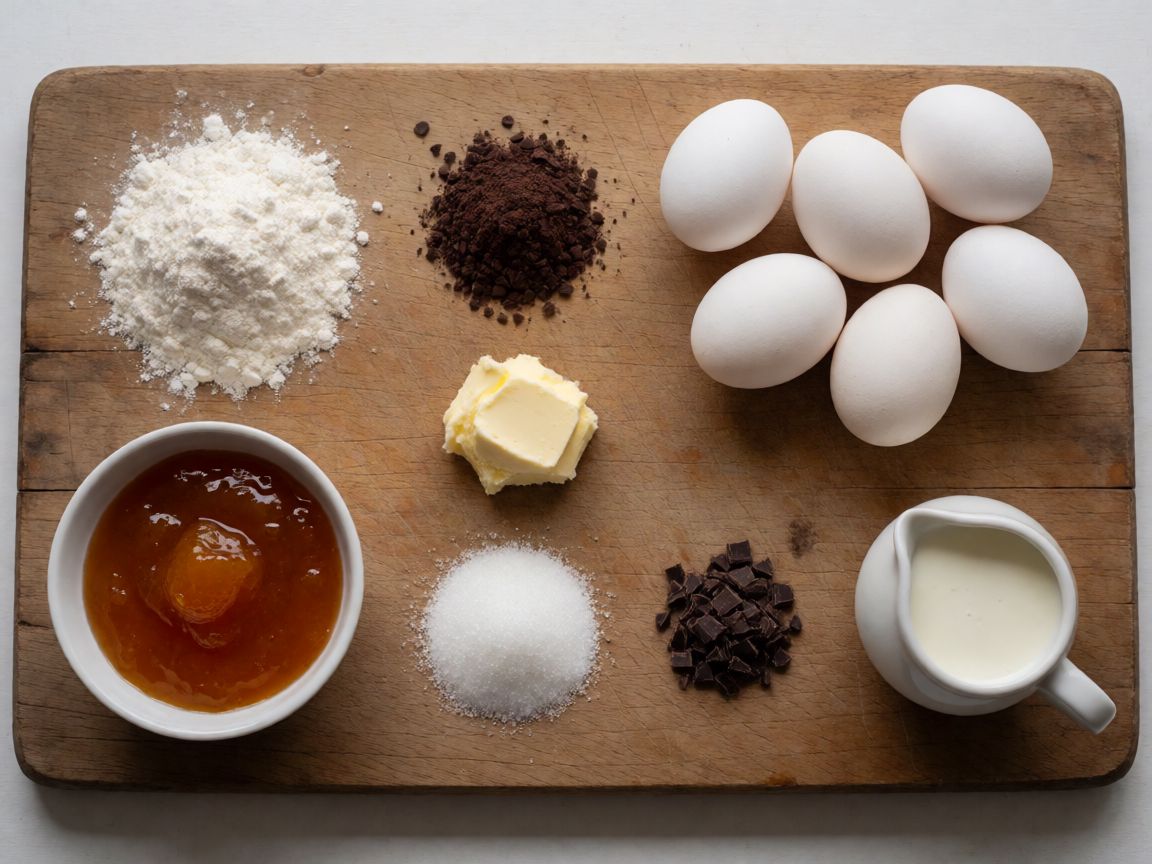
- 110 g Plain flour
- 150 g Dark chocolate ideally 60% cocoa for a softer texture
- 5 pcs Eggs
- 120 g Butter at room temperature
- 180 g Caster sugar
- 300 g Apricot jam
- 320 g Dark chocolate
- 300 ml Double cream






Steps
Beat the room-temperature butter with 30 g of the sugar using a mixer until creamy.
Separate the egg whites from the yolks and add the yolks to the butter cream one at a time, mixing after each addition.
Melt the dark chocolate over a water bath or in the microwave and fold into the batter.
Whisk the egg whites with the remaining sugar until thick and stable, then gently fold into the batter with a spatula.
Sift the flour directly into the batter and fold in gently.
Grease and flour a 24 cm springform tin and pour in the batter.
Bake in a preheated oven at 180°C for 35-40 minutes.
35 minLet the cake cool completely, remove the tin ring and turn out the cake, trimming the base with a knife if needed.
Cut the cooled cake with a serrated knife into two layers.
Spread apricot jam on the bottom layer, cover with the second layer and coat the whole surface and sides with a thin layer of jam.
Chill the cake in the fridge for 15-20 minutes.
18 minBring the cream to the boil, remove from the heat, add the chopped chocolate and stir until smooth.
Place the cake on a wire rack and pour the ganache from the centre, smoothing it with a spatula and tilting the cake to spread it evenly.
Chill the cake in the fridge for at least 2 hours before serving.
120 min
What was changed
Only the conventional oven temperature is given for clarity .
Forget sponge. There's no baking powder here, no soda — just five eggs, beaten whites, and 110 grams of flour trying to hold up a cake made mostly of butter and chocolate. That ratio tells you exactly what this cake is: a soufflé that decided to stay solid. The lift comes entirely from air you beat into the whites and fold in by hand. Lose that air, and you don't get a bad Sacher torte — you get a chocolate brick. Still tastes fine. Just isn't what you were making.
So the whole first half of this recipe is one long argument for a gentle hand. Creaming butter and sugar, adding yolks one at a time — that's not fussiness, that's keeping a fat emulsion from splitting, because split butter weeps and a weeping batter can't carry foam. Then you whisk whites separately and fold them in last, because they're the fragile part. Fold hard, fast, in one go, and you knock the air straight back out — the same air you just spent five minutes building. The cake rises a little in the oven because that trapped air expands with heat; past the oven door, it's on its own.
The second thing that decides this cake is temperature, twice over — once on the cream, once on the cake. You chill the jam-coated cake before pouring the ganache not for tidiness but so the jam sets tacky rather than wet; pour warm ganache onto a wet jam coat and it slides, pools at the base, leaves bald patches at the top. Pour it onto a firm coat and it grips, and gravity — tilting the cake, letting it run — does the smoothing your hand can't.
Chocolate does two different jobs here, so buy two different things, even if the label says the same percentage. In the batter, melted chocolate adds fat and bitterness to a structure that's mostly egg and air — a softer 60% works because it folds in without dragging the mixture down. In the ganache, that same percentage sets the whole texture when it cools: higher cocoa content, less sugar, firmer set. If all you've got is one bar, use it for both and just expect the ganache side to firm up a touch harder — not a disaster, just a different snap when you cut it.
Eggs want to be at room temperature, and this isn't superstition — cold egg whites hold less air when whisked, because the proteins unwind and trap bubbles more easily once they're not fighting the cold. Pull them out an hour before you start. Caster sugar matters for the same reason: it dissolves fast into the whites, so you get a smooth, stable foam instead of a grainy one that collapses under its own weight before it even reaches the batter. Granulated sugar will work, but it takes longer to dissolve, and in that extra whisking time you risk overbeating the whites past their peak — dry, clumpy, no longer elastic enough to fold without tearing.
Butter at room temperature creams with sugar into a pale, light mixture full of tiny air bubbles — a second, smaller air reserve alongside the egg whites. Cold butter won't trap that air; it just gets pushed around by the beater. No substitute here that does the same job — margarine brings water where butter brings fat, and that water thins the whole structure.
Apricot jam isn't decoration, it's a moisture barrier and an edge-cutter. Dark chocolate ganache on its own, against a plain sponge, is heavy and one-note; the jam's acidity cuts straight through that, and its stickiness is what lets the ganache cling instead of sliding off a dry cake surface. If you've no apricot, any sharp, light-coloured jam with real fruit acid — not a dark berry jam, which will fight the chocolate on colour and flavour both — gets you most of the way there.
Double cream is doing specific, measurable work in the ganache: at roughly 48% fat, it's rich enough that the chocolate sets into something you can slice through cleanly rather than something that stays soft and smears. Swap it for single cream, which UK shelves put right next to it, and the ganache won't set the same way — not enough fat to firm up, so you get a shiny but soft coating that never quite holds a sharp edge.
On the oven: 180°C is the number, but ovens — especially small domestic ones with a fan — run hot or cold by as much as 15 degrees depending on where you bought it and how old the thermostat is. Trust the cake, not the dial: it should dome slightly, spring back when you press it lightly in the centre, and a skewer should come out with moist crumbs clinging, not wet batter. If it's pulling away from the tin sides and the top looks matte rather than wet, it's done whether that's at 32 minutes or 42.
Patience shows up twice and both times it's load-bearing, not optional. The cake needs to cool completely before you cut it — warm cake crumbles under a knife because its structure, built on egg foam, hasn't finished setting. And the finished torte needs its full two hours in the fridge before serving, because the ganache is still crystallising during that time; cut it at twenty minutes and you'll get a soft, sliding mess instead of a clean dark shell that cracks slightly under the knife. That crack, when you finally hear it, is the only applause this cake gives you.