
 AI photo
Saffron Buns with Overnight Cold-Rise Dough
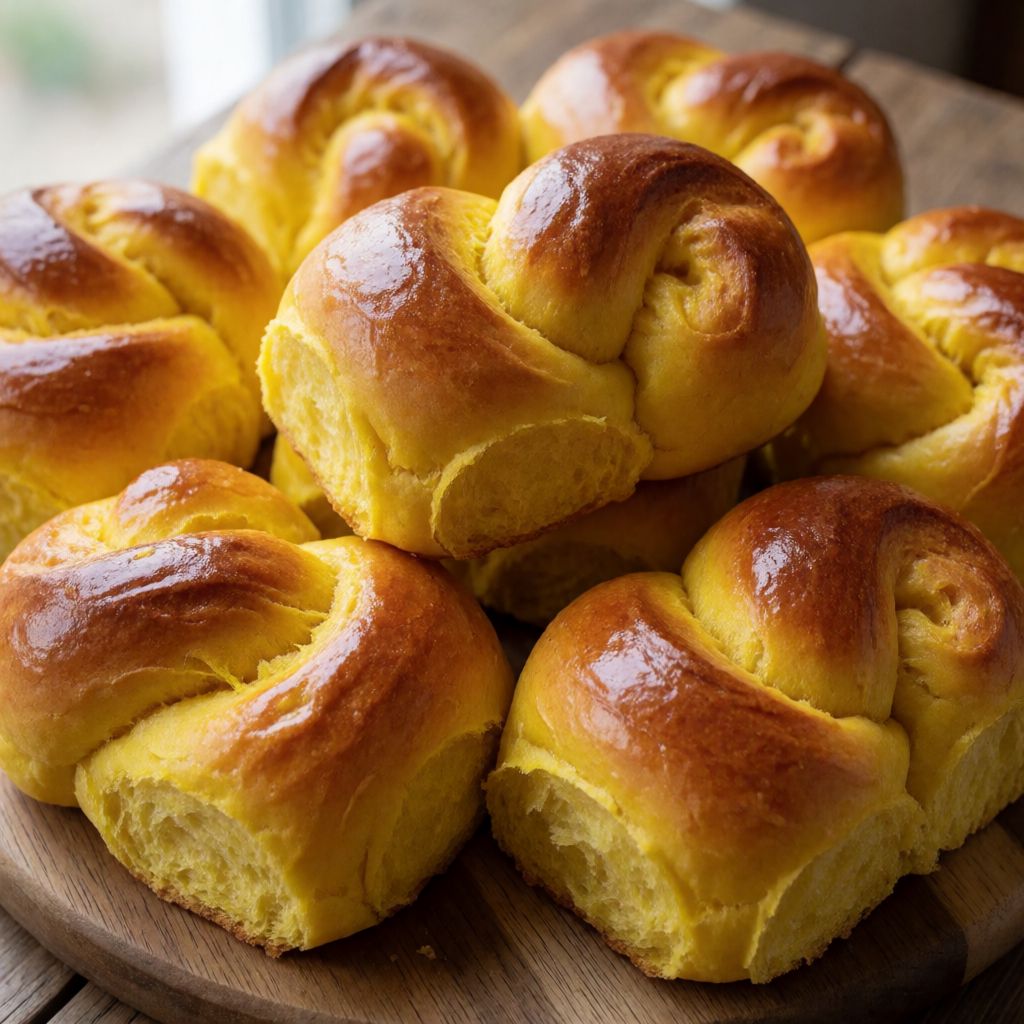
Soft saffron buns, their dough left to rise slowly overnight in the fridge for a deeper flavour.
Labels are worked out automatically from the ingredients and can be wrong. Check the packaging if it matters to you.
Ingredients
- 100 g Butter
- 20 g Yeast
- 250 ml Milk
- 1 pinch Saffron crushed
- 45 g Caster sugar
- 0.25 tsp Salt
- 50 g Marzipan coarsely grated
- 425 g Plain flour
- 12 pcs Dark chocolate buttons for decoration
- 1 pcs Egg for glazing










Steps
Melt the butter over low heat in a saucepan, removing it from the heat as soon as it has melted.
In a bowl, combine the milk, saffron and yeast, and stir until the yeast has dissolved.
Add the melted butter, caster sugar, grated marzipan and salt, and mix well.
Gradually add the flour and knead well into a smooth dough.
Transfer the dough to a bowl, cover with a damp towel and refrigerate overnight.
The next morning, take out the dough and roll it out on a floured surface into a rectangle.
Cut into 16 long strips and shape into buns, either in the traditional 'lussekatt' shape or your own design.
Decorate with the chocolate buttons and leave the dough to rise for 1 hour on the counter.
60 minBrush the dough with beaten egg and bake in a fan oven at 175°C for 16-18 minutes, until the buns turn golden.
17 min
This is lussekatter, the Swedish saffron bun that turns up every December around St Lucia's day — but the method here is built for a normal working life, not a bakery. You make the dough at night, it rises slowly in the fridge, and in the morning you shape and bake. No early alarm, no standing over proving dough for two hours before breakfast.
What decides whether it works is the saffron and the temperature of the butter when it meets the milk. Saffron doesn't dissolve in liquid the way sugar does — it bleeds colour and flavour slowly, and crushing the threads first (as the recipe says) breaks the cell walls so that bleeding starts immediately instead of over the next hour. Some say you can just drop the whole threads in and get the same gold colour — no, because you'll get patches of intense bitterness next to pale dough, and the colour will be blotchy rather than even.
The butter has to be melted and off the heat the moment it liquefies, not simmered. Yeast dies above roughly 50°C; pour hot butter straight into milk with live yeast in it and you're not making dough rise slowly, you're killing the thing that's supposed to raise it. The saucepan sitting off the heat gives you a margin — the butter stays liquid but stops climbing in temperature.
The marzipan is the one ingredient that looks decorative but isn't. Grated coarsely and worked into the dough, it brings almond oil and sugar that a plain enriched dough doesn't have, and it keeps the crumb moist for longer than butter alone would — bakeries have used almond paste in sweet doughs for exactly this reason, because a bun that dries out by evening is a bun nobody buys the next day. If you've no marzipan, ground almonds plus a little extra sugar gets you most of the way there, though the texture will be slightly less silky.
Yeast at 20g fresh is a lot for 425g flour — this is a rich, buttery, sugared dough, and rich doughs slow yeast down, so you compensate with more of it rather than more time at room temperature. If you're using dried yeast instead of fresh, use roughly a third of the weight, and dissolve it the same way in the warm-ish milk rather than mixing it dry into the flour — the saffron milk needs to be lukewarm, not hot, for this to matter at all.
Flour here is just plain flour, not bread flour, which tells you something about what this dough is for. Lussekatter aren't meant to be chewy or structured like a loaf; they're meant to be soft and slightly cakey, so you don't want the extra gluten strength that a stronger flour would give you. Plain flour kneaded "well" — the recipe's own word — means long enough to turn elastic and smooth, not to breaking point.
Shaping the traditional way — strips curled into S-shapes with a raisin or button in each curl — comes from a story about St Lucia and the devil, but functionally the curls exist because a flat bun in a hot oven bakes evenly; a thick lump doesn't. You don't need to follow the shape. The dough doesn't know what a lussekatt is meant to look like, and your own twist will rise and bake exactly the same as long as there's no part dramatically thicker than another.
The hour's rise on the counter after the fridge night is not optional padding — it's the dough waking back up to room temperature and to active fermentation after the cold slowed it down. Skip it and you bake cold, dense dough that won't have the open, light crumb you're after; the strips will look shaped but taste under-proved.
175°C in a fan oven, 16–18 minutes, "until golden" is the real instruction — the minutes are the floor, not the target. Egg wash is what gives you that shine and the deep gold rather than pale cream; without it the buns will still cook through but look flatter on top. If you've no egg to spare, a brush of milk gets you some colour, just less lacquer. And a British oven worth trusting its own dial is rare enough that checking colour at 16 minutes, rather than trusting the timer blindly, is the honest way to finish this.