
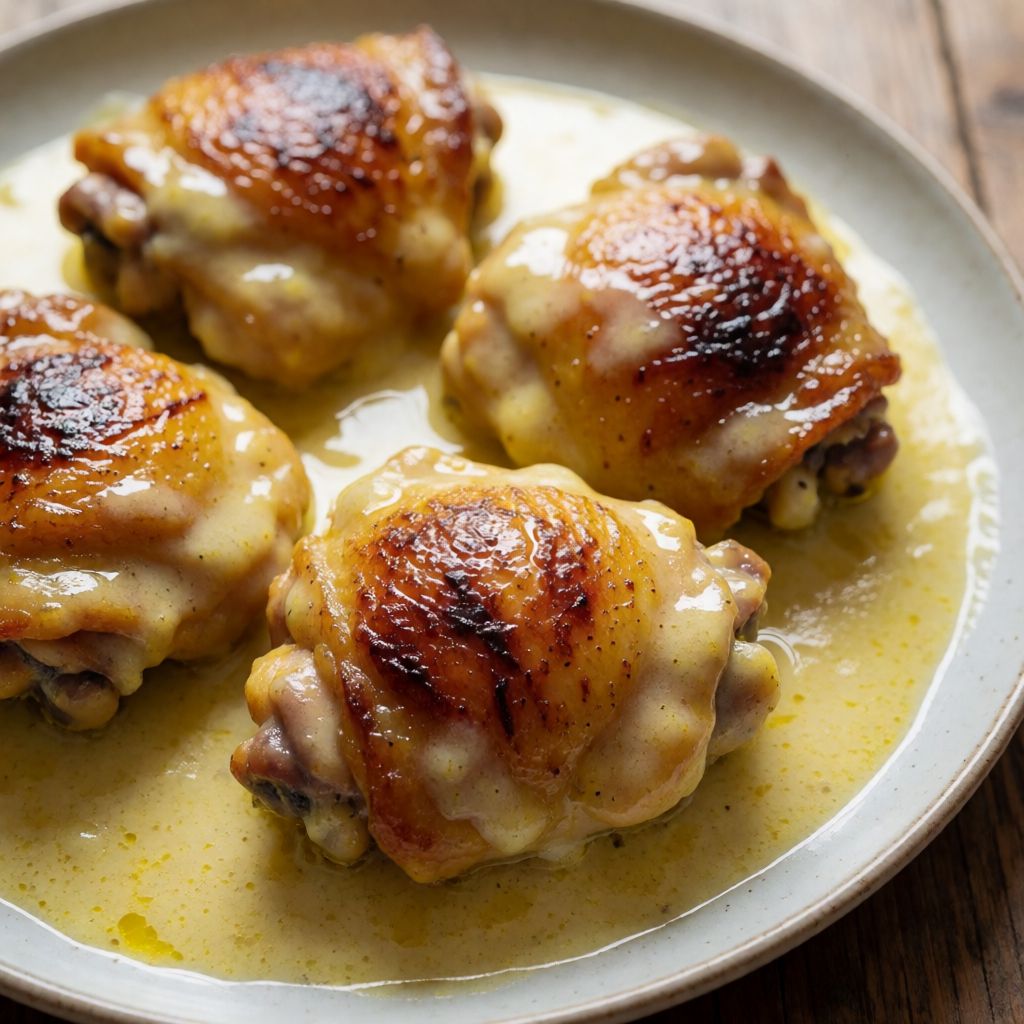
 AI photo
Saffron Chicken Thighs
Tender chicken thighs simmered in a saffron and cream sauce.
Labels are worked out automatically from the ingredients and can be wrong. Check the packaging if it matters to you.
Ingredients
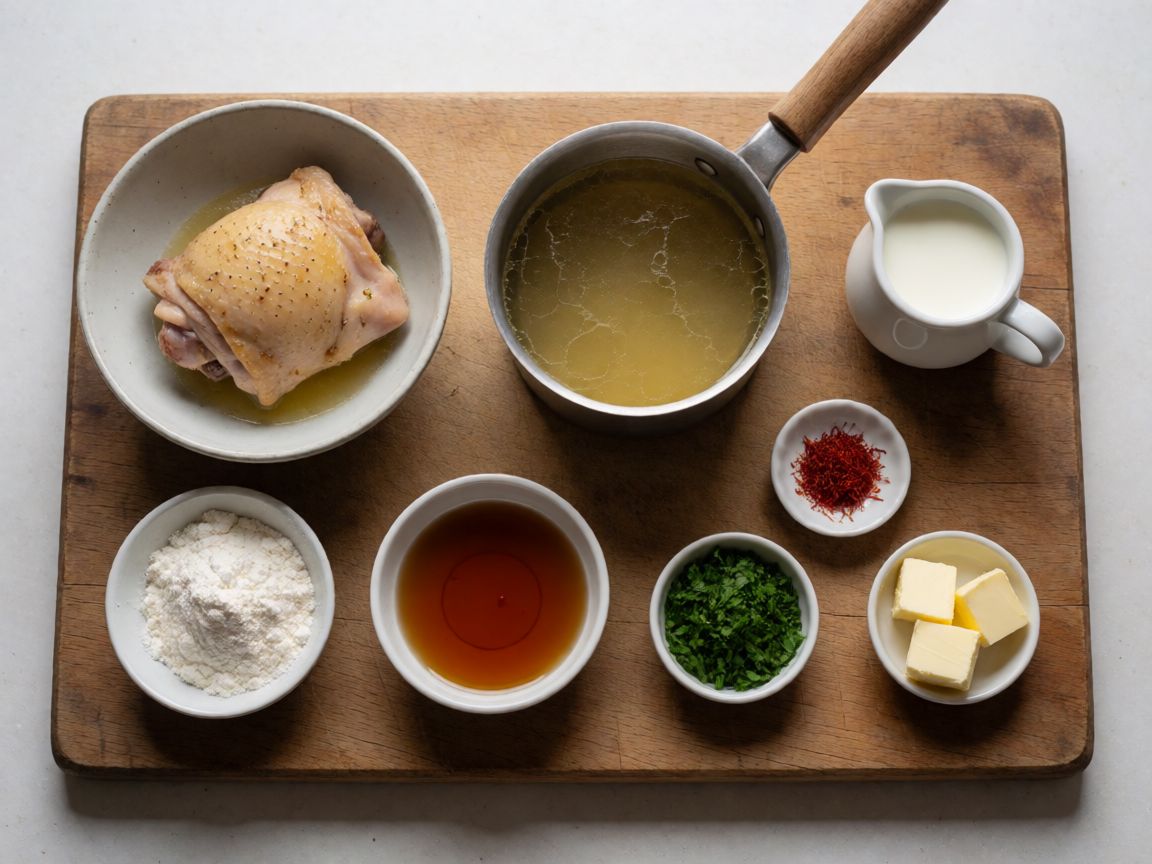
- 1.5 kg Chicken thigh
- 1 l Meat stock
- 200 ml Double cream
- 1 tbsp Plain flour sieved
- 1 tbsp Brandy
- 0.5 tsp Saffron
- Olive oil to taste
- Parsley fresh, finely chopped, to taste
- Salt to taste
- Butter to taste
- Black pepper to taste











Steps
Keep the stock warm so it's ready when needed.
Melt the butter with the olive oil in a pan. Add the chicken thighs and fry over high heat.
Once the thighs are evenly browned, pour in the brandy and let it evaporate.
Add a few spoonfuls of warm stock and cook over low heat.
Top up with a little more stock as needed while cooking. Season the chicken with black pepper and salt to taste.
Pour a ladleful of hot stock into a bowl and dissolve the saffron in it.
Sprinkle the chicken thighs with a spoonful of flour and stir gently.
Add the cream and stir again so the chicken becomes creamy and juicy.
Let the chicken thighs cook a little longer, garnish with fresh finely chopped parsley and serve. Done when the inside reaches 74°C.
This is braised chicken thigh pretending to be a stew and a sauce at the same time — the meat cooks down slowly in stock, gets a shot of brandy for depth, and finishes creamy and gold from saffron. It's closer to a fricassée than anything you'd call a curry, and the whole thing hangs on two decisions: how hard you brown the chicken at the start, and how gently you let it finish.
What decides whether it works is the browning. High heat at the start isn't about speed — it's about the Maillard reaction, the crust that forms on the skin and underside of the meat that gives you the brown fond stuck to the pan. That fond is flavour you can't buy back later; if you skip it and go straight to a low simmer, you get pale, boiled-tasting chicken no amount of cream will rescue. Some say you can just stew the thighs straight in stock from cold — no, because without that sear you're making poached chicken with a sauce, not braised chicken with a sauce.
After that, everything drops to a gentle simmer — low enough that the stock barely trembles, not rolling. This is where the thigh meat, which is tougher and fattier than breast, relaxes and becomes tender without drying out. Thighs forgive you here; breast wouldn't. Boiling hard at this stage toughens the muscle fibres faster than it breaks down the connective tissue, so you end up with dry meat in a wet sauce — the opposite of what you want.
Chicken thigh, not breast, and that's not fashion — it's physics. Thigh has more connective tissue and intramuscular fat, both of which need time and moisture to soften, and both of which reward you with flavour breast simply doesn't carry. Bone-in and skin-on if you can get it, because the bone slows the cooking (so the meat doesn't seize) and the skin is what actually browns and gives you the fond. If you only have boneless, fine — just watch it, because it'll cook faster and the window to overdone shrinks.
The stock has to be warm going in, not cold from the fridge. Pour cold liquid onto a hot pan mid-sear and you drop the pan's temperature, stop the browning dead, and the chicken starts steaming instead of colouring — plus you shock the pan and risk the fond lifting unevenly rather than deglazing cleanly. Keeping it warm on the side is a small discipline, but it's the kind of thing that separates a dish that tastes built from one that tastes assembled. Use a proper meat stock if you can — homemade, or a good fresh one from a tub, not a cube dissolved in water, because cube stock is salt and flavouring with none of the gelatine that gives a braise its body.
Brandy does one job: it lifts the fond off the pan base as it bubbles and burns off its harshest alcohol, leaving behind aromatic compounds that dissolve better in fat and alcohol than in water alone — that's deglazing, not flambé theatre. Let it actually evaporate, don't rush it in after a few seconds; you want the smell to change from sharp to rounded. No brandy in the cupboard — any dry-ish spirit or even a splash of dry white wine with less of the same effect will do; what you're after is something to lift the fond, not the specific taste of cognac.
Saffron is the expensive one, and worth being honest about. A proper pinch — the 0.5 tsp here is already generous by most recipes' standards — goes a long way, and more isn't better past a point: oversaturate and it turns bitter and medicinal rather than warm and floral. Buy threads, not powder, if you can; powder is easier to adulterate and harder to judge quality by sight. There's no real substitute for the flavour — turmeric will give you the colour and nothing else, so use turmeric only if you've accepted you're making a different, paler-tasting dish and you're fine with that.
Double cream, not single, because single cream can split when it meets acid or prolonged heat near a simmer — double has enough fat to stay stable. Add it once the heat's already come down, not while the pan's still roaring from the sear, or you risk the same splitting. The spoonful of sieved flour before the cream goes in isn't fussy extra work — sieving stops lumps forming the second it hits warm liquid, and stirring it through the chicken first means it thickens evenly rather than clumping in one spot at the bottom of the pan.
Butter plus olive oil together, not one or the other, is an old practical compromise: butter alone burns and browns too fast at the heat you need for a proper sear, oil alone won't give you butter's flavour or the way it helps the fond colour. Any neutral oil with no smell of its own works in oil's place — sunflower, a mild rapeseed — just not something aromatic like a strong extra virgin that'll compete with the saffron later.
On a British hob, in a normal wide pan rather than anything like a kazan, your main enemy is evenness — domestic rings tend to have a hot spot in the centre, so turn the thighs and don't leave the pan still for long stretches during the browning stage, or one side scorches while the rest stays pale. There's no clever trick round this beyond paying attention; a thin disc-bottomed pan punishes inattention more than a thick one does.
The one number worth trusting over any clock is 74°C in the thickest part of the thigh — that's where chicken is safely, properly done, not a guess based on how long it's been in the pan. Time in this recipe — ninety minutes total — is a lower bound, the point past which you can reasonably expect doneness, not a bell that rings when it's ready. Patience is the real ingredient here: rush the simmer and you get tough meat in a thin sauce; rush the brandy and you get a boozy taste instead of a rounded one. Let it sit at a gentle tremble and walk away from it for stretches — that's most of the work done right there.