
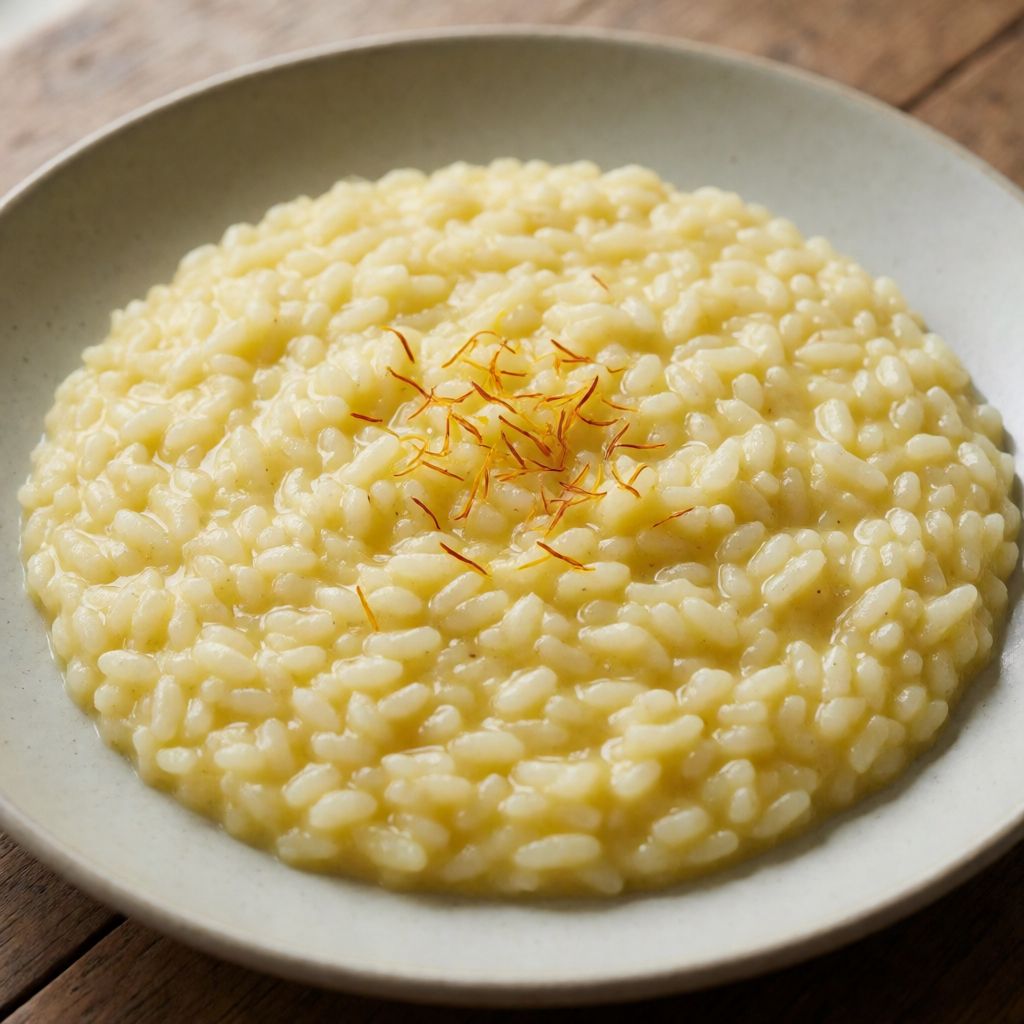
 AI photo
Saffron Risotto
A fragrant saffron risotto finished with toasted hazelnuts and parmesan.
Labels are worked out automatically from the ingredients and can be wrong. Check the packaging if it matters to you.
Ingredients
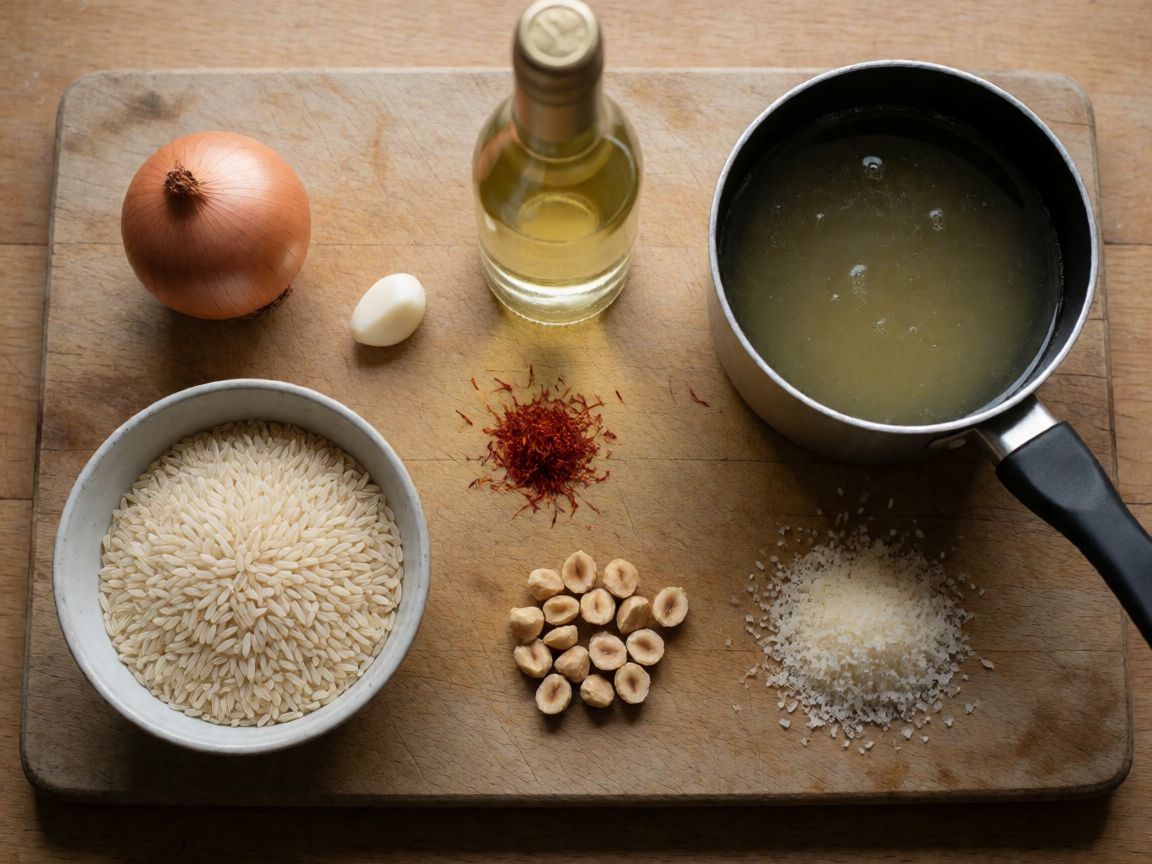
- 1 pcs Onion
- 1 clove Garlic
- 1 tbsp Olive Oil
- 350 g Risotto Rice
- 100 ml White Wine
- 1 pinch Saffron dried
- 1 l Stock or chicken stock
- 60 g Hazelnuts
- 40 g Parmesan coarsely grated, keep some for garnish
- Salt to taste
- Black Pepper freshly ground
- 1 bunch Parsley for garnish












Steps
Finely chop the onion and garlic and sauté them in a pan with the olive oil over medium heat until soft and translucent.
5 minAdd the risotto rice, white wine and ground saffron, stir well for a few minutes, then gradually add the stock, 100ml at a time.
10 minLet the rice absorb the stock before adding more. Once all the stock has been used, remove the pan from the heat.
5 minStir in the freshly grated parmesan. Season with salt and pepper to taste.
3 minQuickly toast the hazelnuts in a hot pan, rub off their skins, then serve the risotto on plates, garnished with parsley and the toasted hazelnuts.
2 min
Think of this as risotto alla milanese’s cousin — same gold colour, same starchy hug, but hazelnuts standing in for the usual osso buco or marrow. That swap is smart for a home kitchen: marrow needs a butcher who still saws bones, a hazelnut needs five minutes in a dry pan. The crunch does similar work — something firm against all that soft.
What decides whether it works isn't your stirring arm, it's the rice. You need a short, fat grain with a lot of surface starch — Arborio, Carnaroli, Vialone Nano, whatever's on the shelf labelled 'risotto rice' in a British supermarket, they're bred for exactly this. Long-grain rice, basmati, jasmine, anything that prides itself on staying separate — wrong tool entirely, because separate is the opposite of what you want here.
Some say you must stand over the pan stirring without stopping or the risotto won't go creamy. No — what makes it creamy is starch coming off the grain into the liquid, and that happens because you add the stock a little at a time, letting the rice nearly drink each addition dry before the next. Stir enough to keep grains moving so they don't catch on the bottom, not so hard you snap them. The violence isn't the mechanism. Time and liquid are.
Onion and garlic are your base, and the only crime here is colour. You want them turning glassy, not gold — translucent means the sugars are softening, gold means they're starting to caramelise, and caramelised alliums fight with saffron instead of carrying it. Low enough heat that you can still talk while it happens; if it's hissing and spitting, pull it back.
The oil is there to carry heat evenly into the onion, nothing more sentimental than that. If your olive oil has a strong taste you don't want fighting the saffron, use any oil with no smell of its own — sunflower, groundnut, rapeseed, whatever's in the cupboard. Olive oil here is about character, not necessity.
Wine's job is acid, not flavour theatre. A splash, bubbled off, leaves behind sharpness that cuts through the richness coming later from cheese and oil — without it the dish goes flat and heavy on the tongue. No wine in the house? A dry vermouth does the same job, or skip it and add a squeeze of lemon near the end instead; you're chasing acidity, not a particular bottle.
Saffron: a pinch means a pinch, and crush the threads between your fingers rather than dropping them in whole. Some recipes toss it straight into the dry pan and call it done — better to let it sit a minute in a splash of the warm stock or the wine first. Saffron's aroma is oil-soluble and needs a little liquid contact to spread evenly; skip that and you get one spoonful that tastes of nothing and the next that tastes bitter. There's no real substitute for the flavour — turmeric will lie to you about colour and tell you nothing true about taste. If you haven't got saffron, be honest with yourself: you're making a different, perfectly fine rice dish, not this one.
Stock has to be warm when it meets the rice, not fridge-cold. Cold liquid shocks the grain, stalls the starch release mid-stride, and you end up with patches cooked unevenly — some chalky in the centre, some blown out. On a typical UK hob with two or three rings, keep the stock pot simmering gently on a back burner the whole time you're working the rice; it's an extra pan to wash, but it's the one piece of equipment this dish actually demands.
Parmesan brings fat, salt and that long savoury note that makes the sauce taste of something beyond starch. Any firm, aged cheese does similar work — grana padano is nearly interchangeable, a hard aged pecorino works too though it pushes sharper. The hazelnuts are toasted hard and fast specifically to loosen their papery skins, not to cook them through — a minute too long in the pan and you've traded crunch for a burnt, bitter nut nobody wants. Any raw nut with a skin that rubs off under heat will do the same trick — almonds, walnuts, whatever you've got. And patience, honestly, is the one ingredient not on the list but doing the most work: turn the heat up to hurry the starch along and you'll scorch the bottom of the rice while the middle's still raw. There's no shortcut for standing there, ladle in hand.