
 AI photo
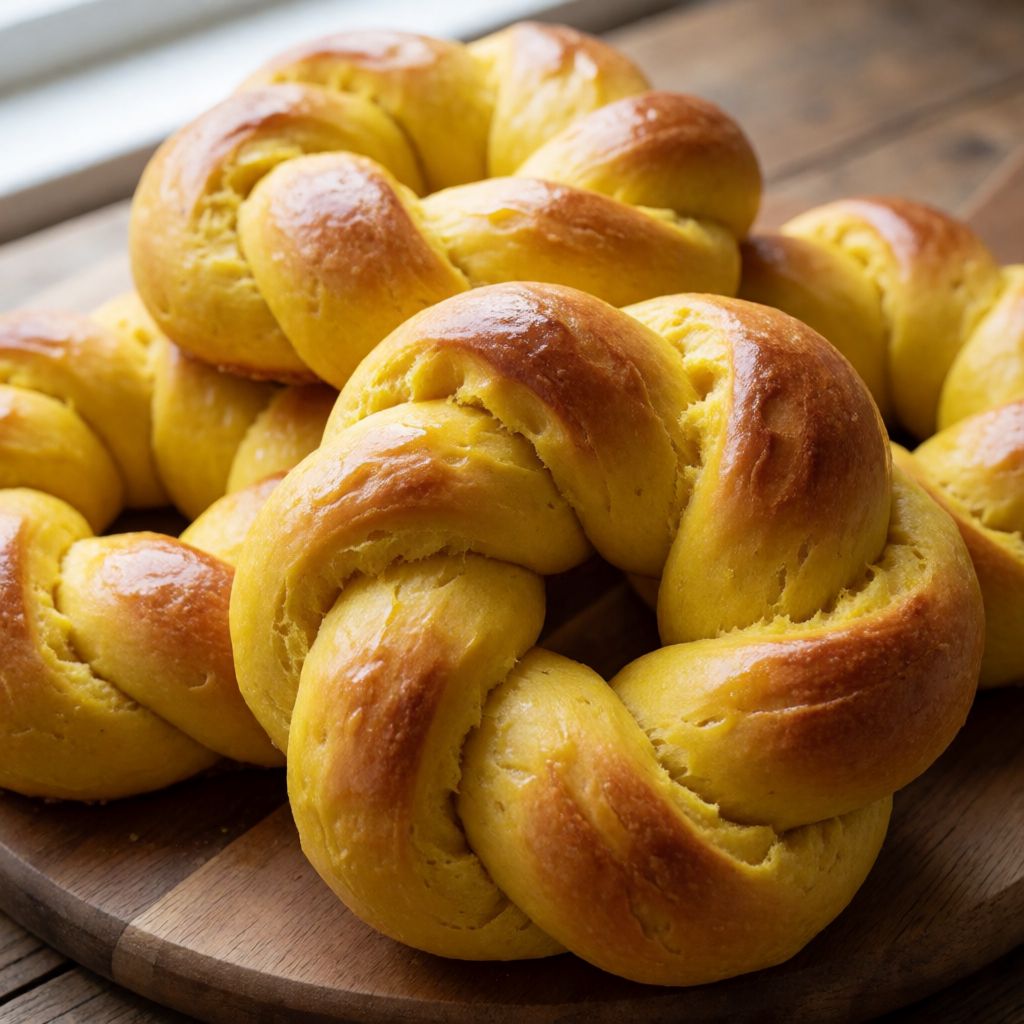
Saffron Wreath Buns
A braided saffron bread, shaped into a round wreath and brushed with egg before baking.
Labels are worked out automatically from the ingredients and can be wrong. Check the packaging if it matters to you.
Ingredients
- 20 g Yeast
- 300 ml Milk room temperature
- 1 pinch Saffron
- 2 pcs Eggs
- 425 g Plain Flour
- 50 g Wholemeal Flour
- 50 g Sugar
- 1 pinch Salt
- 75 g Butter cold
- 1 pcs Egg beaten, for brushing









Steps
Dissolve the yeast in a bowl with the room-temperature milk, add the crushed saffron together with the eggs and mix well.
2 minTip the plain flour, wholemeal flour, sugar and salt into a clean bowl and rub in the butter until fully combined.
3 minPour the flour mixture into the bowl with the milk and knead well, ideally with a mixer on medium speed for 5-8 minutes.
8 minThe dough should be fairly sticky and should not be firm. Cover the dough and let it rise for 2 hours on the kitchen counter, or leave it overnight in the fridge.
120 minTip the dough onto a floured surface, dust with a little flour and divide into three equal pieces. Roll the three pieces into long strips, plait them into a braid and join into a round wreath.
2 minPlace on a parchment-lined baking tray and let rise for another 30 minutes (1 hour if the dough rose overnight in the fridge).
30 minBrush with beaten egg and bake in a preheated fan oven at 175°C for 30 minutes.
30 minServe with cold butter while the bread is still warm and freshly baked.
What was changed
Graham flour was swapped for Wholemeal Flour, the usual substitute found in British shops.
This is a saffron brioche, shaped into a wreath because a ring looks festive and bakes evenly — no corner to burn, no middle to stay pale. The saffron isn't decoration, it's the whole point: it brings a bitter-floral note and that particular yellow that turns an ordinary milk bread into something you'd put on a table for a reason, not just breakfast. Scandinavian bakers do this at Christmas; the shape and the spice both say "occasion", not "Tuesday".
What decides whether it works is the butter and how patient you are with the dough. Cold butter rubbed into flour, not melted and poured in — that's the difference between a bread that stays soft for two days and one that's sandy on day one. Rubbing coats the flour in fat before the liquid arrives, which slows gluten formation and keeps the crumb tender instead of chewy. Melt the butter first and you lose that coating step; you get a wetter dough that behaves differently and a crumb that's denser.
The dough itself will feel wrong if you're used to white sandwich loaves — sticky, slack, nothing like the tight ball people associate with "proper" bread. Some say sticky dough means too much liquid and you should add flour until it clears the bowl. No — a sticky, loose dough is correct here because this is an enriched dough, closer to brioche than to a baguette. Egg and butter get in the way of gluten strands linking up tightly, so it never will feel as firm as lean bread dough, and forcing more flour in just dries out the crumb you're trying to keep soft.
Yeast first, dissolved straight into room-temperature milk — not hot, not from the fridge. Hot milk kills yeast outright above a point your hand would already be complaining about; cold milk just stalls it. Room temperature means the yeast wakes up without a fight. If your flat is cold, give it those two minutes a little longer rather than reaching for warmer milk.
Saffron: crush it rather than dropping the threads in whole. Crushing opens more surface for the colour and bitterness to bleed into the warm milk during that two-minute soak — whole threads mostly just sit there looking expensive. If you don't have saffron, you don't really have this bread; turmeric will give you the colour but none of the flavour, so be honest with yourself that you're making a yellow bun, not a saffron one. There's no real substitute, only an admission.
Flour is split two ways — plain and wholemeal — for a reason beyond habit. Wholemeal brings bran and a slightly nuttier flavour, but bran also cuts gluten strands short, so it's kept to a minor share. All plain flour gives you a lighter, more stretchable dough; all wholemeal would give you a dense, close-grained wreath that fights the braid instead of holding it. If you only have plain flour, use it all — you'll lose a little depth of flavour, not the bread itself.
Butter, cold, rubbed into the dry mix before any liquid touches it: this is the brioche logic again. Cold fat stays in small flecks that melt slowly in the oven, leaving pockets of tenderness through the crumb, instead of blending uniformly into a smooth, denser paste the way softened or melted butter would. Any firm fat with a mild flavour does this job — a flavourless margarine at a pinch — but butter also brings taste, which margarine doesn't, so don't swap it just to save washing up a bowl.
The two eggs in the dough do double duty: protein for structure, fat and lecithin for softness and colour, which is partly why this bread has that rich crumb without needing much more fat. The third egg, beaten and brushed on just before baking, is purely cosmetic — it's what gives you the shine and the deep gold crust. Skip it and the bread still works, it just looks like it skipped something too. Milk brushed on instead gives a softer, matte finish if you'd rather not crack another egg for the sake of shine.
Shaping into a braid-turned-wreath isn't fussy bakery theatre, it's practical: three strands braided give even thickness all round, so the bread bakes uniformly rather than drying out at thin ends and staying doughy in a thick middle. On a domestic tray, don't crowd it — give the ring room, because it will spread as it proves and again as the oven's heat hits it, and a tray that's too small just means the wreath fuses shut and loses its shape. A standard fan oven at 175°C is gentle enough to colour the crust slowly while the enriched, sugar-and-egg dough inside has time to actually cook through rather than scorch before the centre sets — enriched doughs burn faster than lean ones at high heat because of that sugar, so don't be tempted to push the temperature up to save ten minutes. Serve it warm, with cold butter against warm crumb, because that contrast is the only garnish this bread needs.