
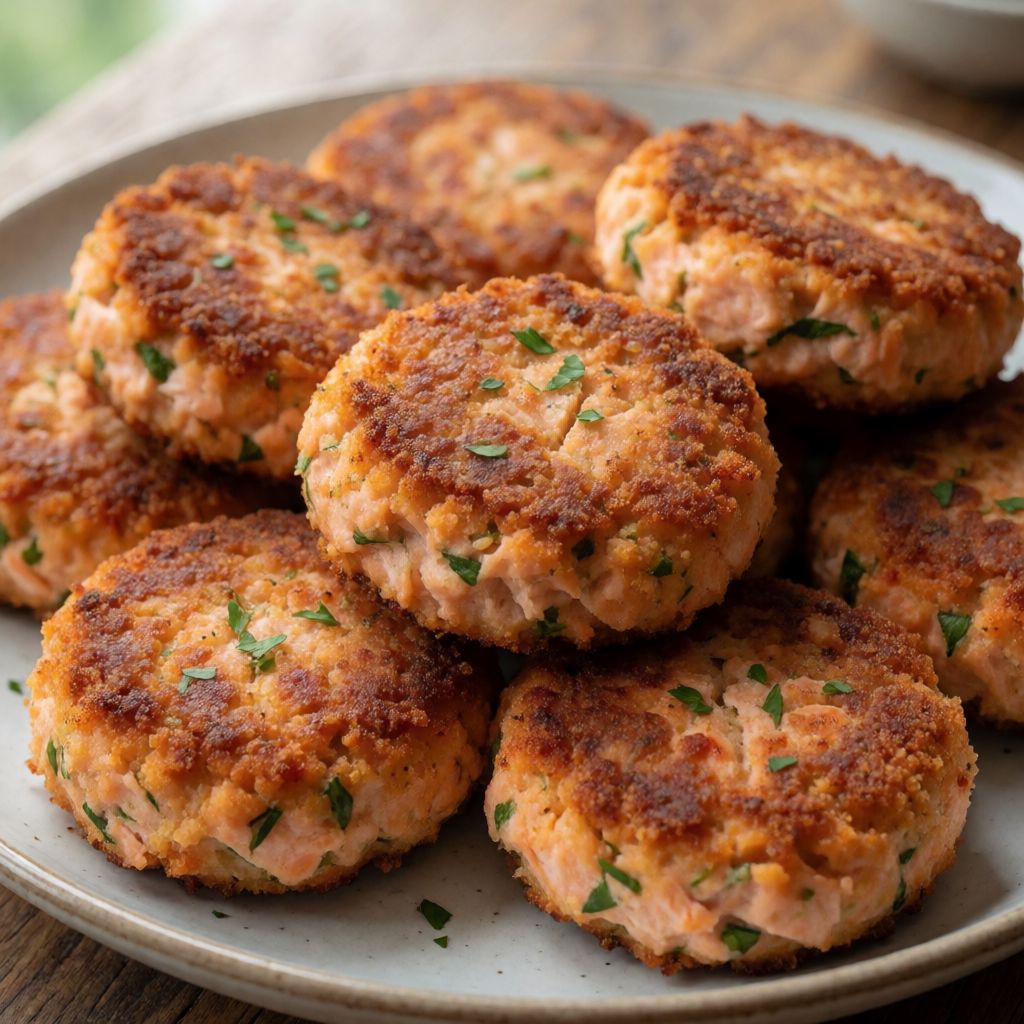
 AI photo
Salmon Burgers
Quick salmon burgers with chives and parsley, pan-fried or grilled and served with a lemon dressing.
Labels are worked out automatically from the ingredients and can be wrong. Check the packaging if it matters to you.
Ingredients
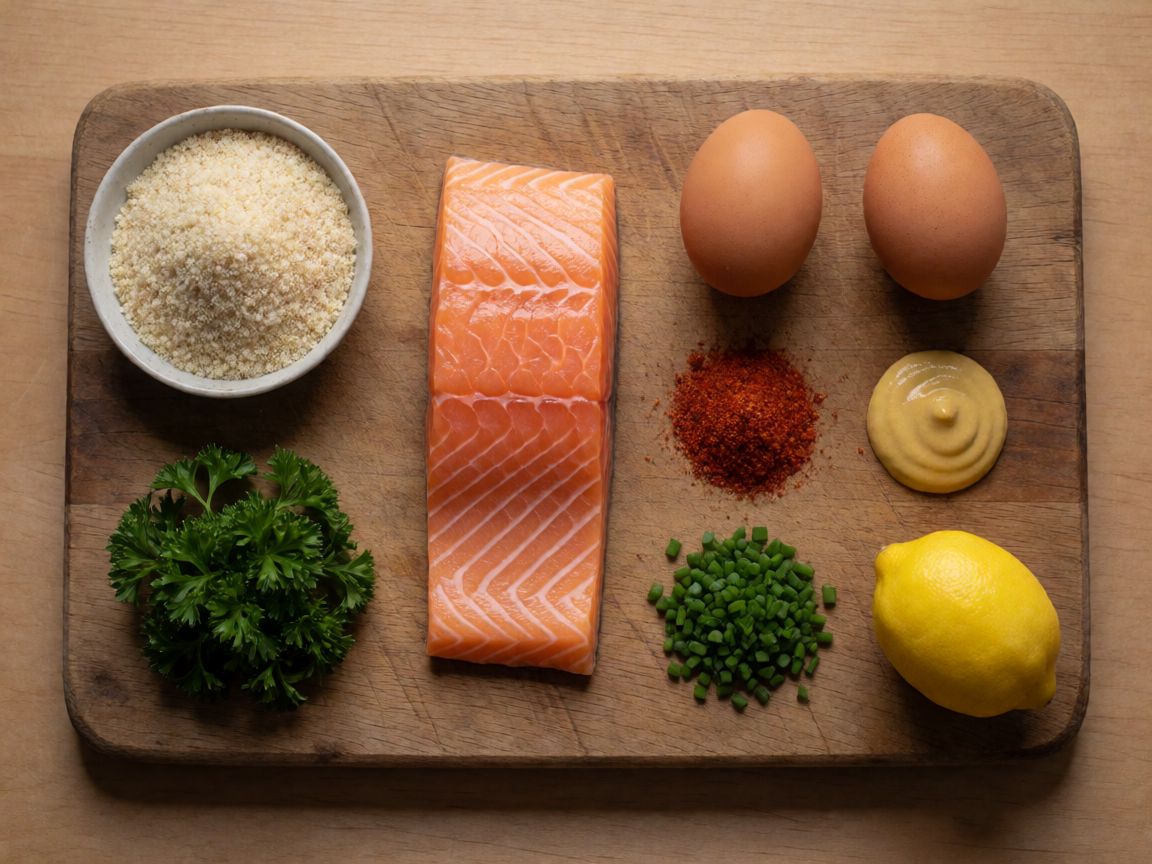
- 400 g Salmon
- 1 pcs Egg
- 2 tbsp Breadcrumbs dried
- 1 tsp Chilli powder
- 1 bunch Parsley
- 1 pinch Salt
- 1 tbsp Dried chives dried
- 1 tsp Mustard
- 2 tbsp Olive oil
- 1 pcs Lemon
- 1 clove Garlic
- 1 pcs Spring onion









Steps
Remove any small bones from the salmon fillet with tweezers and cut it into small pieces.
In a bowl, combine the salmon pieces, breadcrumbs, egg, chilli powder, dried chives, spring onion and a pinch of salt. Mix well, then add the mustard and mix again.
Shape into 4 burger patties.
For the dressing, mix the olive oil with lemon juice, crushed garlic and parsley until smooth.
Heat a frying pan or grill and cook the burgers quickly for 4 minutes on each side. They are done when the thickest part reaches 63°C.
8 minSeason to taste with salt and serve with the lemon dressing.
A salmon burger is not a hamburger that happens to be pink. It's closer to a fish cutlet wearing a disguise, and the whole thing hangs on one decision: how finely do you cut the fish. Cut it too fine, into a paste, and you get something that cooks dense and bouncy, closer to a fishcake from a packet. Cut it in small pieces — the recipe says it, and means it — and the egg and breadcrumbs just hold those pieces together loosely, so when you bite in you still feel salmon, not mush. That's the difference between a burger and a pâté, and it's decided with a knife, not a food processor.
What decides whether it works is heat and restraint. Salmon has almost no connective tissue to break down, nothing to render — it's not a cut you tenderise, it's a cut you protect from overcooking. Four minutes a side on a surface hot enough to set a crust fast is not a suggestion, it's the whole method: a hot pan seals the outside before the inside turns from glossy orange to chalky grey. The 63°C core they mention is the real marker, not the clock — a thermometer tells you the truth, the timer only guesses at it. Some say you need to cook fish right through until it flakes everywhere; no — by the time salmon flakes easily all over, it's already dry, because the muscle fibres have seized and pushed their moisture out.
Start with the salmon itself, because the whole structure depends on it. You want a fillet, skin removed, and — this matters more than people think — pin bones out. Tweezers, not fingers, because fingers can't feel the thin ones near the belly, and a bone in a burger is the single thing that turns someone off fish for a year. Farmed salmon is fattier and more forgiving on heat; wild is leaner and punishes you faster if you overcook it by even a minute. Either works here; just know which one you bought before you set the timer by feel.
The egg and breadcrumbs are not filler, they're glue and sponge in equal measure. The egg binds the loose pieces of fish so the patty holds a shape when it hits the pan; the breadcrumbs soak up the moisture the salmon releases as it heats, so you don't end up with a patty swimming in its own juice and falling apart at the edges. Dried breadcrumbs work because they're thirsty — fresh white bread is wetter and won't absorb as cleanly. If you've none in the cupboard, crushed crackers or even porridge oats do the same absorbing job; the criterion is "dry and starchy," not "breadcrumbs specifically."
Mustard goes in after everything else is mixed, and that's deliberate, not fussy. Mix mustard in too early and it gets lost, diluted through the whole mass before it's had a chance to do its job, which is to sit as a sharp little thread of heat against the fattiness of the fish. Chilli powder and dried chives do similar work from different angles — chilli for warmth, chives for a mild oniony lift that doesn't overpower like raw onion would. Dried herbs here aren't a downgrade from fresh; in a mix like this, where everything gets folded together and cooked, dried chives distribute more evenly than chopped fresh ones would.
Spring onion earns its place by being the one fresh, crunchy thing in an otherwise soft mixture — texture contrast, not just flavour. If you don't have it, a tablespoon of finely chopped regular onion softened for a minute in the pan first will do, though raw spring onion is milder and that's exactly why it's chosen over raw regular onion, which would be harsh and watery by comparison.
For the dressing: olive oil is simply "an oil with no smell of its own and enough body to carry garlic and lemon" — a decent olive oil, nothing you'd call "finishing oil," because here it's a carrier, not the star. Lemon juice brings acid to cut the richness of the fish, and garlic, crushed rather than sliced, disperses through the oil instead of sitting as chunks. Parsley at the end is for green freshness and a bit of bite — flat-leaf if you can get it, curly if that's what's in the fridge, it won't ruin anything.
On the hob: a wide frying pan stands in for a grill perfectly well, and in most UK kitchens that's exactly what you'll use. There's no kazan logic needed here — just get the pan properly hot before the patties go in, because a lukewarm pan is how you end up steaming the outside grey instead of searing it, and a grey crust on salmon means it's already lost juice before the inside's even warm. Four minutes a side is the lower bound they give you; the real sign is a firm, slightly springy edge and that crust holding together when you flip. If you've a meat thermometer from the Sunday roast kit, use it here too — 63°C in the thickest part is not fussy precision, it's the exact point past which salmon stops being silky and starts being dry, and with fish that line is crossed in under a minute of carelessness.
This makes four burgers from 400g of fish — modest, not a show of abundance, which tells you something about where this recipe comes from: quick, portioned, nothing wasted, built around what one fillet gives you rather than what looks generous on a plate.